


Flatness measurement
Flatness to ensure component quality and quality of primary material
Flatness is an important parameter in tolerance measurement. It is applied to flat or linear surfaces.
Flatness – or planarity – can be determined using optical and tactile methods. The choice of method depends on the respective application and the measured variable.
Definition of flatness
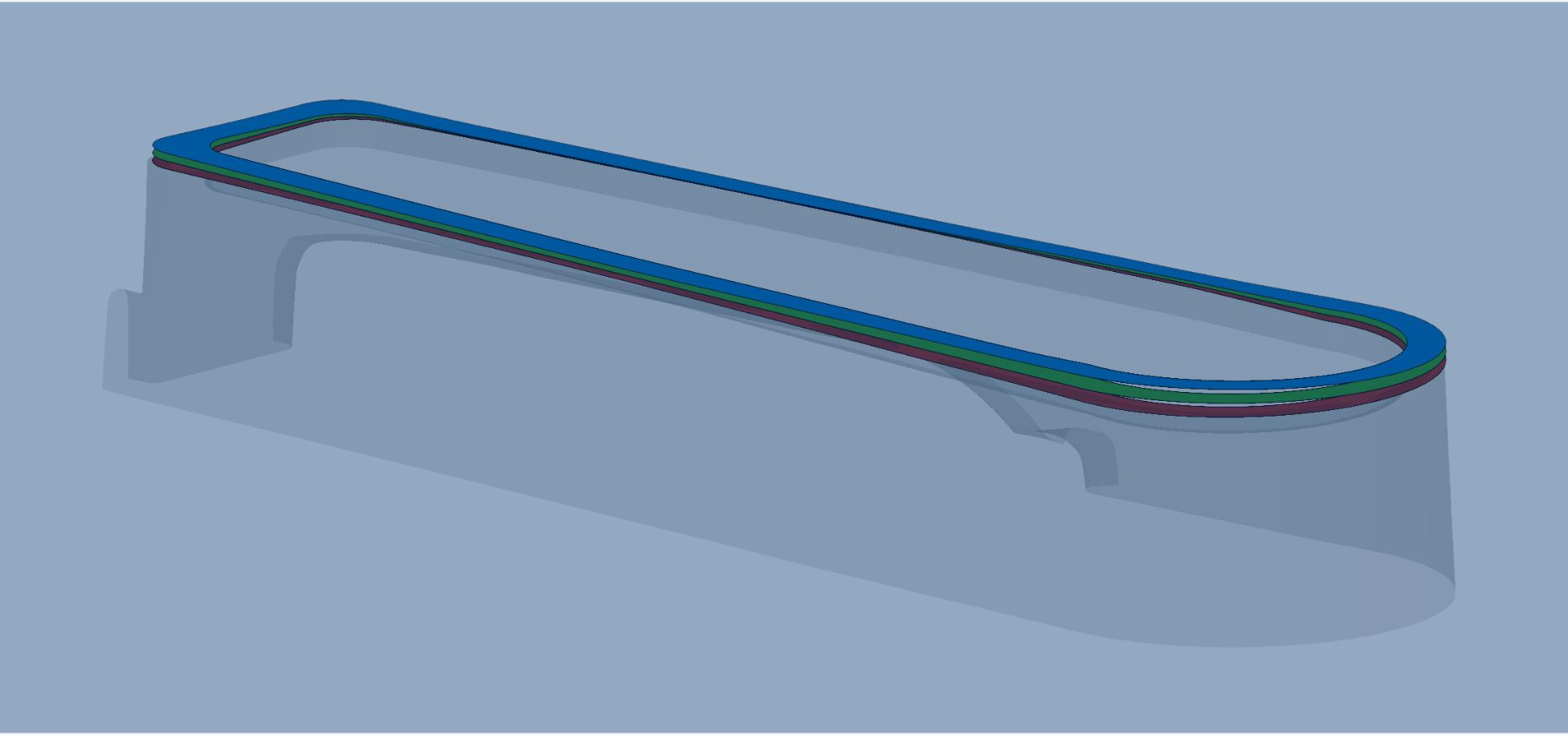
Flatness or planarity refers to the structure of a surface that is located between two ideal planar surfaces. The distance between the two planar surfaces defines the tolerance.
It can be assumed that there is practically no such thing as a super-planar surface in reality. At best, surfaces made of calmed mercury come close to an ideally flat plane.
However, their use is limited to the production of inexpensive, but purely vertically aligned telescopes. As soon as we talk about solids, a flatness measurement must always be based on a corresponding tolerance value.
Benefits of flatness measurement
The production of a plane within a defined tolerance is essential for many technical applications. A maximum flat surface offers the following advantages:
- Optimum fit
- Minimal friction
- Defined reflection
- Prevention of cracking
- favored overflow behavior
With planarity control, it is irrelevant how large or small a component is.
Flatness measurement is also used for wafers from microchips to the measurement of leveled plots of land and the leveling of large asphalted or concreted surfaces. Some of the methods are very similar.
Disturbance variable of a level
A surface is flat if it has no structures in its surface over its entire length and width. These structures can look as follows:
Mountains and valleys are radial, elongated interruptions of the ideal line of length or width. Mountains exceed this ideal line, valleys fall below it.
Cracks are abrupt interruptions of indeterminate depth in the base material without simultaneously creating folds or mountains. Folds are linear elevations. Shells are cracks that make the upper material detachable at certain points.
Scoring and scratches are mechanical damage to the surface caused by other objects. They differ from cracks in the defined depths and differences in the transverse profile.
Grooves and scratches lift out material and can cause compression in the base material along the line. Waves are alternating peaks and valleys.
The roughness is the periodically recurring micro-fine deviation in shape along the wavy line. Bumps are dome-shaped, convex interruptions along the plane. Pores, on the other hand, usually have a concave structure.
Method for flatness measurement
Optical or tactile methods are generally available for measuring a plane for planarity.
Optical processes include these approaches, for example:
- Confocal microscopy
- White light interferometry
- Laser scanning
- Laser point measurement method
The following methods are available for tactile measurement
- Touch step method
- 3-D coordinate measuring method
Confocal microscopy and white light interferometry use the scattering behavior of reflected light to determine a surface structure. Both methods are suitable for particularly small measurement areas.
They are therefore mainly used in microelectronics and other areas with similarly small measuring ranges. They also play a major role in materials testing, for example when inspecting weld seams.
Laser scanning involves continuously scanning a surface. The reflections are recorded by a sensor.
From this, a computer calculates an image of the scanned surface. Laser scanning is ideal for checking the surface flatness of primary material. It is used as standard in the production of profiles (rails, pipes, window profiles) and strip material (paper, sheet metal coils).
The laser point measuring method is ideal for measuring fixed or large planes. It is the standard method for levelling leveled, asphalted or concreted outdoor surfaces.
Here, the plane is checked from a reference point over a grid of any desired mesh size. In mechanical engineering, the laser point measuring method is used for leveling and checking machine beds on large milling machines.
This ensures that a clamped component lies flat and that there are no undesirable deviations during processing.
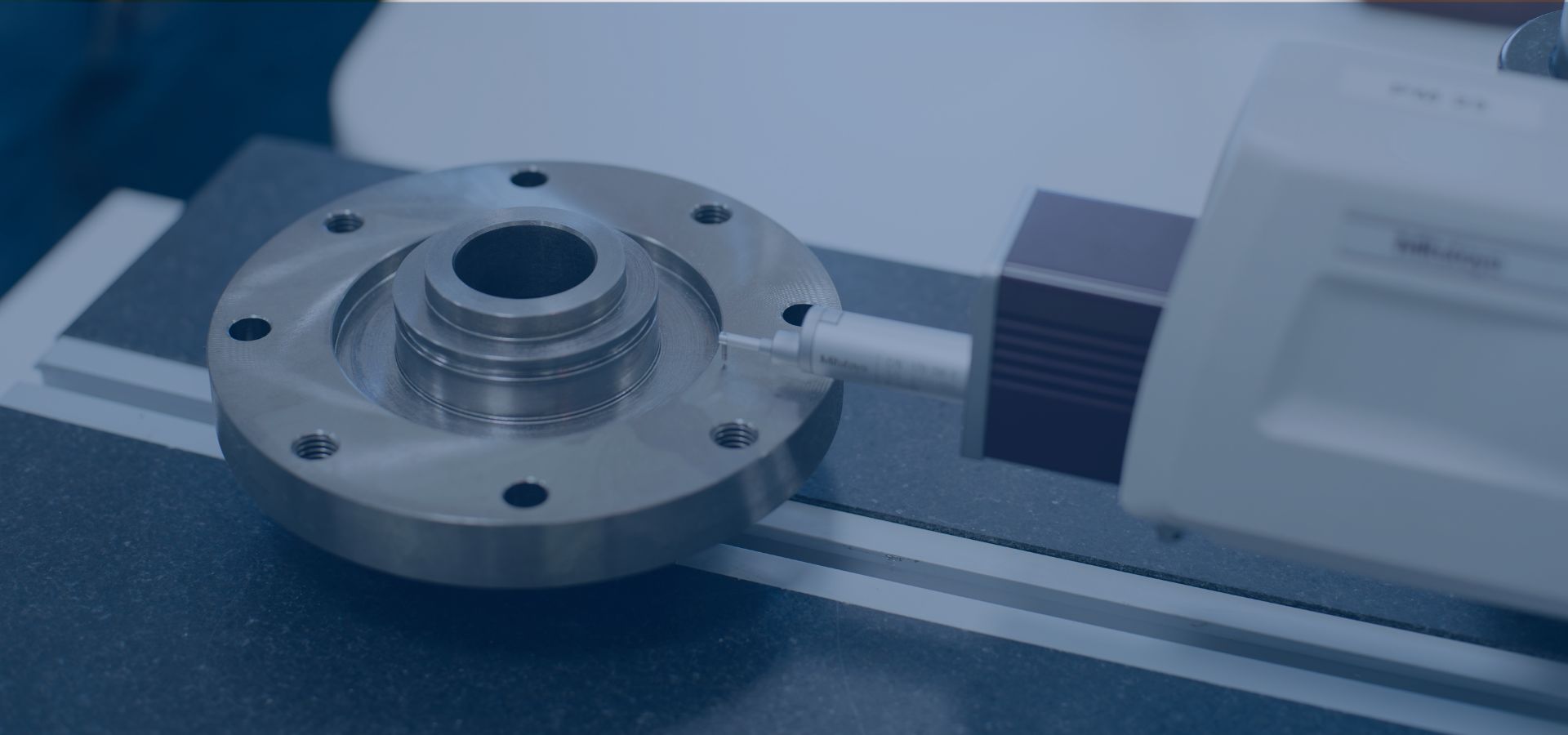
The tactile step method performs the flatness measurement with the aid of a surface-mounted measuring head. This tactile measurement is particularly suitable for very small measuring sections where maximum precision is required.
It is still generally assumed that tactile measurement and leveling using contact methods is superior to optical inspection systems. This is particularly evident in the tactile step method.
Checking a level using 3D coordinate measuring methods is very similar to the laser point measuring method.
The difference is that this flatness measurement requires the surface to be touched with a measuring head. The tactile measurement in the 2D or 3D coordinate system can also be operated with any degree of closeness.
Results of the flatness measurement
The aim of a flatness measurement is always to determine the basic possibility and the effort required to level a surface.
Leveling by removing material is always easier than filling. This is especially true for solid materials such as metals.
This one-sided orientation of the possibilities for post-processing makes the high-precision control of planarity particularly plausible.