

Fast template creation for 3D printing with reverse engineering
Reverse engineering is a method for reverse engineering. Thanks to modern scanning methods, it is now available with a high degree of precision.
The scanning processes are also very fast. They are supplemented by highly developed programs that reduce the amount of data.
This reduces the computing power and storage space required. With modern reverse engineering methods, visualization copies of real products can be produced very quickly.
Advantages of the reverse engineering process
The transfer of an object into a CAD solid model using the reverse engineering method is particularly suitable for organic shapes and surfaces.
Amorphous structures are very difficult to detect using manual or tactile measuring methods. Typical applications for reverse engineering are as follows:
- Faces
- Body
- Organically shaped industrial design
- Sculptures
- Aerodynamically optimized shapes
Capturing and digitizing these objects using reverse engineering is particularly fast and precise. In addition, the required hardware and software is becoming increasingly cheaper and more powerful.
Some useful programs for these applications are already available as freeware. This makes this process interesting for the maker scene as well as for trade and industry.
Reverse engineering as part of reverse engineering
Reverse engineering is a process used to draw conclusions about the design of a real product. The engineering process is carried out backwards: first the product is measured, then graphically represented and finally examined for its technical properties.
For example, it is the only available method of reproduction for historical models or products for which construction documents can no longer be found.
The data obtained also provides a quick and convenient basis for developing new products. The following methods can be considered for this design process:
- Manual measuring and tracing
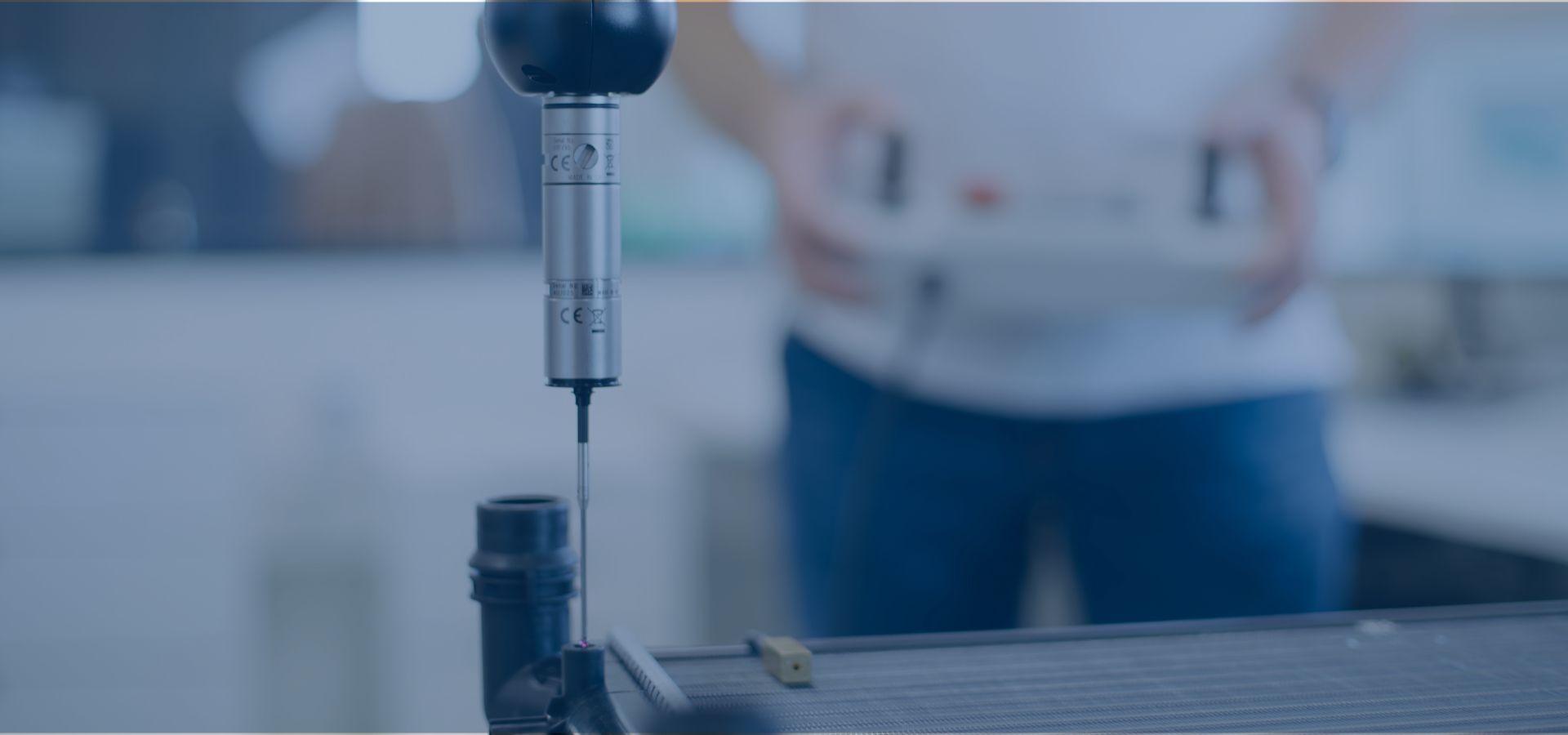
- Tactile measurement with 3D coordinate measuring system
- Various scanning processes with subsequent reverse engineering
Due to highly developed hardware and software, reverse engineering has recently become the preferred method for the reverse engineering of amorphous objects.
Definition of reverse engineering
Reverse engineering does not refer to the actual scanning process, but rather the preparation of the resulting data. Modern scanners can already create a very vivid 3D model of an object.
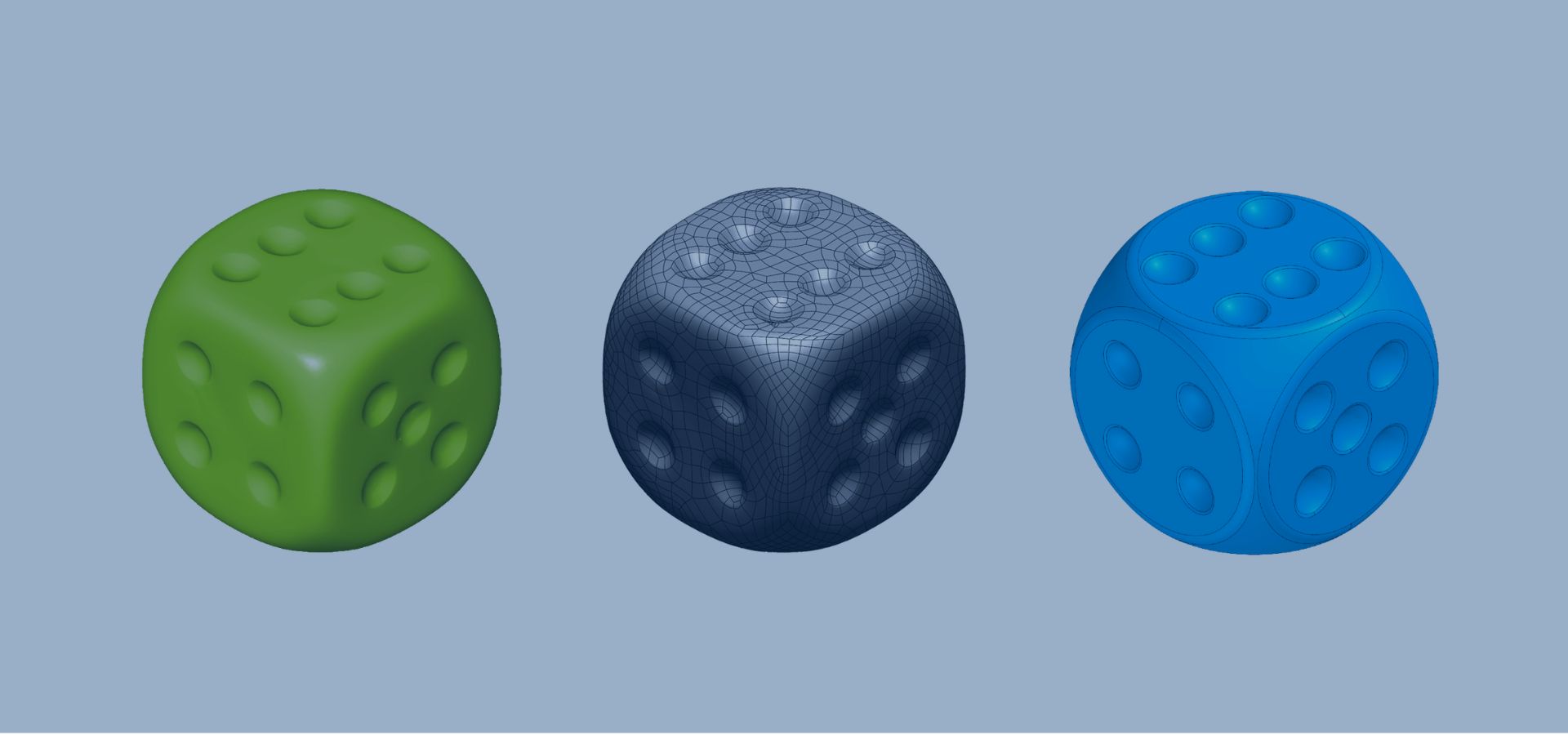
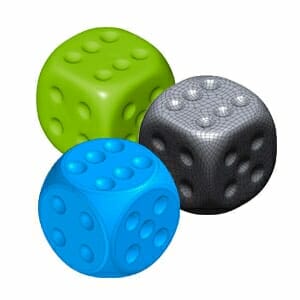
Further steps are necessary to generate a usable data set that can be used on a processing machine. The raw data supplied by the scanner is initially available as a point cloud or as a chaotically generated grid.
The amount of data is still enormous and the surfaces do not fully correspond to the original. Reverse engineering is the post-processing of this raw data until a usable 3D model is available.
In technical terms, the definition of reverse engineering is: “reverse engineering is the process of converting a polygon surface (or point cloud) into NURBS surfaces.” NURBS are non-uniform rational B-spline vector curves. This conversion process is partially automatic.
Today, the user still has to provide some assistance and support with most programs. These vector curves are captured by the design program and combined into a model. This model can be reworked as required. The following uses are common:
- Creation of a 1:1 copy
- Scaling (enlargement or reduction to scale)
- Additions
- Shape changes
The modelability of the 3D model created is arbitrary and depends only on the imagination and skill of the designer.
The first result of a successful traceability of the surfaces is the creation of a surface model. In the second step, a volume model is created from this.
Difference between surface model and volume model
A surface model is a contiguous, complete surface. However, it is still two-dimensional and only defines the envelope of a solid model within a certain area.
To generate a solid model from a surface model, it must be completely closed. In the case of the reverse engineering method, this means, for example, that the support surface must be closed.
Smoothing, touching up and adjusting transitions are further steps in the reverse engineering process.
Scanning process for reverse engineering
Three methods of capturing plastic objects can be used for reverse engineering:
- Digital photography
- Strip light scanning
- Laser scanning
Digital photography is a simple and widely available method for obtaining raw data for 3D models. Normal cell phone cameras are already sufficient to achieve very interesting results.
However, the capture process is time-consuming and requires a lot of rework. Scanning over digital photos is very popular in the maker movement. It can be used to create interesting copies of faces and other complex shapes and then print them out.
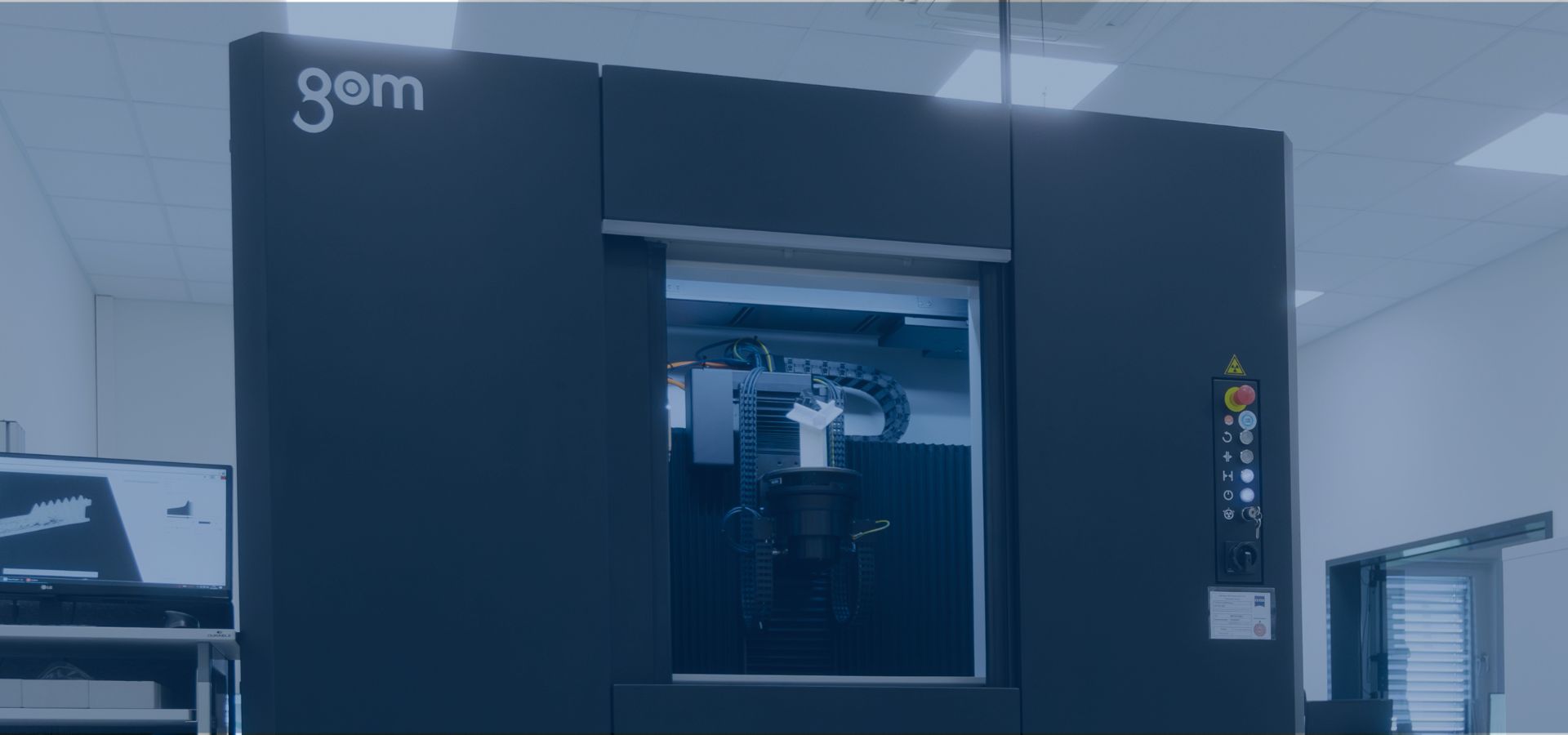
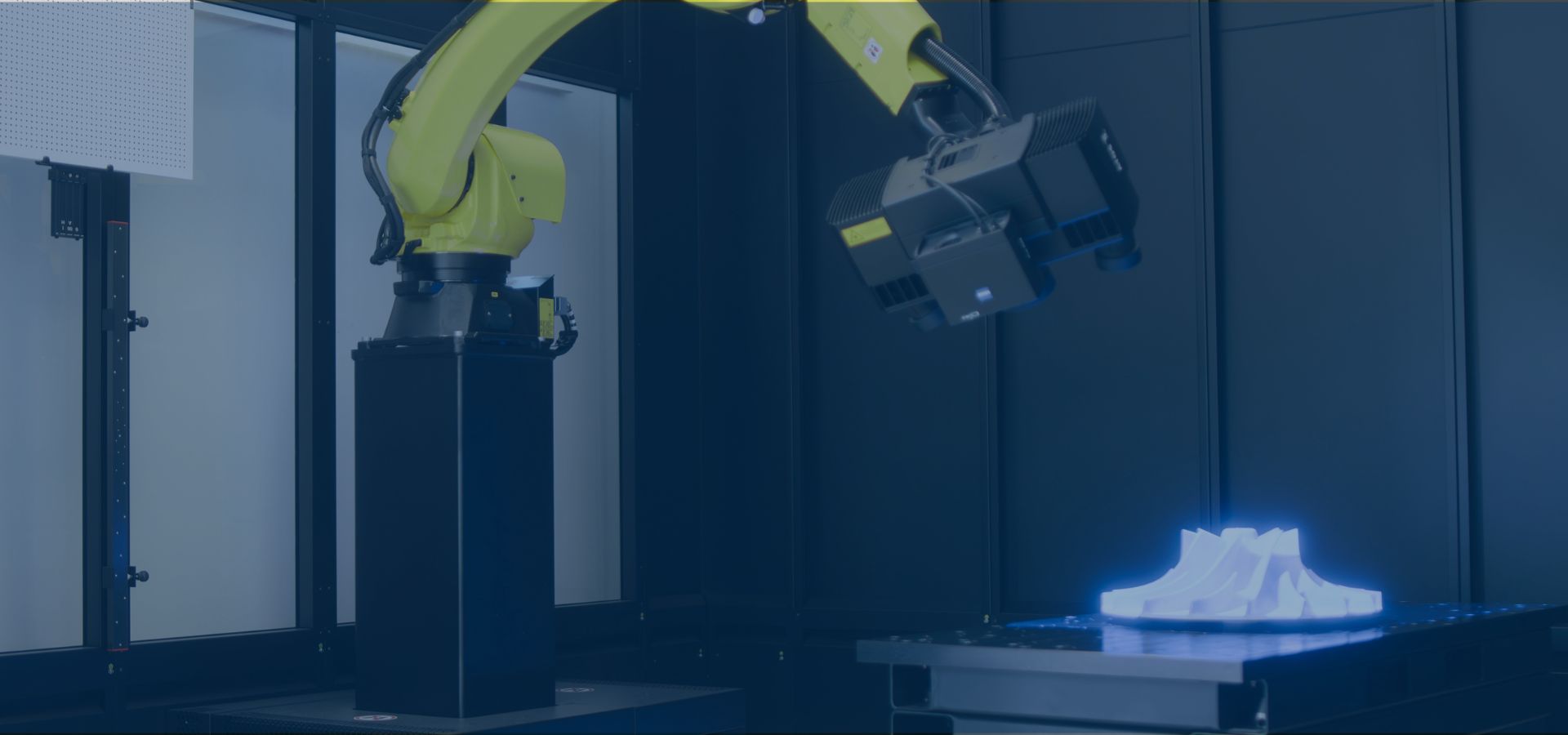
Stripe light scanning is a fast, inexpensive and precise method. It projects a stripe pattern onto a surface. By quickly changing the direction, all structures on the surface are accurately detected.
The connected computer then converts the data into the CAD surface model.
Laser scanning is the most precise method for measuring a surface. The scanning laser beam captures the smallest elevations.
The data obtained is particularly valid and comes very close to the actual dimensions of the scanned object. Once it has been scanned, the files for reverse engineering are available in STL format.
Variants of the reverse engineering process
Once the STL files have been created for reverse engineering, the actual conversion begins. The following two options are available for this:
- Autosurface
- Boundary Fit
Autosurface” is the automatic reverse engineering process. Here, the 3D scan processing program automatically defines the surfaces and the grid structure – the so-called “NURBS”.
With “Boundary Fit”, the nurbs are defined manually. The surfaces are then created again automatically.
The advantages of Autosurface are the high conversion speed from the 3D scan to the surface model and the high precision. The difference in accuracy from the original to the surface model is only 0.05% with high-quality equipment.
The disadvantages of Autosurface are as follows:
- Random NURBS structure
- Frequently missing surfaces
- High data volume
- No longer changeable
The random NURBS structure is particularly problematic if the model is to be displayed in a decomposable form. The grid lines arbitrarily envelop the object and make it impossible to assign them to individual building sections.
The areas that are often missing must be reworked manually. Depending on the size of the object, this can be very time-consuming.
The large amount of data makes further processing of the model difficult and requires computers with high processing power.
Due to the randomly generated structure of the grid and surfaces, subsequent changes to the 3D model are difficult or even impossible. At best, scaling can still be implemented, but beyond that the autosurface models reach their limits.
The advantages of boundary fit are as follows:
- Logical NURBS network
- Less space
- Closing to the volume model easier
- Any post-processing possible
The logically structured NURBS network from Boundary Fit is based on the component structure of the object. The 3D model can then be animated in a separable manner. The smaller number of surfaces reduces the file size.
This simplifies further processing. With a closed volume model, the 3D scan can be processed as required. The disadvantages of the boundary fit are the required expertise of the processor and the high workload.
Process of a reverse engineering
The creation of a 3D model using reverse engineering is a three-stage process. It consists of the following steps:
1. capture the object
2. Convert the point cloud into a CAD surface model
3. Post-processing via reverse engineering
The usual file formats for the 3D models created are .STEP, .X_T, .SAT, .CATPART and .IGIS.
The object is loaded into the computer as a digital model using the scanning methods described. There it is only available as a point cloud. The programs first create a CAD surface model from this.
The resulting NURBS are still arranged chaotically for the time being. In this state, the 3D model still contains a large amount of data. In the third step, the actual reverse engineering, the 3D model is simplified and smoothed.
The more the model is simplified, the less computing power is required for further processing. This can mean some time and manual tracing of the digital structures. However, it increases the precision of the CAD volume model and speeds up the processes.
Simplification of geometries
For objects that are only partially amorphous in shape, it makes sense to reproduce the defined parts. The vectorial resolution of basic bodies considerably reduces the amount of data to be processed.
For example, a program only needs its spatial diagonal to calculate a cuboid. This means that a design program can create a complete CAD solid model from this single vector.
The same applies to cylinders, rings, spheres, circles and pyramids. The amount of data required for modeling is minimal, especially compared to the remaining, undefinable structures of a typical partially amorphous object.
Limits of the reverse engineering process
As suitable as the reverse engineering process is for organic-amorphous structures, it is unsuitable for angular components with holes.
The method reaches its limits particularly in areas with precisely defined technical geometry. It is unusable for the following structures:
- Threaded holes
- Blind holes
- Threaded bolt
- Defined roughness
All optical capture systems also have difficulties capturing shiny objects. Chrome-plated or highly polished products can therefore only be digitized with a scanner with additional measures, such as a “matting spray”.
Threads, regardless of whether they are drilled holes or bolts, have too delicate a structure for scanners. The transition between a fine thread and a roughness is difficult to recognize, even for modern detection devices.
Drill holes are almost impossible to define from the outside. The finished 3D model does not clearly show how deep the drilled hole should be.
If a surface has a defined roughness, this is usually not reproduced by the scanner with the regularity of the original. The representation of a file or a roughened area will be chaotic in most cases.
Traditional manual and tactile methods are therefore better suited to digitizing angular and clearly structured objects than scanning with subsequent reverse engineering.
Reverse engineering process for reverse engineering
The reverse engineering process is ideal for organic shapes. The raw models from the 3D scan contain large amounts of data. These can be significantly reduced by suitable post-processing.
The finished data is the basis for producing a visual copy of the original. For angular starting products, constructive reproduction through precise measurement is more advantageous for reverse engineering.
Reverse engineering with 3DIMETIK
Do you have a component but no more documentation for it? Come to us. We at 3DIMETIK use various methods to create an exact replica.
No matter how complex the shape of your component, our innovative reverse engineering methods will always get you there.
We at 3DMETIK create reproducible models from your originals. Give us a call or send us a message. Our customer service team will assess your challenge precisely and discuss all the necessary measures with you. We look forward to your call.