

Surface measurement as quality control
Surface measurement is a component of non-destructive quality control. It provides characteristic data on friction or coatability.
The structure of the surface contributes significantly to the technical properties of a component. It is therefore usually clearly defined by the customer and tested accordingly.
At the points where a defined roughness is required, it is entered on the drawing with the corresponding Ra specification.
Precise control of the typical parameters of a surface measurement therefore helps to ensure component quality and reliable compliance with your customers’ specifications.
Shape deviations of technical surfaces
Roughness and waviness are two levels of deviation in the shape of technical surfaces.
Starting from a flat, absolutely smooth surface, the technique distinguishes between six orders of shape deviation. These are
- Shape changes
- Ripple
- Roughness in groove form
- Roughness in the form of grooves
- Roughness in the structure
- Structure of the crystal lattice
A change in shape occurs when a component has been compressed or bent. The waviness describes periodically recurring depressions or elevations along a defined measuring section.
Groove-shaped roughness is created by scratching, pressing or etching a surface. Scoring is the lighter version of grooves and can go down to the nanometer range. The last two orders can only be influenced during primary forming or initial forming of a workpiece.
Properties of structured surfaces
Surfaces of solids have defined properties. Essentially, two parameters are decisive for determining a surface quality:
- Roughness
- Ripple
Roughness determines how smooth a surface is. However, the statement “the smoother the better” is not correct. There are numerous cases in which a workpiece must have a high surface roughness.
Rough surfaces have a high coefficient of friction and provide a good adhesive base. A high coefficient of friction is required, for example, if the product is to have anti-slip properties. For measurements in the high-precision range, tactile measuring methods are advantageous as they deliver the most accurate results thanks to highly sensitive probes.
Floor tiles in bathrooms are a typical example of this. These must have a noticeably rougher texture than the wall tiles.
This ensures optimum slip resistance when walking on with wet feet. A defined roughened surface can also be advantageous for the application of a coating.
Paint, primers or powder coatings adhere better to slightly rough surfaces than if they are polished to a mirror finish. Polished surfaces, on the other hand, are required if the component is to be chrome-plated.
The lowest possible roughness is always required when a component slides on another component. The smoothness of the surface ensures that the lubricating film between the components does not break off.
Waviness is very similar to roughness. Waviness can be visible, perceptible and can also be checked using normal measuring equipment such as a centimeter ruler. However, they can also be in the micrometer range.
Their main difference to roughness lies in their periodic structure. A typical wavy pattern is created, for example, when a component is turned on a lathe or when a surface is face-milled. Reducing the waviness helps to improve the sliding properties and reduce noise generation in rolling bearings.
Tactile measuring methods for roughness and waviness measurement
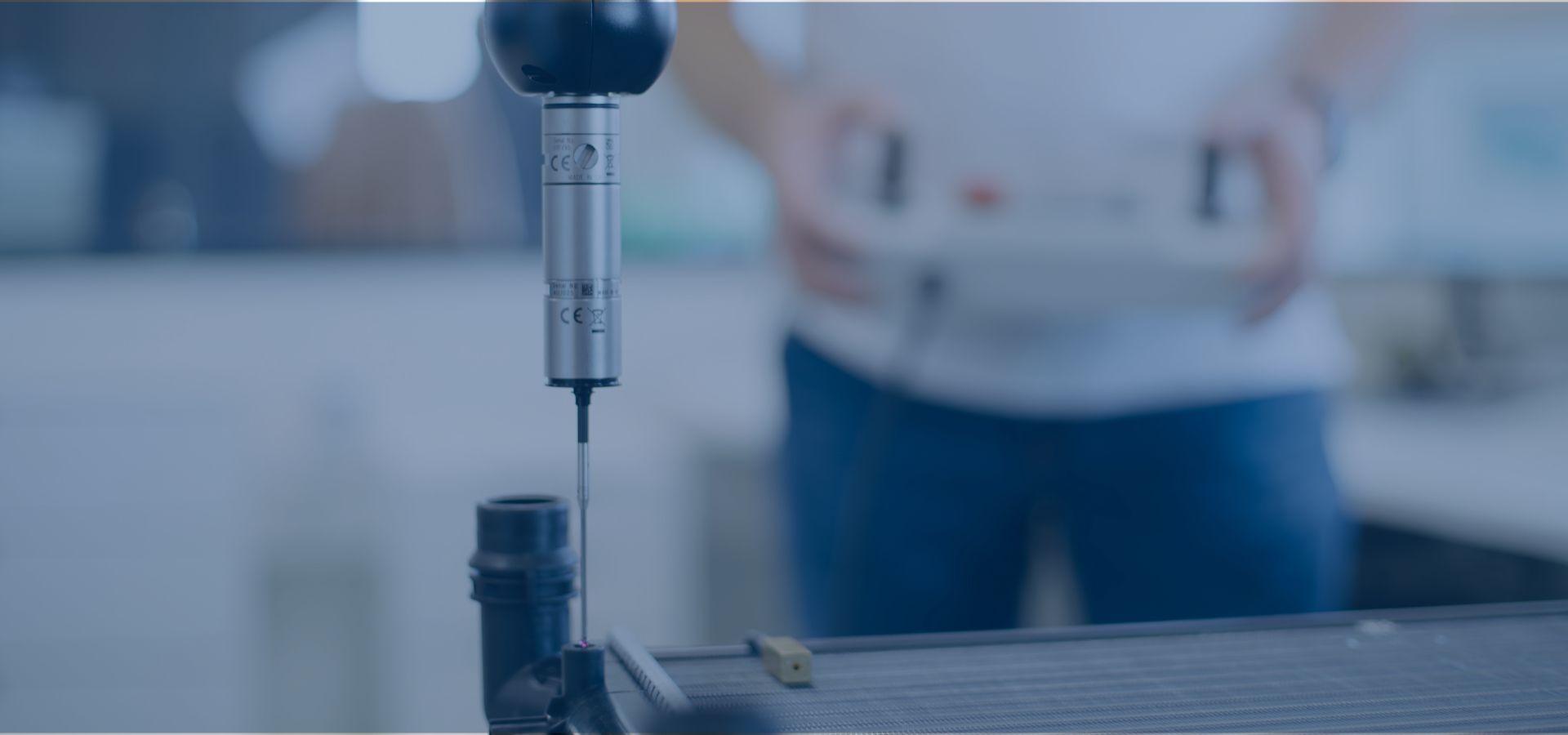
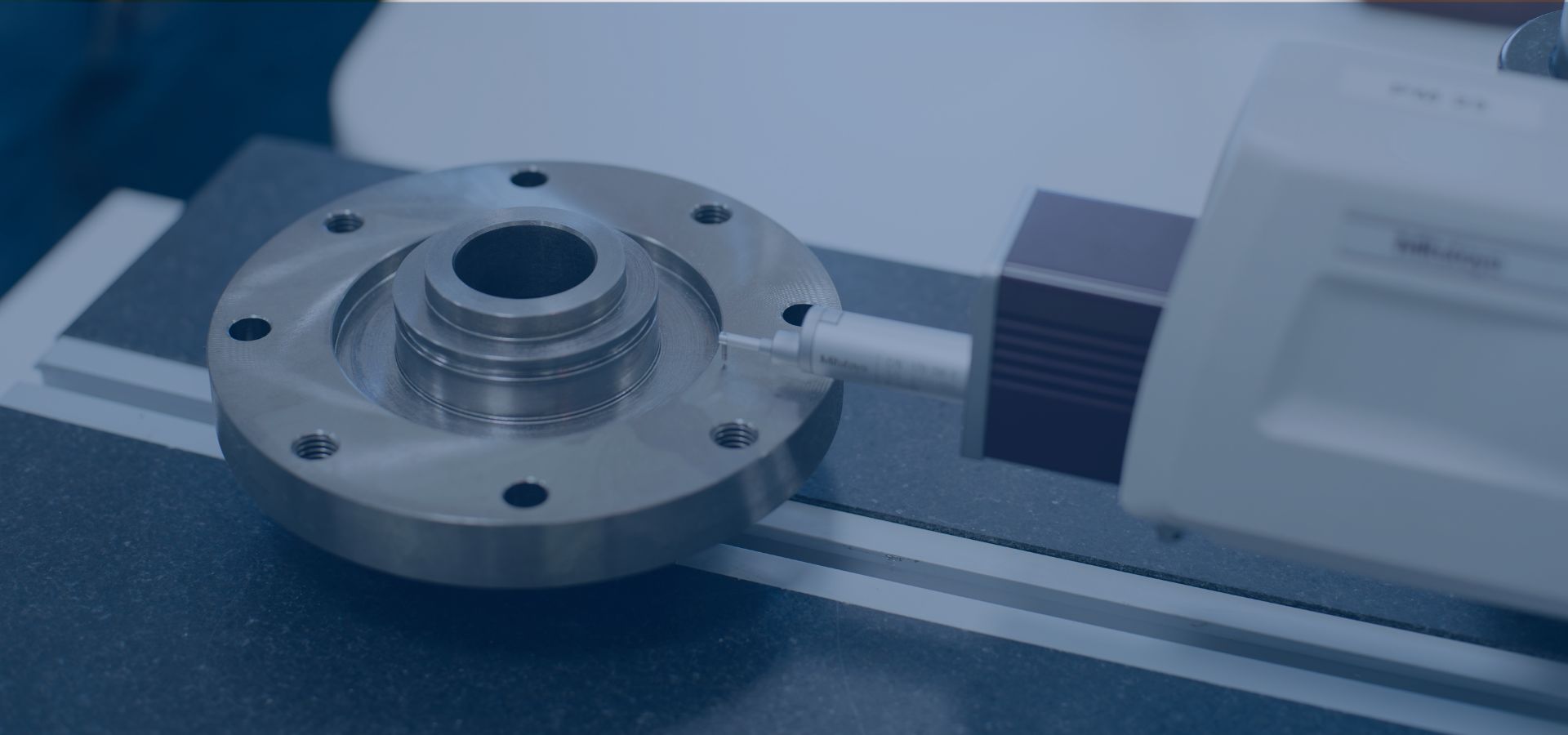
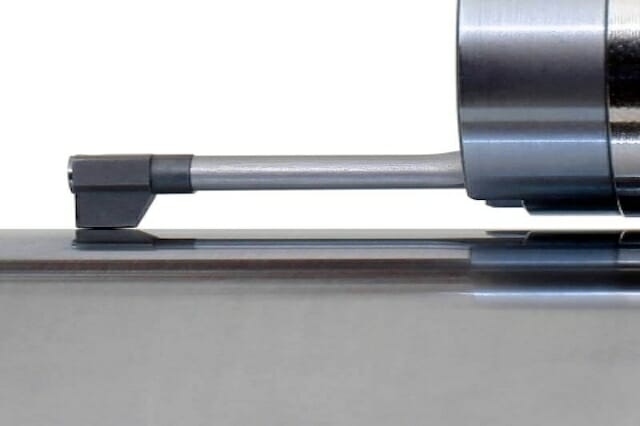
Tactile roughness measurement is still the most commonly used method for determining surface roughness and waviness measurement. With this test method, a measuring head moves over a defined measuring section.
A diamond tip is attached to this measuring head. It moves into the grooves and flutes. The test device measures the deviation of the test head and uses this to determine the center line of the structure.
The average deviation from this center line is ultimately the parameter Ra, which is specified in the tactile measurement of surface roughness.
The unit of measurement is the micrometer. Tactile measuring methods are preferably used for surface roughness from 0.1 micrometers.
The problem with tactile roughness measurement is its linear approach. Particularly when measuring waviness, you must therefore always ensure that the measuring section is approached at right angles to the shaft front.
Optical measurement methods for surface roughness and waviness
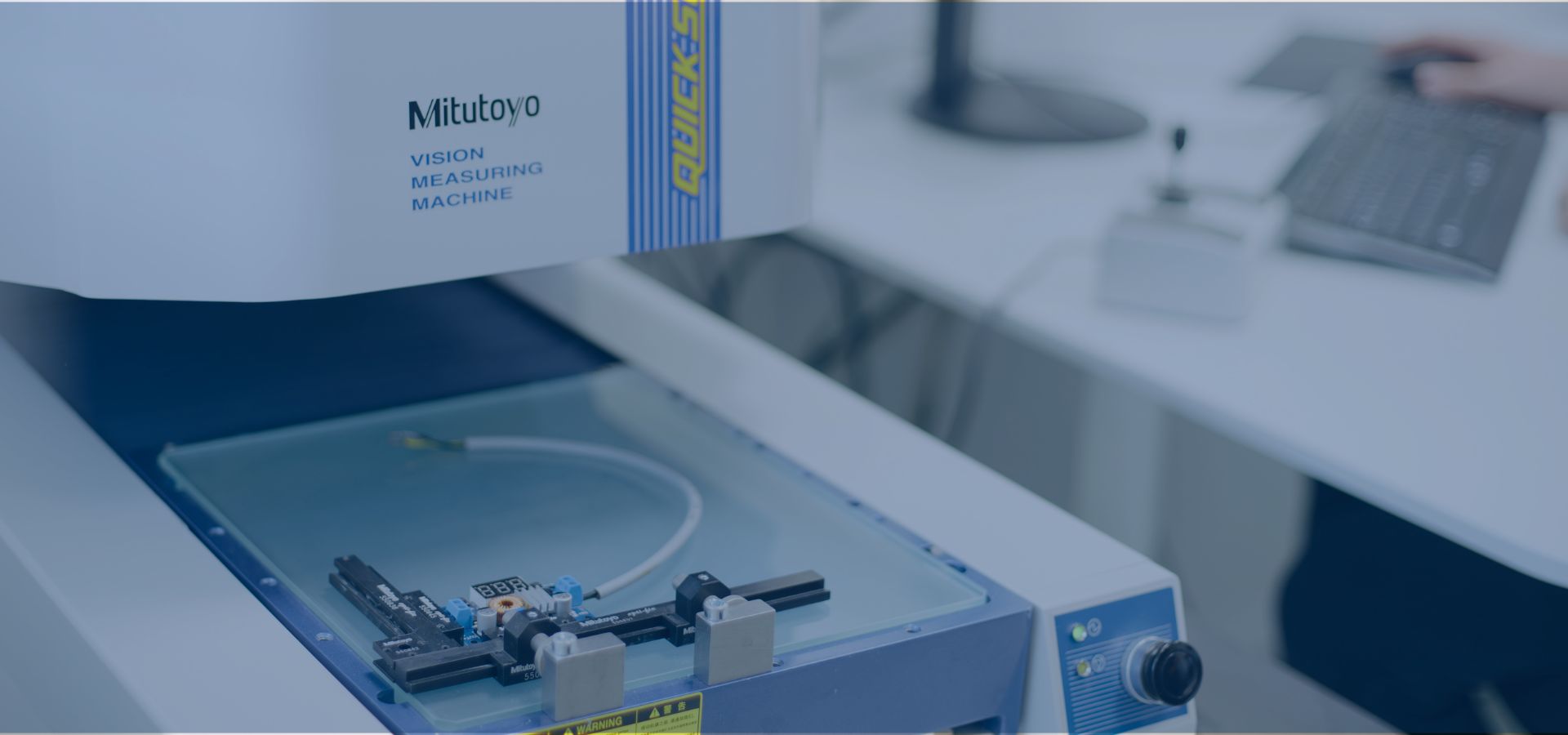
Tactile measurement methods are being supplemented by optical inspection methods and in some cases have already been replaced. There are numerous advantages to optical surface measurement:
- Faster measurement of surface roughness
- Linear and planar (topographical) methods possible
- Very high resolutions available
- Non-contact measuring method
Various test methods are available for optical surface measurement. All methods are constantly being further developed. Linear, confocal measurement methods with point sensors tend to be advantageous for determining the defined roughness of surfaces.
They are very fast and can offer useful additional functions, such as roundness measurements. It can also be used for 3D surface measurement, but is quite slow in this approach.
In addition, the linear, optical measuring methods have the same problem when testing for waviness as the tactile methods.
You must check in advance whether the measurement path is transverse or parallel to the wave front. You will only get a valid result when measuring waviness with a transverse measurement.
The white light microscope or white light interferometer has established itself for 3D surface measurement. It irradiates a defined surface and can create a highly precise, topographically correct image within a few seconds.
In addition to the output of precise measurement values, the structure is marked in color during 3D surface measurement. The question of the direction of a measuring section does not arise with 3D measurement.
The surface is always viewed as a whole and evaluated accordingly. Non-linear detection has particular advantages when measuring waviness. The risk of viewing a sample from the wrong direction is eliminated.
Finally, optical surface measurement for roughness or waviness excludes the possibility that the measurement method itself has an influence on these parameters.
Instead of a “scratching” diamond head, the surface is only irradiated with a laser beam or white light. Both methods have practically no effect on the structure of the surface.
Forecast of the development of surface measurement
Overall, it can be said that optical testing methods are making great strides forward.
They are becoming faster, more precise, more convenient and can cover ever larger measuring ranges. This suggests that the future of surface measurement belongs to optical methods.
The advantages are obvious: detailed recording and evaluation of a surface roughness makes 100% inspection of all components possible, even for large series, as long as the surface measurement can be carried out in a short time.
However, the general development of computer technology provides precisely this for optical surface measurement: continuous inspection of all products using automated 3D surface measurement to measure waviness and test for surface roughness is exactly what the industry needs.
Deviations can be easily detected with this surface measurement and faulty parts can be rejected. Sustainable surface measurement ensures the required product quality, especially for inexpensive but highly stressed parts such as roller bearings.