

Malformations during casting and melting: Blowholes
Shrinkage cavity means “depression”. In metallurgy, blowholes are unwanted cavities that occur when metal solidifies.
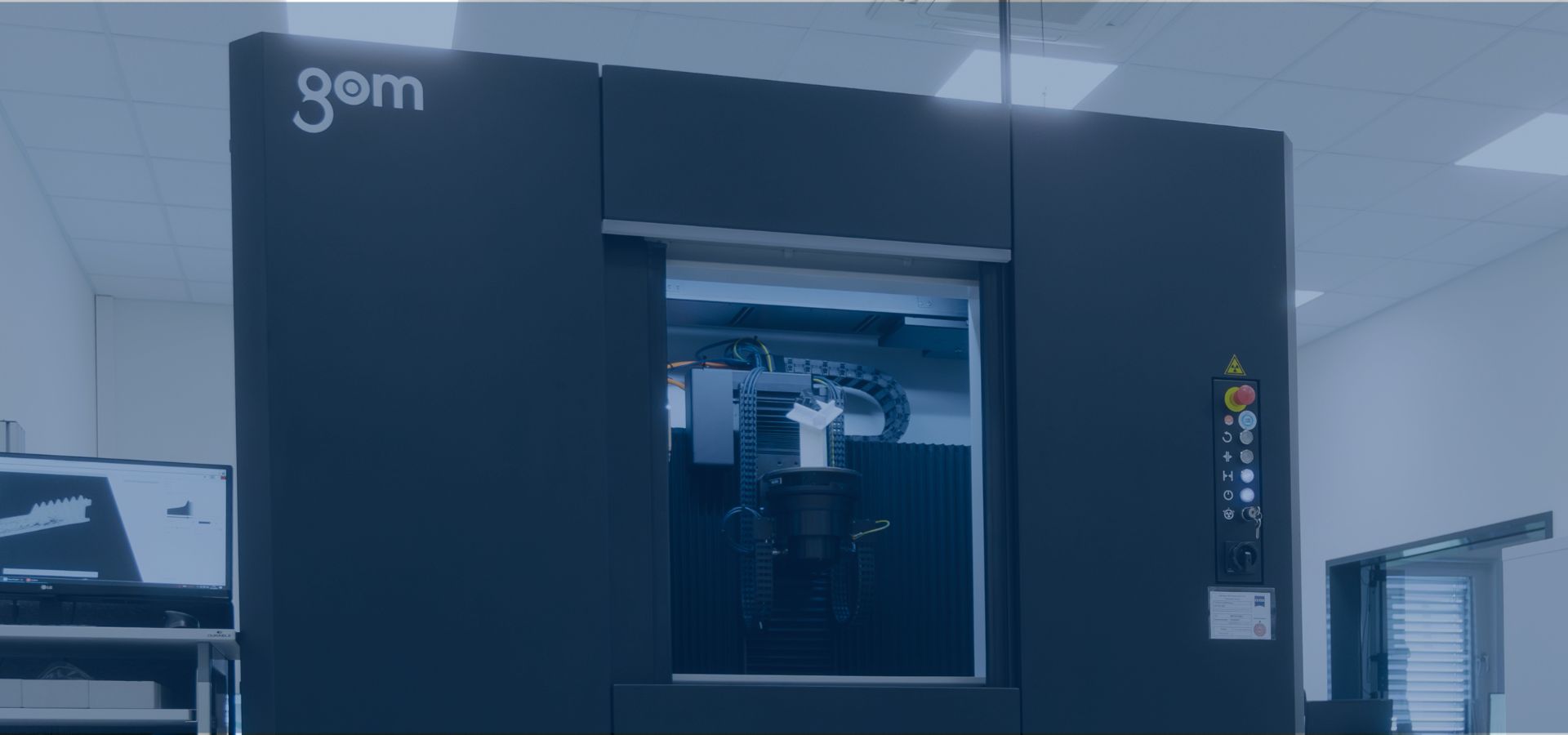
The resulting casting defects can mean the rejection of the entire component. The process of clearly identifying blowholes and eliminating the causes of their formation is known as blowhole testing or blowhole analysis. These CT measurement methods are an essential part of modern quality assurance. Using various testing methods within industrial computed tomography, blowholes can be identified quickly and precisely and displayed in a visualized measurement report.
Formation of blowholes
The cavities are created by specific properties that a material has at the point of solidification. The thicker-walled and more solid a component becomes, the more difficult it is to create a void-free structure.
Basically, the volume of any metallic material shrinks during solidification. However, the extent of this shrinkage varies greatly: cast iron with nodular graphite only loses 0-4% of its volume during solidification.
With magnesium-aluminum alloys, however, shrinkage can be up to seven percent. The greater the tendency of a material to shrink, the more likely it is that shrinkage cavities will form.
The actual shrinkage cavity only describes this one phenomenon: the formation of a cavity in a casting due to shrinkage during solidification.
All other causes for the formation of cavities in molten metals do not count as blowholes or are referred to as “non-genuine blowholes”.
Prevent the formation of blowholes
The feeder and riser are part of every casting. The feeder feeds the molten metal into the cavity. The risers allow the air to escape from the cavity.
The risers get their name because the molten metal rises in them. The most effective way to avoid the formation of blowholes is to equip a casting with a sufficient number of risers and to ensure a sufficient, uninterrupted and reasonably fast supply of molten metal.
With a well-designed casting process, shrinkage cavities also occur – but ideally they only form in the risers. As these are separated anyway, they are irrelevant for the quality of the casting.
Variants of the real blowholes
These defects are divided into “open” and “closed” blowholes. “Open” blowholes occur at the transition point between the feeder or riser and the workpiece.
The sudden solidification and resulting shrinkage of the metal can continue into the base material at these points. This leads to the characteristic depression around the entry and exit points of the molten metal.
In addition to these entry and exit points, offsets, edges and changes in the cross-section of the casting are susceptible to shrinkage cavity formation.
Open shrinkage cavities can be managed quite well by designing the casting sufficiently. Either the casting must be re-milled at the critical points or the shrinkage cavity formation is incorporated into the design of the casting in a technically tolerable manner.
Closed blowholes are not visible inside a wall. They are much more difficult to localize. Imaging procedures such as X-ray or ultrasound testing are required to detect them.
Depending on the characteristics, a simple target/actual comparison of the specific density can be used to determine the presence of blowholes. As the exact volume of a casting is known, the use of a high-precision scale is sufficient for this purpose. This makes it easier to identify rejects.
Formation of the blowhole
The depressions and cavities caused by shrinkage cavities do not always have to be immediately recognizable. In addition to the characteristic defects, porosity of the material after solidification is also a typical consequence of this phenomenon.
This shrinkage porosity can occur in the microscopic range and is therefore difficult to localize.
Fake and false blowholes
Not every cavity that forms in molten metal is a blowhole. Welding defects with cavity formation are not classic blowholes, although they are also serious quality defects that must be counteracted immediately.
Genuine blowholes in castings are all cavities created by the inclusion of gases.
These are usually pronounced blisters that can appear on the edges of a casting with a correspondingly sharp-edged contour.
These inclusions are particularly fatal if they occur internally and only come to light after the surface has been milled or turned off. Colloquially, these false blowholes are also known as “blowholes”. Causes for the blister formation can be
- Residual moisture in the cavity
- Precipitation of hydrogen from the humidity in the air
- Precipitation of dissolved hydrogen from the melt
The cavities caused by hydrogen in particular appear as porosity that is difficult to detect.
Measures against blowholes
Blowhole formation can be supported in two ways: adjustments to the mold and casting technique. The technical molding measures provide for the riser to be sufficiently thick and long.
A large diameter in the feeder supports the following shrinkage-preventing properties of the casting:
- Sufficient pressure during the casting process
- Maintaining the melting temperature
This is supported by the fact that the riser is thicker than the thickest wall of the planned casting. This prevents the casting from “starving”.
This happens when the melt in the feeder begins to solidify while the mold is not yet completely filled.
This also means that the feeder is always connected to the thickest-walled cavity of the mold. This allows the molten metal to solidify from the outside inwards and draw in liquid metal during the solidification process.
If necessary, several feeders can also be installed. This is a major challenge for the synchronous casting process. However, this process is unavoidable for some molded parts.
Casting measures against blowholes
Casting technology measures include, for example, tempering the mold before and during casting.
However, this is only possible with metal pairings of mold metal and workpiece metal in which the melting points are sufficiently far apart.
One example of this is aluminum die casting in steel moulds. Aluminum has a melting point of 600 °C, whereas steel has a melting point of 1400 °C. In this case, however, additional heating of the steel mold is only necessary for small series or individual pieces.
For economic reasons, however, a sand casting process would be chosen instead of a milled steel mold. The hot box process established for this purpose was developed for precisely this reason.
The cavity is formed in a molding sand, which in turn is placed in a metal box. The metal box and sand can then be heated as required and cooled in a very controlled manner.
This prevents the formation of blowholes quite reliably, but is also very costly. In the normal die casting process, additional heating of the steel mold can usually be dispensed with, as the mold heats up on its own due to the molten metal.
However, the first shots made with the still cold mold are usually rejects due to its high shrinkage porosity.
Problems due to porosity
Porosity, which can be caused by gas bubbles or shrinkage porosity, reduces the strength of a workpiece. Any area with high porosity can no longer absorb the calculated shear, compressive or bending forces.
In addition, the shrinkage porosity may create a rough surface that can only be filled again with makeshift measures such as filling and overpainting.
In most cases, the visual defects caused by shrinkage porosity are not accepted by customers.
The only way to deal with porosity and especially shrinkage porosity is to prevent it or to move it to areas where it is not critical.
If a casting has to be reworked anyway, porosity on the surface can be removed at the same time.
Blasting processes may be sufficient for this purpose. As a rule, however, machining processes such as grinding, turning or milling are required to remove the shrinkage porosity.
3D measurement technology in the treatment of blowholes
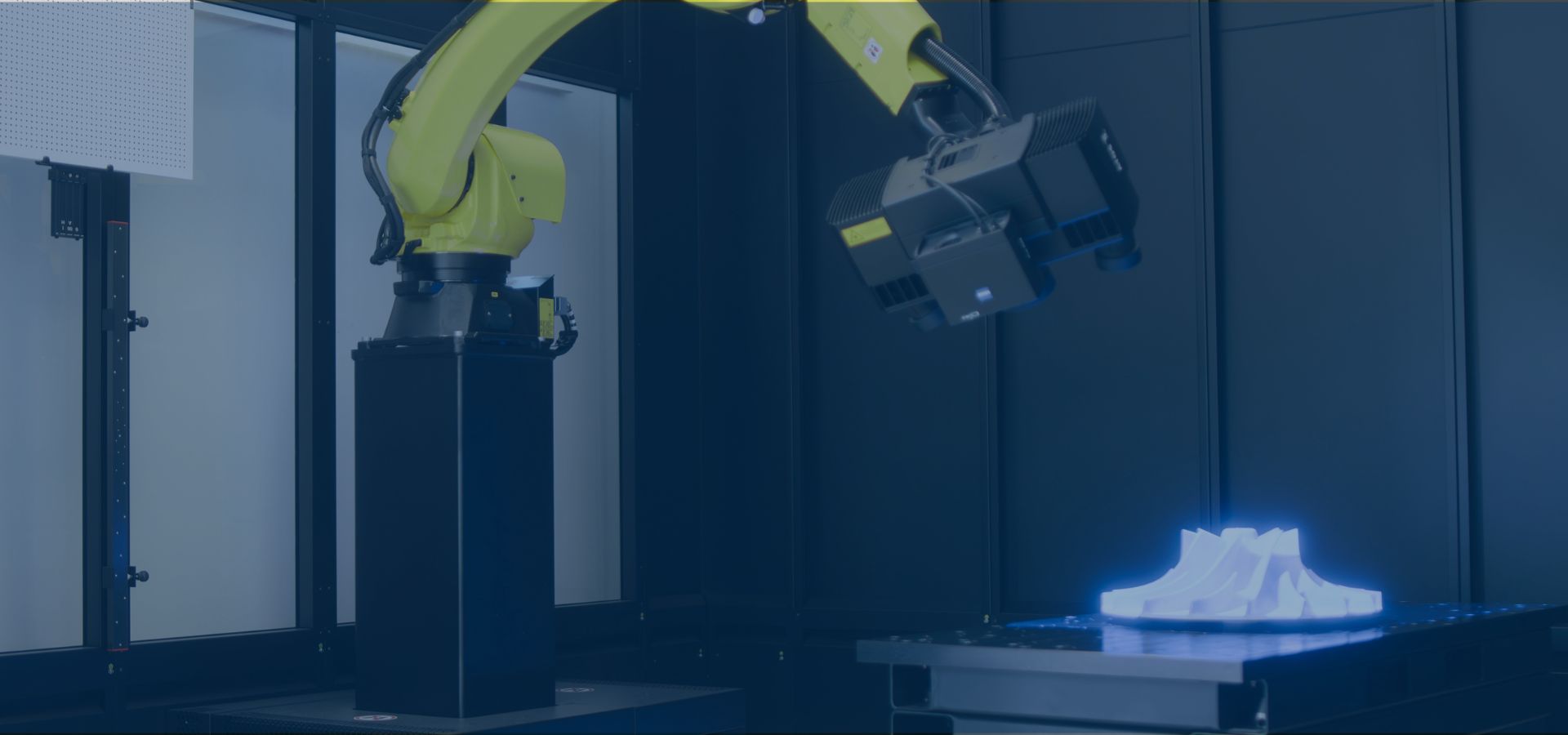
3D measurement technology can detect porosity that may be barely visible to the naked eye by scanning the surfaces with high precision.
The laser scanning processes available today allow sufficiently high resolutions. In addition, 3D scanning processes are significantly faster and more reliable than manual assessment.
This makes high-performance 3D measurement technology a powerful tool for quality assurance, especially in the series production of cast parts.
100% tests for geometry and shrinkage porosity allow trends in shrinkage cavity formation to be identified quickly, so that the casting processes can be adjusted early enough to counteract this.
This prevents the formation of faulty parts, rejects and waste of raw materials and energy.
How do I recognize blowholes?
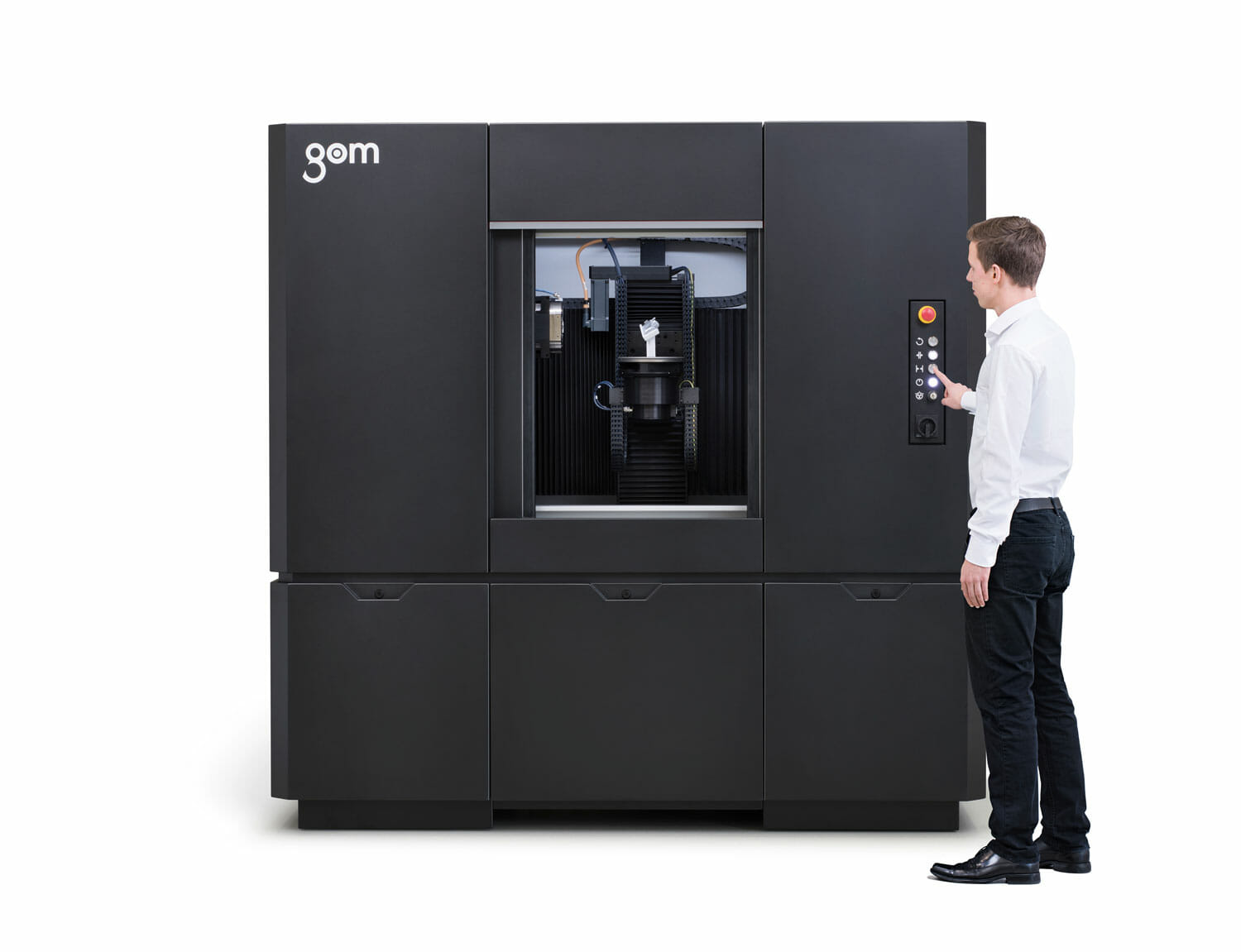
Due to the high complexity of various components, blowholes are often not very easy to detect and are hidden in the inner workings of test specimens. Modern X-ray methods can help here by revealing internal structures in which blowholes are often hidden. Precise results are achieved with industrial computed tomography and, in particular, with cavity testing.