


Measurement technology
Measurement technology is used in scientific and technical fields for the experimental determination of quantifiable values.
Among other things, measurement technology provides engineering science with data for assessing the properties of technical devices and equipment, such as their proper functioning or their reliability and quality.
To fulfill its tasks, measurement technology makes use of some special areas of mathematics, namely combinatorics, error calculation, probability calculation and statistics.
The terms measurement, measurement procedure, measurement method and measurement principle have a special meaning in measurement technology.
Basic concepts of measurement technology
Basic concepts of measurement technology are summarized in DIN 1319. The term measurement therefore refers to an experimental process with which you record the specific value of a physical quantity as a multiple of a unit or another reference value.
The physical quantity in question is called the measurand, the determined value is called the measured value. It consists of the measured numerical value with the associated unit specification.
Related terms in measurement technology are counting, a process that provides a unitless numerical value for the number of similar events or elements, and testing.
You not only determine a measured value, a number or another quantifiable property, but also establish whether these values fulfill specified criteria.
Basics of measurement technology
The physical or chemical effects and laws on which a measurement is based are referred to as the measuring principle. Their concrete application by means of technical solutions, such as measuring devices, is called the measuring method.
Measuring principles belong to the field of theoretical metrology, while applied metrology deals with the measuring methods.
Physical effects and correlations that are important in measurement technology result in a matrix of input and output measured variables of a mechanical, electrical, thermal, magnetic or optical nature.
For example, you can convert a mechanical input signal into a mechanical output signal of different sizes using a lever. Tactile 3D measurement technology converts mechanical input signals from sensors into electrical signals that are suitable for automated acquisition and further processing.
In measurement technology, measurement methods are general rules that define the way in which a specific measured value is determined.
They are divided into direct and indirect, deflection and compensation methods as well as analog and digital measurement methods. A direct measurement method directly determines the required variable, i.e. the task variable and the measured variable are the same.
With an indirect measurement method, however, the measured variable must be converted into the task variable. For example, the change in length of a coil spring under an axial load can be determined directly by comparing it with a length scale.
Physical and mathematical background of measurement technology
In the classification of measuring technology, this process is also a deflection method and an analog measuring method. The measured value is determined using the position of a reference point at the moving end of the spring relative to a length scale fixed at the fixed end, and not only can whole scale divisions be read off, but intermediate values can also be interpolated.
As the change in length of a spring is proportional to the force acting on it, provided that the elongation in particular remains small compared to the spring length and Hook’s law applies to the spring material, it can also be used in measurement technology for indirect measurement of the force.
In this case, the force F can be determined using the equation F = c * s from the change in length s and the spring stiffness c or, according to DIN 2089, the spring rate R.
Under the specified conditions, the latter depends on the shear modulus G of the spring material, the wire and coil diameters d and D respectively, as well as the number of coils n, i.e. for a given spring it is a constant that is determined by the equation c = G * d^4 / (8 * D³ * n).
With Newton’s second law F = m * a and the gravitational constant or acceleration due to gravity g, a force measurement can also be used in metrology to indirectly determine the mass of an object.
However, since the value of the gravitational constant is location-dependent, mass determination with spring balances requires a location-based calibration of the measuring devices if a higher degree of accuracy is required.
This is not necessary for a compensation method that compares an unknown mass, using suitable measuring devices such as beam scales, with known, in particular calibrated mass standards.
Application of measurement technology
With this application of measurement technology, a change in the gravitational constant has the same effect on both sides of the balance. Although this mass determination with a beam balance is a direct measurement method, indirect measurement using a spring balance is often preferred in metrology because it is easier to implement.
Although you can only make a yes/no statement regarding the agreement of the weights in both weighing pans when measuring with a beam scale via the zero point adjustment, this is an analog and not a digital measuring method.
Even without a scale, the scale continuously indicates the degree of compliance via the pointer deflection.
Although the measuring range depends on the number of decimal places, as with a digital display, measuring devices with dials are also not digital measuring technology if the last digit is not advanced by leaps and bounds, as is usual with mechanical speedometers in cars or Ferraris meters for measuring electrical energy in Germany.
Various methods
These measuring devices are also examples of integrating measurement methods that record and display the integral of a measured variable such as speed or electrical power over time.
If you use a compensation method to quantitatively evaluate the deviation from the zero point instead of a zero point adjustment, this variant is referred to as the difference method in measurement technology.
A good example of this is the measurement of electrical resistances using a Wheatstone bridge circuit, which also leads to another variant.
The resistance is originally measured by zeroing the current flow between two parallel paths of a bridge circuit containing the required resistor and three known resistors, one of which is adjustable.
In this application of the measurement technique, the required resistance results from the equation Rx = R2 * R3 / R1. Alternatively, you can measure the current flow or the voltage difference between the two paths using three known resistors and calculate the required resistance using Kirchhoff’s laws. If the supply voltage U0 is known, it obeys the equation U = (R3 / (R3 + Rx) – R1 / (R1 + R2)) * U0.
With a Wheatstone bridge, you can determine resistances that are smaller than the known R1 to R3, and thus possibly also smaller than the measuring range of available measuring devices.
Such a measuring method, which maps a non-quantitative measurand to another measurand that lies within the measuring range of the available measuring devices, is called the substitution method or comparison method.
In measurement technology, a single measuring device alone is often not enough to carry out a measurement.
Examples of different methods of measurement technology:
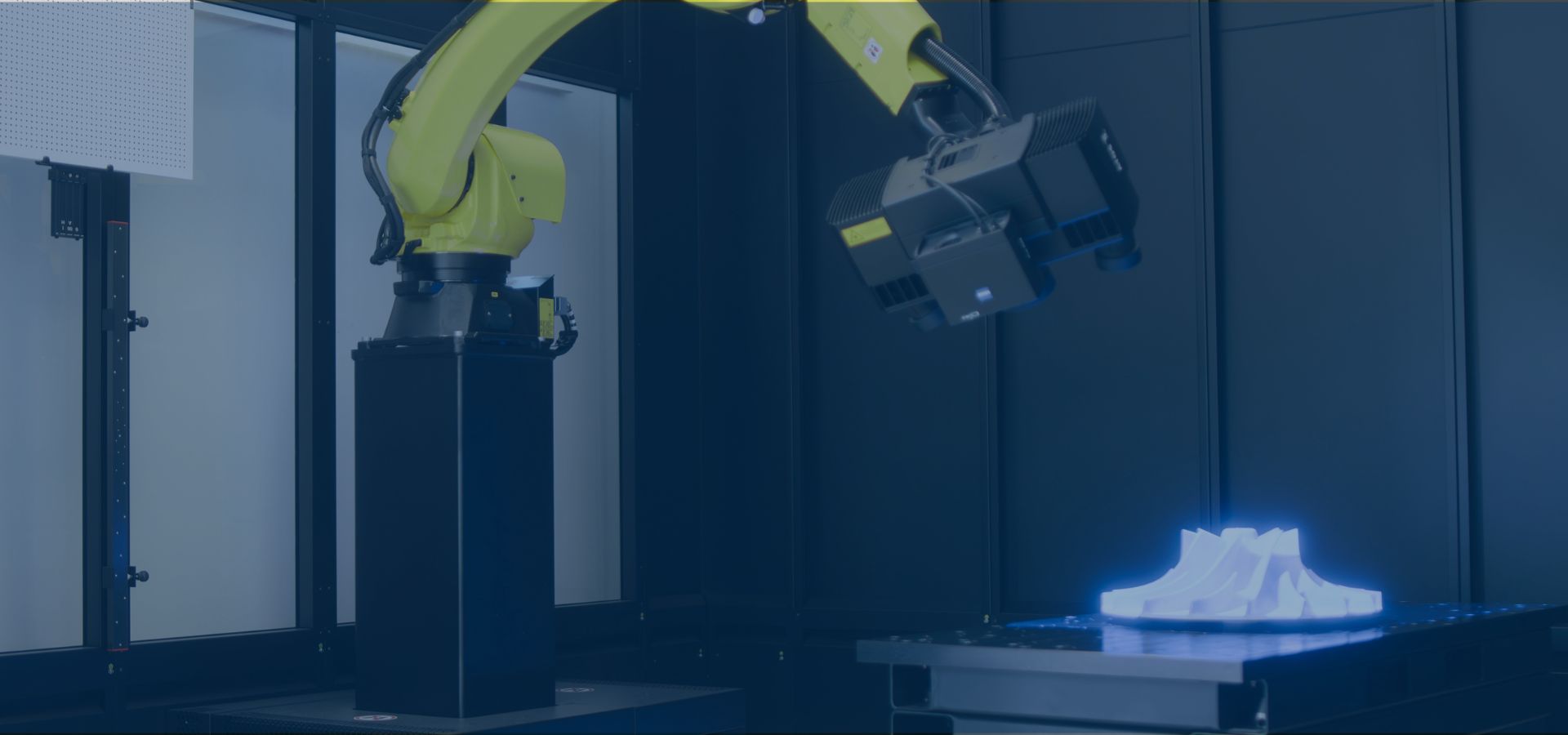
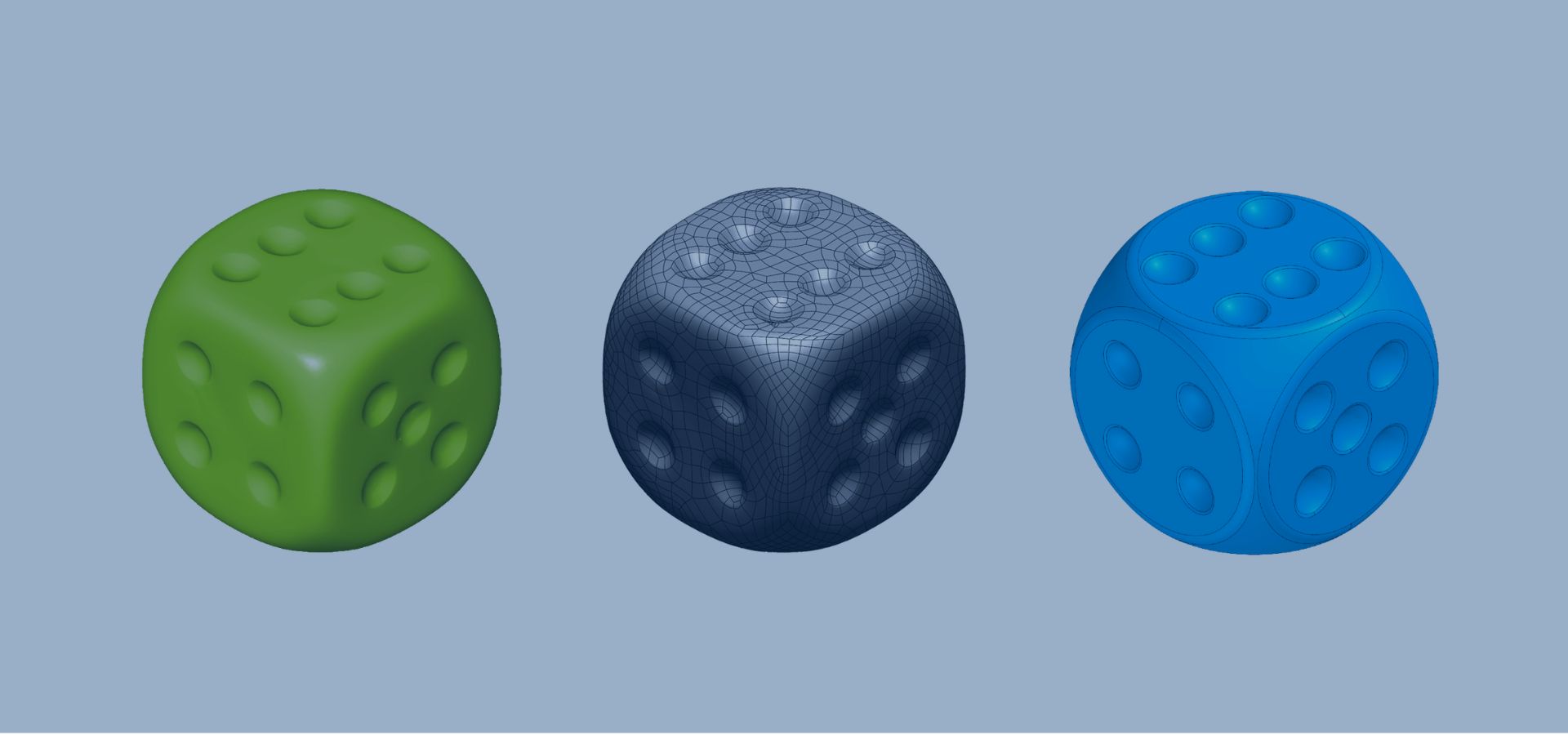
- Optical 3D measurements
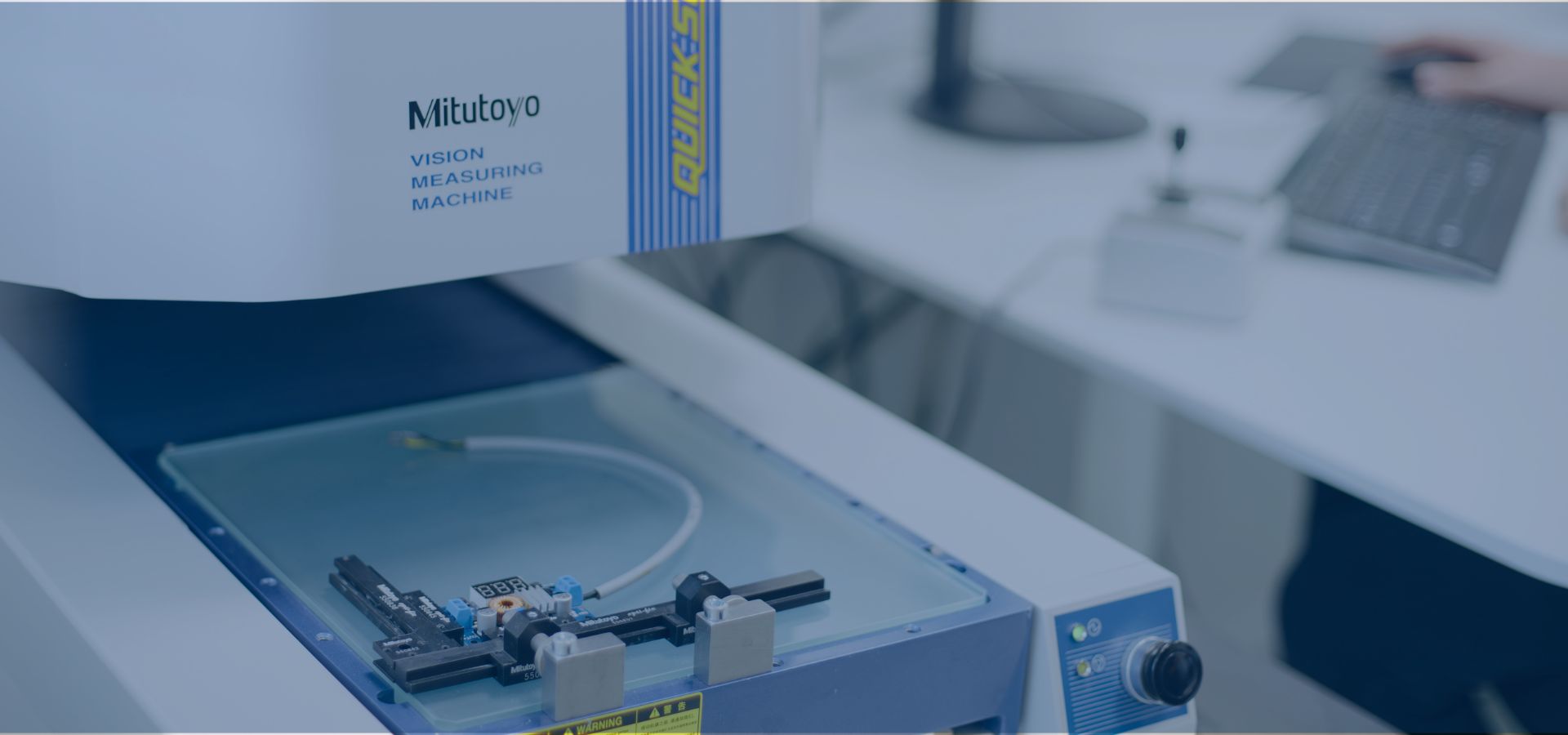
- Optical 2D measurements
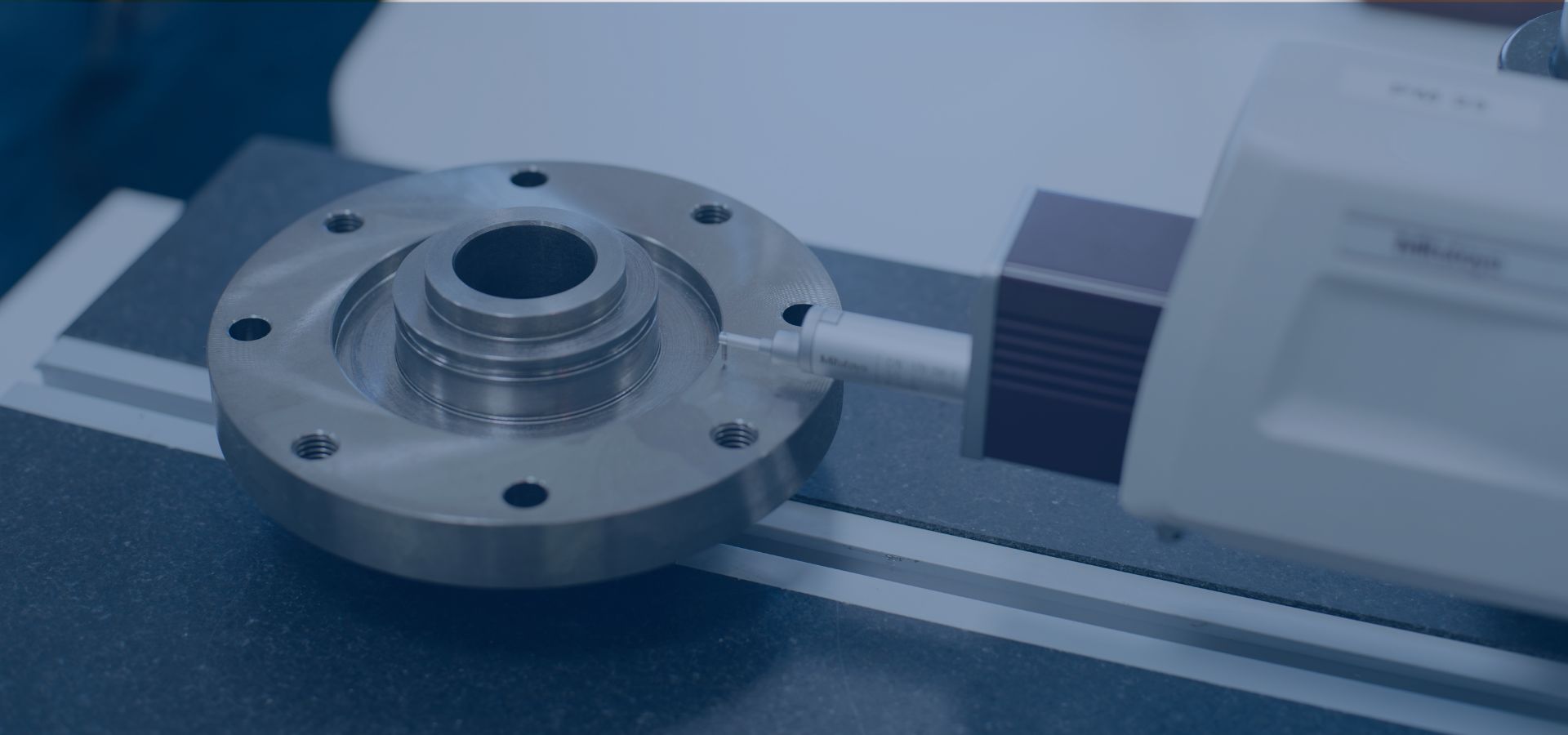
- Tactile measurements
- Surface measurements
- Industrial computed tomography
Additional measuring elements are required, for example a voltage source with a constant and known voltage value, or additional measuring devices for recording additional measured variables. Measurement technology refers to the entirety of all interacting measuring elements as a measuring system or measuring device and its structure as a measuring chain.
A measurement chain generally consists of the measurement object, the measured variable recording, the measurement signal processing, the measured value output as well as supply and auxiliary devices.
The measured variable recording provides the primary measurement signals. The measurement signal processing provides the measured value for the measured value output through conversion. In all parts of the measurement chain, the measurement technology must also take into account influencing and disturbance variables from the environment.
Measurement technology characterizes measuring elements using two parameters. They result from the characteristic curve of the measuring element, which represents a relationship between input and output signals in a static state as a function of the form y = f(x).
In measurement technology, the measuring element sensitivity is the differential quotient of the output and input signal ? = dy / dx. Its reciprocal value is called the measuring element coefficient.
These parameters are only dimensionless if the input and output signals have the same unit, for example when the measured value is converted by a measuring amplifier that adapts the measuring signal to the measuring range of the subsequent elements. In this case, the sensitivity corresponds to the amplification factor.
For low measuring element sensitivities or sufficiently low requirements on the accuracy of your measurement technology, you can replace the differential quotient with the difference quotient.
In practical measurement technology, there are deviations between the actual value of the output variable of a measuring element yi and the setpoint value ys that you expect for a given input value.
These measuring element errors can be represented as absolute or relative errors: Fabs = yi – ys = ?y or Frel = (yi – ys) / ys = ?y. Measurement technology classifies errors according to their type as zero point errors and linearity errors.
A zero point error F0 = y0i -y0s is present if the measuring element delivers an output value that deviates from the setpoint value at an input value of zero. In measurement technology, a linearity error is a deviation of the actual characteristic curve from the setpoint characteristic curve, which is a straight line or may be approximated as such.
The determination of measuring element errors is called calibration in measurement technology. It can be carried out according to individual factory or general standards such as DAkkS or DIN EN ISO / IEC 17025.
Calibration is an official test to determine whether a measuring device or a measuring standard complies with the relevant legal regulations. When calibrating your measuring technology, on the other hand, you change a measuring element so that its errors either reach a minimum value or remain within specified tolerance limits.
These changes are generally permanent and are usually made in practice using either the fixed point method or the tolerance band method.
With the fixed point method of measurement technology, you bring the nominal characteristic curve at the zero point or at the start of the measuring range and at the end of the measuring range or scale to coincide with the actual characteristic curve.
Here, the largest linearity error specifies the minimum of the measuring element error. With the tolerance band method, you shift the target characteristic curve so that the differences between the target and actual characteristic curve fulfill a suitable minimum criterion.
Suitable criteria in measurement technology are, for example, the minimum of the sum of squared errors or the Chebyshev approximation, which minimizes the largest deviation occurring in the measurement range.
In addition to the static characteristic curve of measuring elements, dynamic properties must also be taken into account in measurement technology, which may depend on the measuring range.
The output variable generally follows the input variable with a finite delay. This time response of measuring elements is usually determined by means of step or sinusoidal changes in the input signals. Measurement technology refers to the time response of the output signals as step response or sinusoidal response.
If the transfer function of a measuring element in its measuring range can be described by a first-order differential equation, then it reaches the value (1 1/e) * ?, i.e. 63.2 % of its final value, after one unit of time.
The deviation is reduced to five percent after three time units and to one percent after five time units. If the transfer function corresponds to a higher order differential equation, then the transient response of the measuring element is either oscillating or creeping. The latter is characterized by an inflection point in the step response.
With the sine response, the delay of the output signal results in a phase shift to the input signal.
A double-logarithmic representation of the quotient of output and input signal over frequency is called amplitude response in measurement technology. In contrast, the phase response is a semi-logarithmic representation of the phase angle over the frequency.
You can estimate the suitability of a measuring element for measurements in a specific frequency range using the so-called cut-off frequency or cut-off frequency fG if the time behavior of the measuring element can be represented by a first-order differential equation.
This frequency describes the point in the diagram of the amplitude response at which the ratio of the amplitudes of the output and input signal is 1/?2, i.e. around 71 %. Measuring devices are only suitable for a measurement if the cut-off frequency is at least ten times as high as the frequency of the input signal.
Evaluation of measurement results
A basic rule of measurement technology when evaluating measurements is that a measurement result is the sum of a determined measured value and a measurement uncertainty.
The measurement uncertainty includes systematic and random errors. Both must be determined using suitable mathematical methods. The basic quantities and base units in metrology are defined internationally by the SI system of units, the abbreviation of which is derived from the French term Système International d’Unités.
If you need further units, derive them from the basic units meter, kilogram, second, thermodynamic temperature, electric current, luminous intensity and amount of substance using basic mathematical operations.