

Orientation in space with the 3D coordinate system
The 3D coordinate system is the established concept for defining an orientation in space.
It describes the exact position of a point and how to find it in space. The 3D coordinate system is of great importance in general geometry, analysis and especially in vector calculus.
Three-dimensional calculations are the basis for imaging, plastic processes and for milling programs in optical 3D measurement.
Thanks to the increase in computing power, graphical and productive applications with the 3D coordinate system are now much cheaper than they were a few years ago.
Structure of a coordinate system in space
A 3D coordinate system is an extension of the 2D coordinate system, which in turn is based on the number line.
It is used in mathematics and physics to represent ratios, trends and extreme values.
In applied mechanics, the coordinate system is used to graphically represent or simulate bodies.
The basis of the coordinate system is its axes. They are generally described as the X, Y and Z axes. However, these names are only placeholders that can be replaced by other designations depending on the application.
In a 2D coordinate system, the x-axis (abscissa) serves as the horizontal line and the y-axis (ordinate) as the vertical line. The Cartesian coordinate system, also known as the “axis cross”, is used to clearly assign values of rational functions.
In general algebra, the representation of surfaces is only achieved by drawing several functions in the same axis cross.
With the help of higher mathematics, more precisely differential functions and integrals, even complex contours can be represented exactly.
The contours can be intersected to form surfaces of any complexity. The axis cross defines four quadrants that can represent values in all positive and negative ranges.
In a 3D coordinate system, the axes are extended by the Z-axis and are not arranged in the same way as in the Cartesian axis cross: The X-axis now runs into the depth of space, the Y-axis becomes the horizontal and the Z-axis is the vertical.
In the 3D coordinate system, the quadrants are defined as cubic spaces, which can, however, be extended infinitely. In practical applications, however, only the purely positively doped quadrant plays a role in both the 2D and 3D coordinate systems.
A 2D or 3D coordinate system is determined by its scaling. This can be the same for all axes, but does not necessarily have to be.
It may be useful to add a factor to the scaling of the individual axes. This makes it easier to display interesting sections of functions that are characterized by large extreme values, for example.
The 3D coordinate system in technical applications
In technical applications, the 3D coordinate system is used to capture, simulate and program CNC machines. In data acquisition, the 3D coordinate system is used as a reference frame for scanned objects, for example in industrial computer tomography.
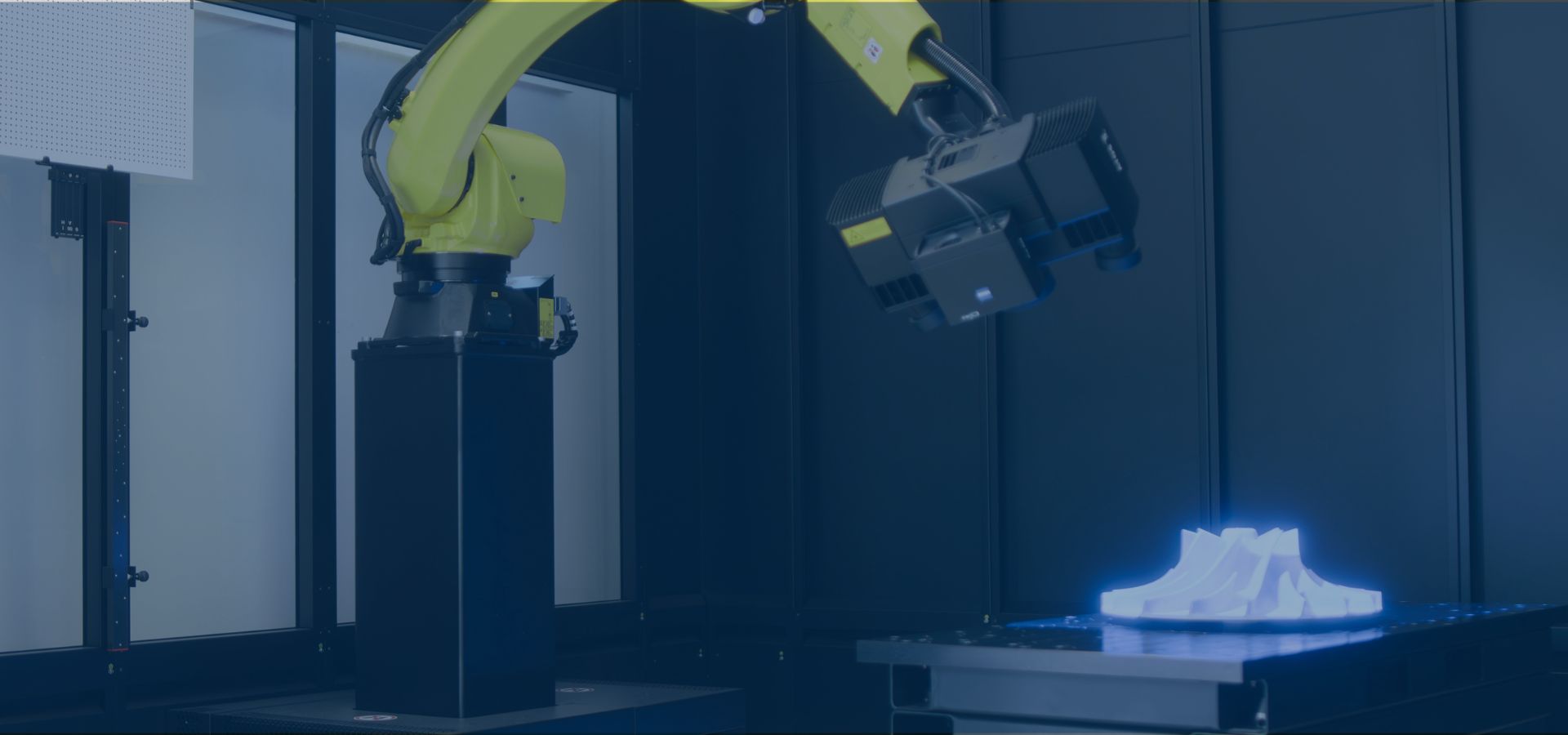
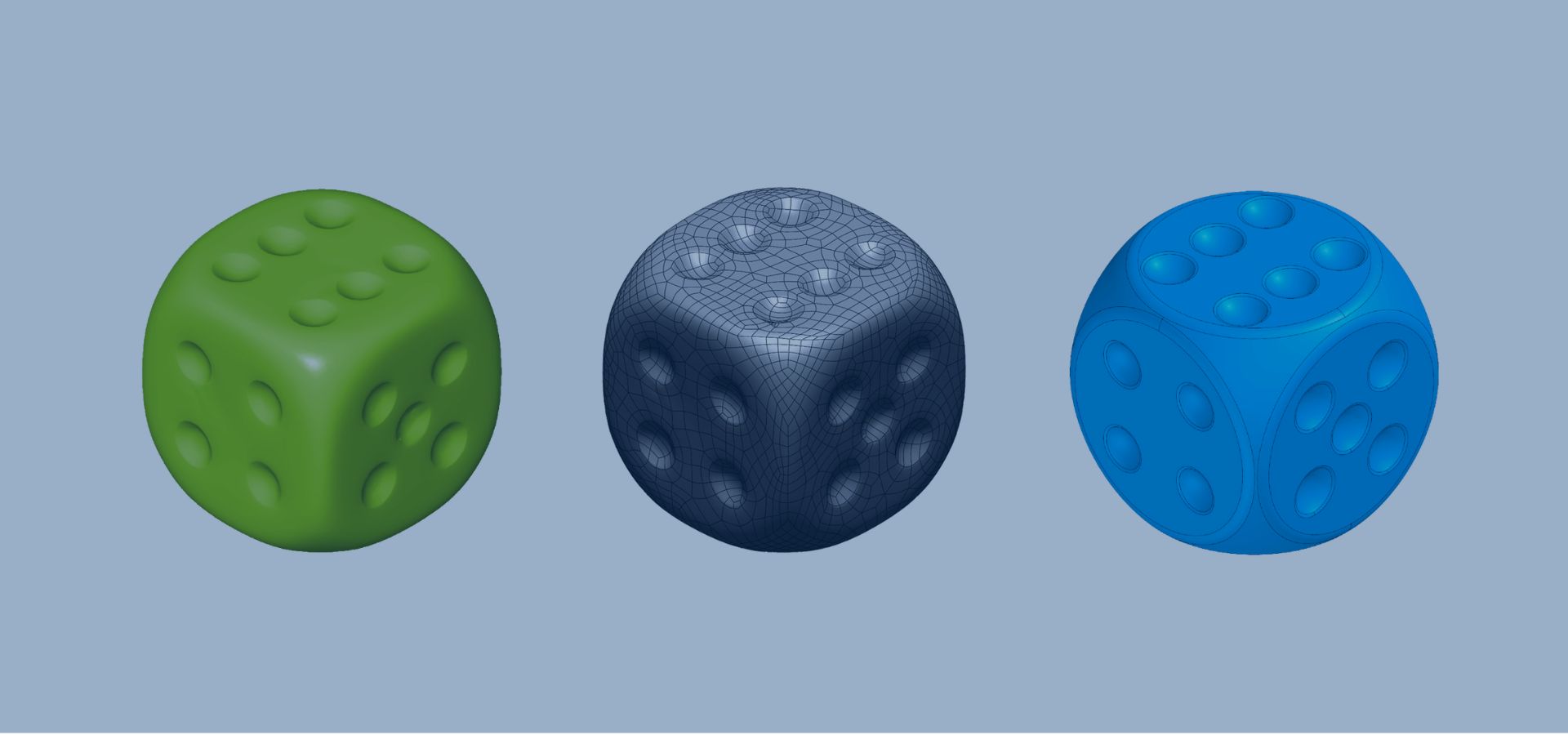
Photometry or laser scanning systems can be used to capture any object in such a way that it can be transferred to a graphic display and evaluated there. The reverse engineering process, also known as surface reconstruction, enables a complete view of the component without damaging it.
The simulation can also be created directly using design programs without having to scan a physical object first.
This is also usually the usual way. Emulators are used to program a CNC machine tool, for example a 5-axis milling machine. They can capture and convert any object so that it can be produced on a machine tool.
However, classic HEIDENHAIN or SIEMENS programming is still popular today for simple workpieces. Traditional CNC programming is based on vector calculation and is quite easy to implement.
Traditional CNC programming
Vector calculation allows precisely defined solids and positions to be represented with just a few entries. For example, it is sufficient to specify the spatial diagonal of a semi-finished block.
The 3D coordinate system of the CNC program, for example HEIDENHAIN, can already calculate the exact length, width and height of the basic block from this simple information.
All that is required are the coordinates of one of the upper corners. Example:
If the program is given the coordinates 150/250/350, it knows that the end point of the basic block for the new workpiece is 150 millimetres high, 250 millimetres wide and 350 millimetres high.
A block with the same edge lengths is calculated from this, as the zero point 0/0/0 is already pre-programmed. The cycle is then precisely defined by specifying the coordinates and tools for each step.
3D coordinate systems in adaptive processes
In addition to subtractive processes, such as machining, adaptive processes are playing an increasingly important role.
The 3D printing systems developed from prototyping are now so advanced that they are also being used for initial applications in series production.
The programming of adaptive systems is very similar to subtractive methods due to the use of a 3D coordinate system.
3D coordinate systems in quality assurance
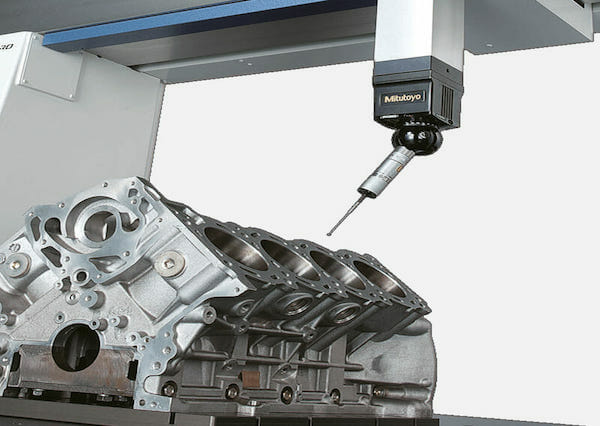
The 3D coordinate system also plays a major role in quality assurance. Here, the 3D coordinate measuring systems are the standard application, especially for large and complex components. Visual measurement reports can be used to optimize and correct test specimens.
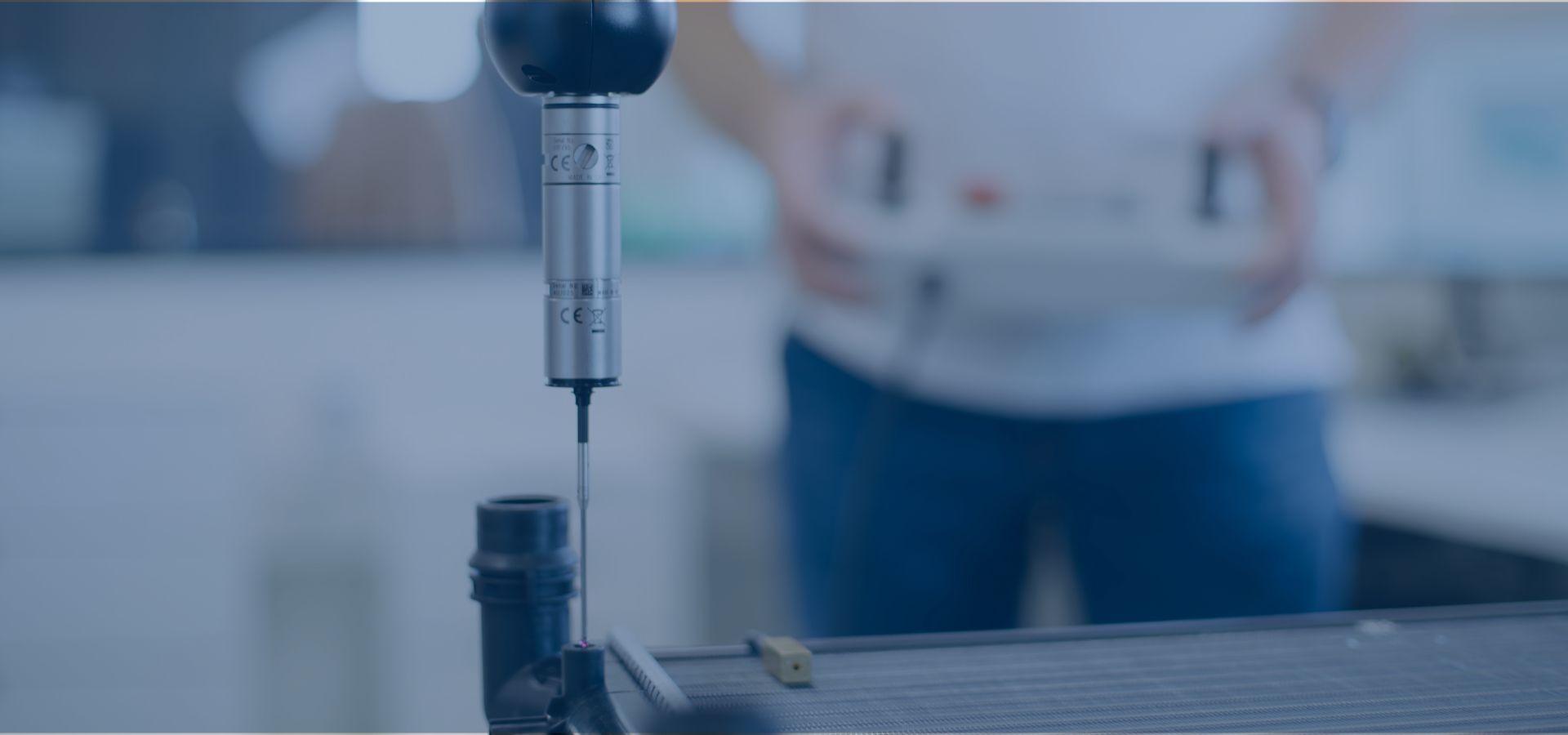
In these systems, the product to be measured or inspected is placed in the working area of a gantry robot.
This then guides a highly sensitive probe to all the designated points and thus ensures a valid target/actual comparison.
The traditional scanning systems are quite precise, but they are also very slow and expensive. They are therefore increasingly being replaced by photographic processes or the so-called laser scans.
These non-contact methods are much faster and cheaper. In terms of precision, they already come close to traditional tactile methods.
Programs for imaging three-dimensional bodies
Today, users have a large selection of programs at their disposal for graphical processing or the creation of three-dimensional bodies.
20 years ago, enormous computing power was still required to create plastic graphics. The programs and their products were still extremely expensive.
This has changed fundamentally with the increasing and cheaper computing power of modern computers.
In fact, there are already free programs available for users to download today that can be used to create very interesting graphics and illustrations.
The basic principle of these systems is always very similar: if you know your way around a 3D coordinate system, you can quickly implement these applications.
Here is a selection of various 3D measurement technology programs for creating virtual bodies in a 3D coordinate system:
Freecad
As its name suggests, this free tool can already create a body with any contour. However, Freecad files can only be saved in its own format.
This makes data migration for other applications, such as 3D printers or CNC milling, almost impossible. However, it is an excellent training program for high-quality applications.
Turbocad
This already semi-professional program is still very inexpensive at around 100-150 euros. It offers comprehensive functionality and is barrier-free when migrating data.
AutoCAD 3D
This program was the standard tool for technical draughtsmen for many years and still is. Originally designed as a 2D program, it could also be used as a 3D program from 2012.
It impresses with its high degree of distribution and problem-free data migration. However, it is quite expensive. The manufacturer offers free versions for pupils and students.
Inventor
Inventor was designed from the outset as a design program that allowed free form design with the help of a 3D coordinate system.
Inventor is a standard program in design departments and costs well over a thousand euros per license. However, Inventor also offers schools contingents of free licenses.
The very advanced rendering and animation functions in Inventor are very interesting. With the appropriate computing power, Inventor already creates photorealistic models that can also be animated.
Cartia
Cartia is one of the high-end applications with a very wide range of functions. In addition to free construction in a 3D coordinate system, Cartia also offers numerous extensions for simulations of all kinds.
These include flow curves, stress curves and heat conductors. Cartia is one of the most expensive CAD systems and requires a long training period.