

Envelope principle for defining tolerances
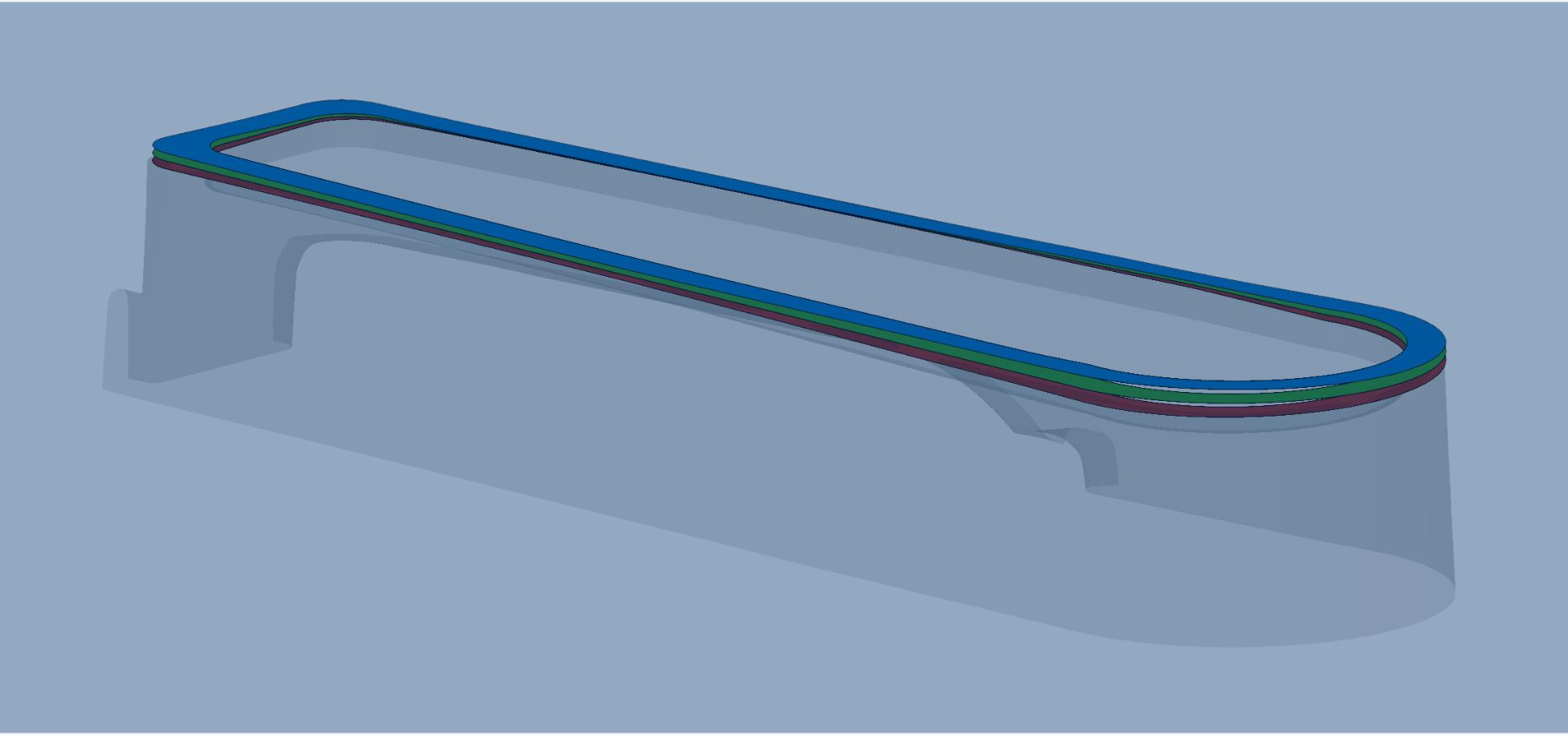
The envelope principle describes how a tolerance is to be understood. A dimension is always intended as an “ideal line”.
The tolerances form a double-sided envelope within which the actual shape dimension must be oriented.
Tolerance envelope principle – benefits and requirements
The purpose of a tolerance is to make it possible to manufacture a specific dimension on the product. A tolerance is particularly important for individual components of an assembly.
If the components are manufactured outside their defined tolerance, the assembly can no longer be put together afterwards. To avoid this, the ideal dimension plus its tolerances are entered on the drawing for production.
A tolerance should always allow a certain value below and above the ideal dimension. These two imaginary minimum and maximum lines form the envelope principle described in DIN 7167.
Achieving dimensional tolerances with the envelope principle
It does not matter how narrow or wide the dimensional tolerances are. As soon as a dimension moves outside the defined tolerance, this leads to problems in the subsequent production steps.
This applies both to the tightest dimensional tolerances in precision mechanics and to comparatively coarse dimensions in the construction industry. Even in bricklaying, a deviation of just a few millimetres can cause problems when plastering or installing door frames.
In metal construction, dimensional tolerance is achieved using multi-stage processes. There are numerous possibilities for this, particularly in machining technology. A workpiece is first “roughed”.
This means that most of its unused mass is removed using rough machining tools. Roughing is followed by finishing.
This fine machining process further reduces the component until it reaches the envelope according to DIN 7167. Grinding, polishing and lapping are further processes available to achieve the ideal dimensions of the component as closely as possible.
The tighter the tolerance, the more time-consuming and expensive it is to machine the workpiece. The tolerance envelope principle must therefore always be adapted to the actual requirements.