

Ensure fits and reduce vibrations with the concentricity tester
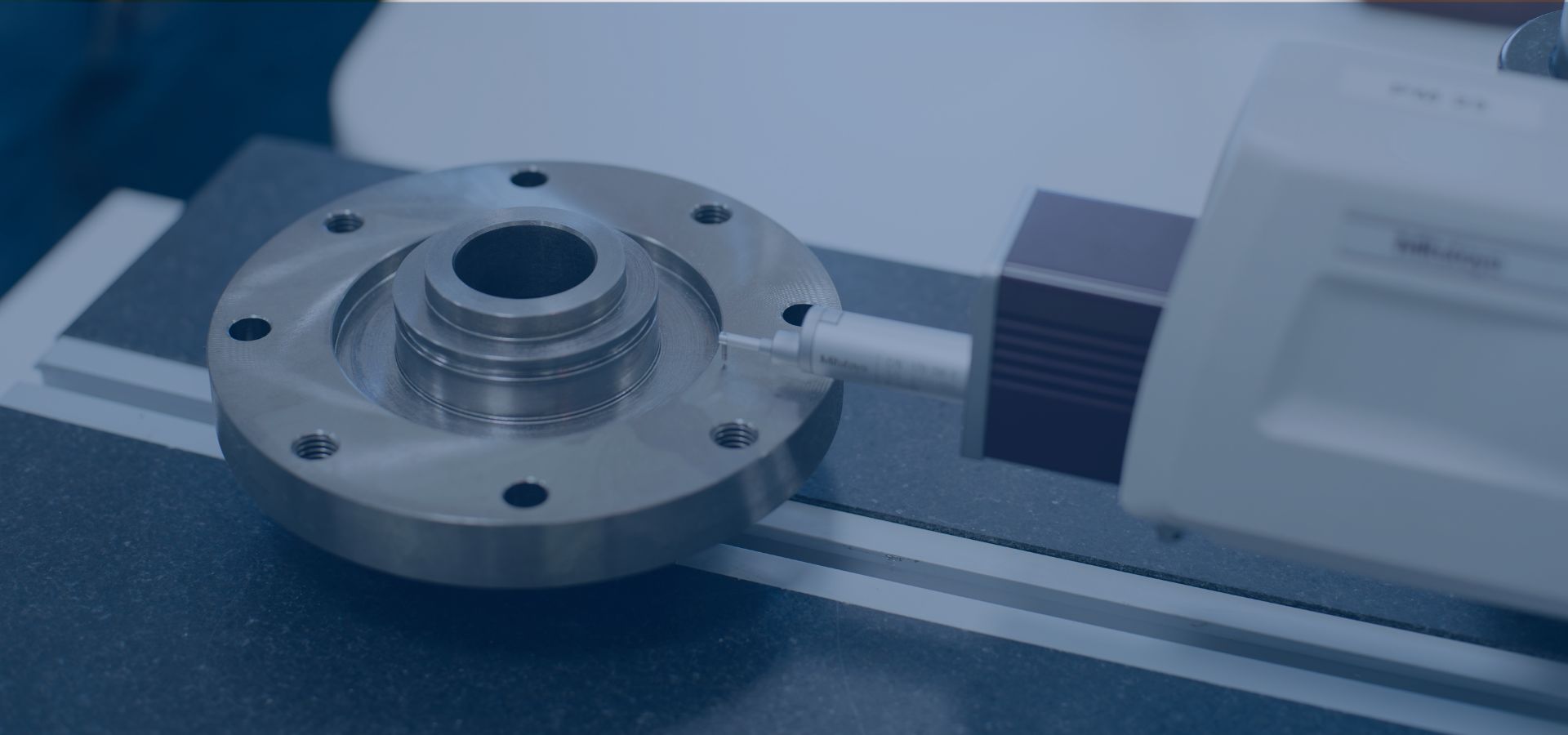
The concentricity tester is a standard test instrument used to check rotationally symmetrical components.
It is used to test numerous parameters. The concentricity tester is available as a stand-alone or integrated control unit.
mini-font-size=” font_color=” color=” id=” custom_class=” template_class=” av_uid=’av-khbt0i2n’ sc_version=’1.0′ admin_preview_bg=”]
Definition of concentricity
The radial tolerance specifies the range in which the actual profile of a rotating area may move. In contrast to the form and position tolerances, the radial tolerance is dynamic.
This means that a detected deviation from the zero line is transferred to the entire path of the rotation. This deviation must not exceed the specified tolerance at any point.
The concentricity tolerances are therefore always recorded twice: Both the axis of rotation and its mounting must be within the specified tolerance. If this is not observed, the tolerances can add up and lead to faults again.
Concentricity for rotationally symmetrical components
Rotationally symmetrical components are manufactured or at least reworked on lathes. These components have the characteristic that they must rotate or accommodate rotating elements.
Small deviations in the tolerance can quickly have a major impact. The concentricity tolerance is essentially relevant for four parameters:
- Fits
- Sliding seat
- Vibration
- Coaxiality
First of all, rotational symmetry ensures that a round component and its intended mount fit together. During assembly, the components must slide into each other without resistance.
It is irrelevant whether the components are also rotated in relation to each other. The important thing with this fit is that it does not matter at what angle the components are rotated in relation to each other.
The concentricity tolerance ensures that they can always be assembled together. A typical example of this is a lid on a tin can or a bearing in its fit.
The sliding fit becomes important when the components are twisted in relation to each other. This includes, for example, all shaft-bearing combinations, especially plain bearings. The shaft must always be able to rotate freely and without tilting in the bearing shell.
The sliding fit is then guaranteed. This rotation is subsequently supported by appropriate lubrication. However, the sliding fit must first be ensured by the concentricity tester.
Vibrations occur when rotationally symmetrical parts become unbalanced at high rotational speeds. This not only puts a great deal of strain on the component itself, but also on the entire assembly.
The concentricity tolerance therefore decreases as the rotational speed increases. The more precisely a shaft has been manufactured, the faster it can be rotated. Concentricity testing therefore plays a particularly important role in engine and vehicle technology as a whole.
Coaxiality is the assurance that all components on a shaft lie on the same axis of rotation. Even if the components are asymmetrical, their pivot point must always be congruent with the axis of rotation of the entire shaft.
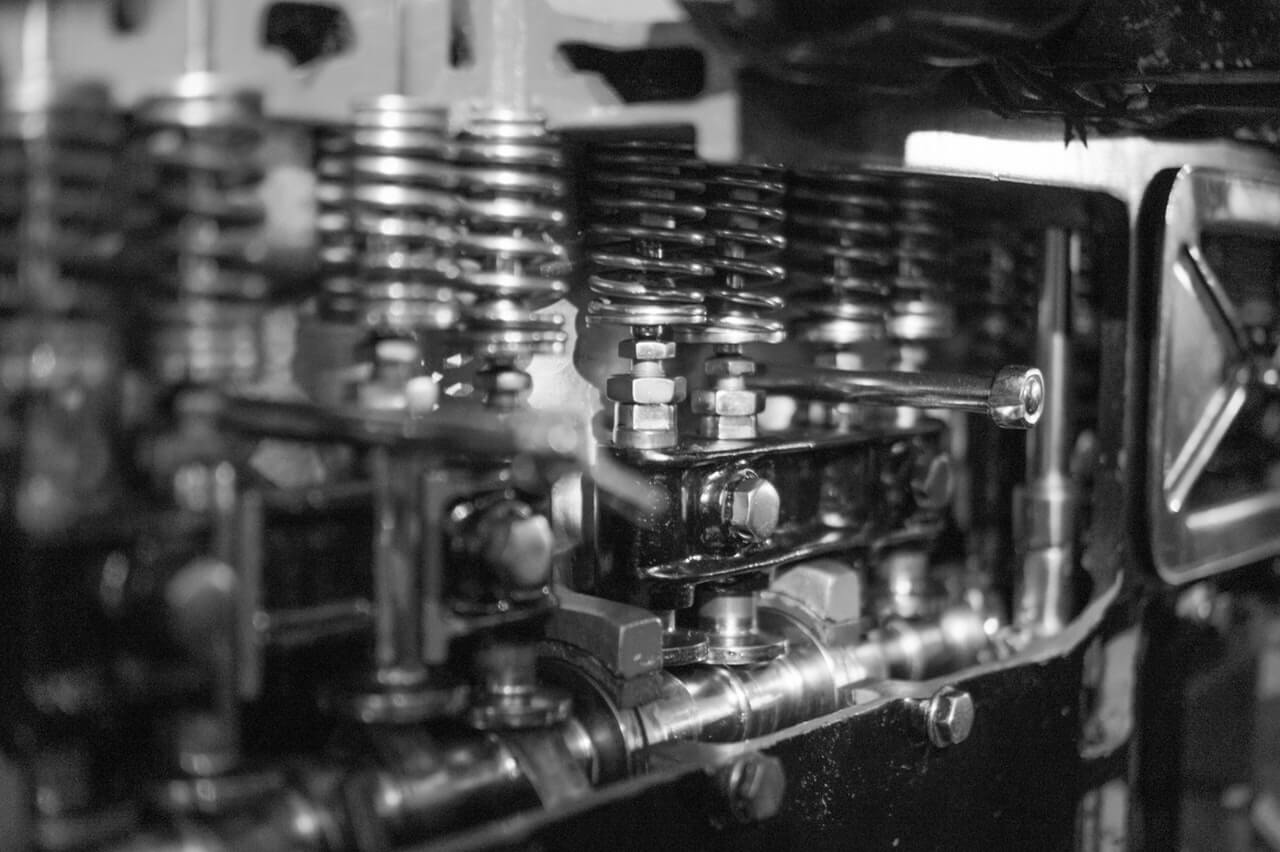
This congruence is called“coaxiality“. A typical example of coaxiality is the camshafts on an internal combustion engine. These shafts used for valve control have numerous elliptically shaped protrusions.
These protrusions are the cams that push the valves into the engine compartment and allow them to slide out again. Camshafts also have grooves with which they can accommodate the gears or pulleys for the drive. The coaxiality ensures that these deviations in the shape of the shaft are located exactly where they are needed.
Producing a concentric run-out
The required concentricity tolerance is usually produced on lathes. A component is clamped on these cutting machines and set to a defined rotation.
During rotation, a cutting tool approaches the component and removes material. The resulting chips give these processing machines their name.
One-sided clamping is sufficient for short components. The longer the component, the more measures must be taken to prevent “impact”. With one-sided clamping, leverage forces act on the component during machining.
To compensate for this, long components are clamped with a tailstock arranged opposite the turning spindle. Particularly long components are additionally supported with one or more quills. This prevents sagging and helps to achieve concentricity and coaxiality.
There are technical limits to the removal of material using chisels. If these are not sufficient to produce the desired concentricity tolerance, tool-free processes are available.
Grinding, lapping and polishing work with abrasive consumables to achieve the desired concentricity and the required coaxiality of the component.
The closer you get to the desired tolerance, the more important it becomes to constantly check concentricity when machining rotationally symmetrical parts.
Malfunctions from concentricity
A concentricity can be disturbed by various influencing factors:
- Elastic deformation during clamping
- Defective workpiece or tool holder
- Incorrect application of the cutting force
- Preloads in the workpiece
- Vibrations in the processing machine
Elastic deformation in the workpiece occurs primarily when it is not sufficiently supported.
Workpieces that are too long tend to sag or droop. This makes it difficult or even impossible to achieve the desired concentricity tolerance.
If the workpiece holder is defective, the shaft to be machined is not centered in the pivot point of the machining axis.
Instead of a uniform, radial rotation, the shaft performs an eccentric movement. As a result, the rotation profile is not round, but elliptical.
The contact pressure of the cutting tool must be uniform. Otherwise there is also a risk that the shaft will not be machined radially but elliptically.
A particular problem with errors in the workpiece fixture or the contact pressure is that resonances can occur. These quickly worsen the result to such an extent that the product can no longer be saved. At high speeds, there is also a risk of the shaft breaking, which poses a major risk of injury to bystanders.
Prestressing in the workpiece occurs when errors are made during casting, rolling or annealing. Stresses in a workpiece always act from the outside inwards. If the outer, stressed layer is removed by turning, the relaxation can greatly change the properties of the workpiece. It can suddenly become much more elastic or lose its coaxiality.
Vibrations in the processing machine indicate bearing damage or poor attachment to the base. For this reason, a lathe should always stand on a solid foundation in order to be able to absorb natural oscillations and external vibrations well.
How a concentricity tester works
The concentricity tester is available in three versions:
- mechanical
- electromechanical
- optical
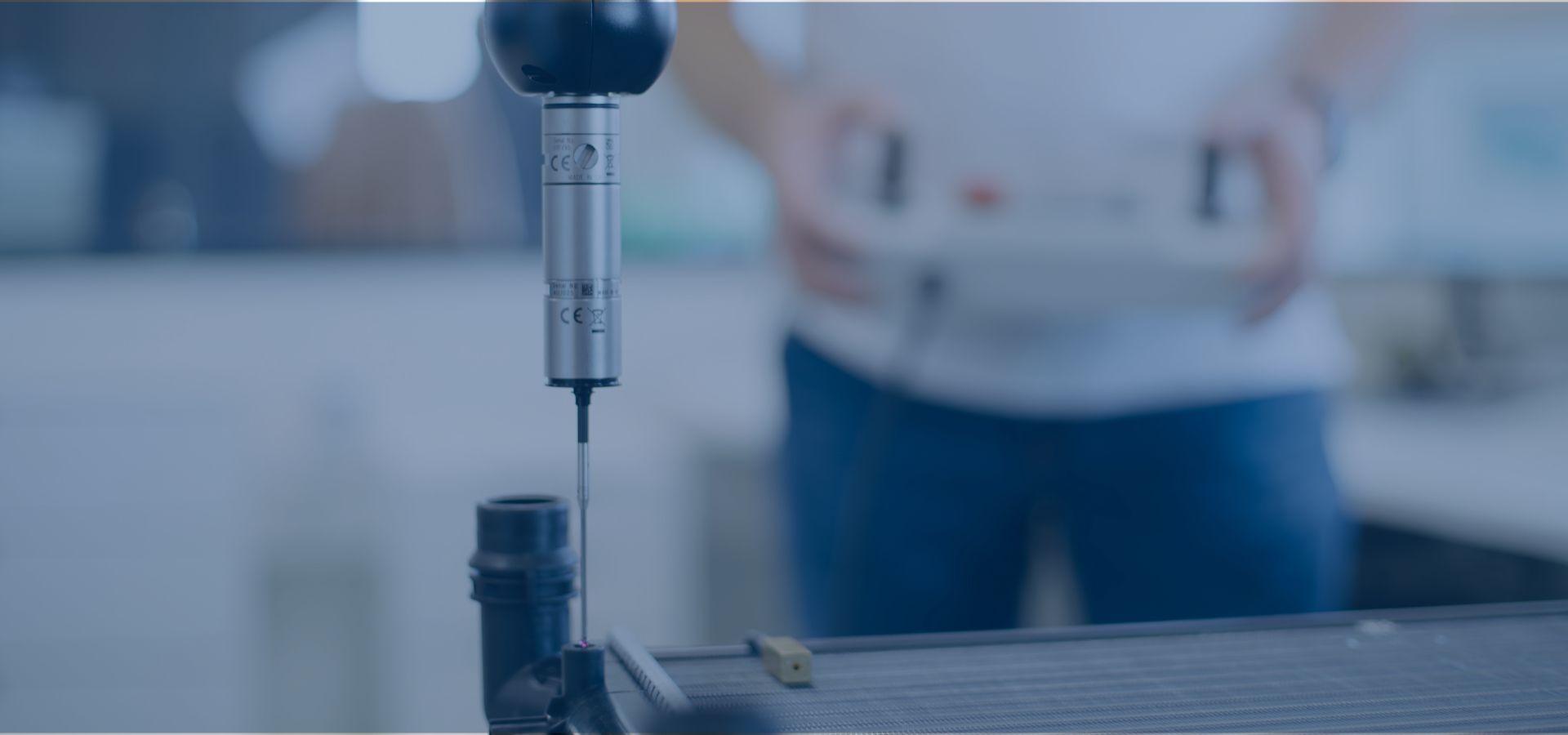
A mechanical concentricity tester is a very traditional tool that has been in use practically since the beginning of machining technology. It consists of a dial gauge and a test head.
The test head is a small wheel or ball tip which is connected to an axle. This axle slides in a guide. There is a small rack at the end of the axle.
A gear wheel engages with this rack. The gear wheel is in turn connected to the pointer in the dial gauge. Depending on the transmission ratio, the dial gauge can thus detect more or less fine deviations in concentricity.
An electromechanical concentricity tester also has a mechanical test head. However, its scanning results can be converted into electronic signals in different ways.
Some devices have a potentiometer for this purpose. Others work with opposing magnetic fields. The electromechanical concentricity tester is particularly advantageous for automated measurement.
With set parameters, the machine itself recognizes which component is within tolerance and which is a reject or needs to be reworked.
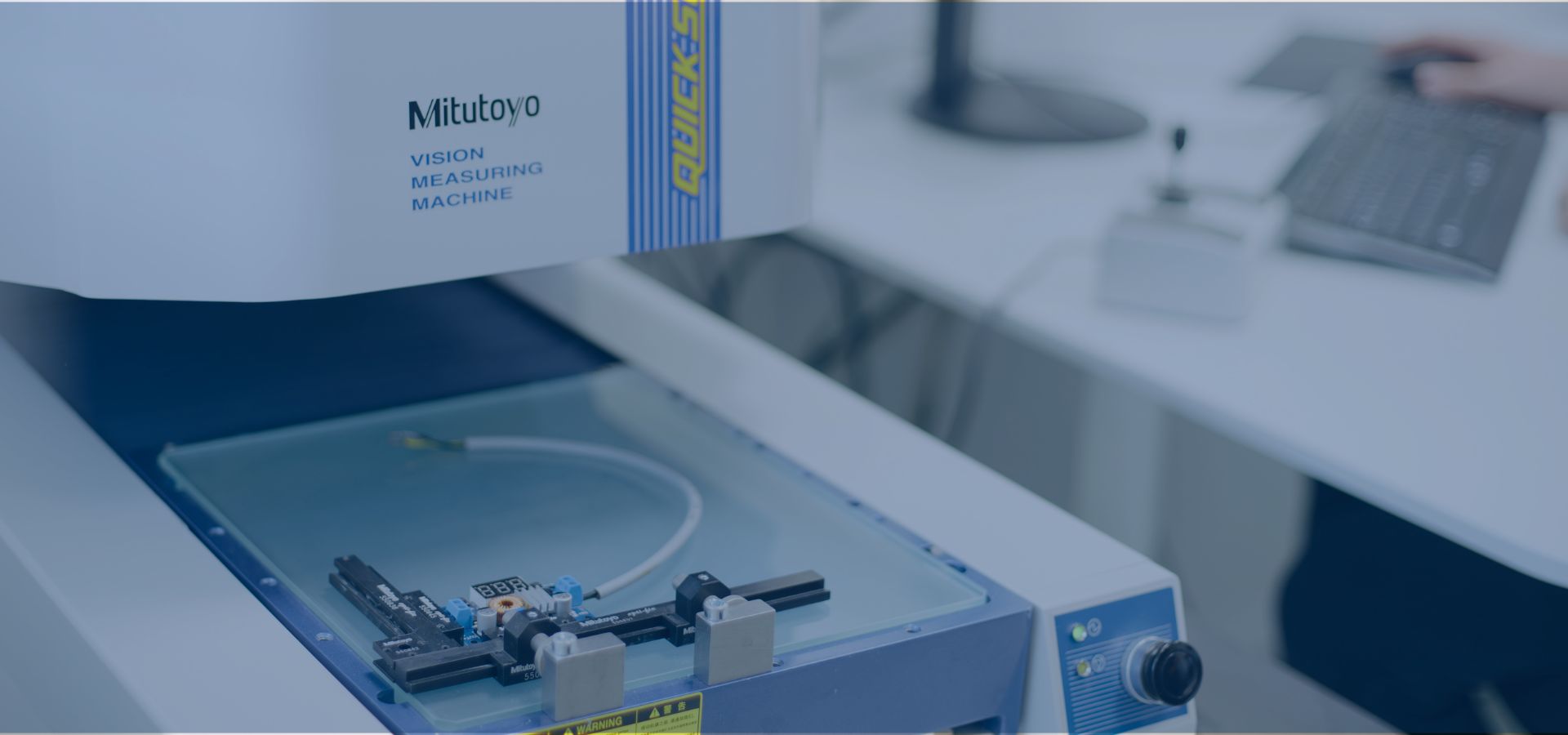
A purely optical concentricity tester has a considerable advantage over mechanical and electromechanical methods for testing concentricity: it checks the concentricity tolerance and coaxiality without touching the component. This opens up new possibilities:
- Check concentricity at high rotational speeds
- Measuring coaxiality during machining
- High-precision concentricity testing without disrupting production
The purely optical concentricity tester available today generally works with focused laser light.
Concentricity tester in use
The concentricity tester is an important measuring instrument in the manufacturing industry. It is easy to learn how to use. Modern devices have a high degree of automation. They make it possible to detect errors in tolerance during production.
They can also interpret the results to determine whether the workpiece has already fallen below the tolerance or whether it can be repaired by reworking.
Testing the coaxiality is the greater challenge here, as different components on a shaft have to be set in relation to each other. However, modern optical processes already have the right solutions for this too.
This makes working with the concentricity tester particularly convenient and safe. With a defined concentricity, the rotating elements work together permanently in the desired manner.