


Select optical and tactile roughness measurement correctly
Testing the roughness of a surface is a standard step in a quality inspection. Roughness is an important parameter wherever a component comes into contact with another object.
Depending on the application, high or low roughness is required. In addition to the established roughness measurement using tactile methods, precise optical inspection methods are also available today.
Roughness as a technical parameter
The roughness of a surface is a technical parameter. Where a precisely defined roughness is required, it is entered on a construction drawing. The technical parameter for roughness is “Ra”.
This describes the “average roughness” that must be present along a linear roughness measurement over the entire surface. Its underlying unit of measurement is the micrometer, i.e. a thousandth of a millimeter. The specification “Ra = 3.2 µm” means, for example, that the surface has been roughened.
In principle, it cannot be said that the surface quality increases as the roughness decreases. Roughness is a neutral variable that is more or less desirable depending on the application.
The reason for this is that as roughness increases, so does the friction between two objects. If two technical components are to slide against each other, the aim of production is to achieve the lowest possible roughness.
However, there are also applications where high friction is required, such as non-slip tiles for bathrooms.
In technical mechanics, low roughness is a quality criterion. This applies in particular wherever a frictional connection can occur. Frictional locking occurs when the protective lubricating film that is supposed to separate the components sliding against each other breaks off.
Bearings, slide rails or inner walls of cylinders are typical cases where there is actually a direct correlation between low roughness and high performance. The smoother a surface is, the easier it is to lubricate.
However, there are exceptions: In combustion engines, for example, the running surface of the piston is intentionally roughened by honing. The cross-honing creates a groove structure in which lubricating oil collects. This significantly improves the reliability and longevity of the engine.
However, the honing process cannot be implemented arbitrarily. An exact dimension must also be specified in advance for the defined creation of this cross structure. With the technically desired minimization of surface friction, the precise definition of roughness also makes sense for economic reasons.
The machining effort increases exponentially with decreasing roughness, making it correspondingly expensive. For example, the manufacturing costs for turning a shaft increase six-fold from an average roughness depth of 100 µm to 6 µm. It is therefore important that you measure the surface roughness. There are two approaches to choose from.
Optical and tactile roughness measurement
The choice of which surface roughness measurement method is the right one always depends on the application. Two approaches are available for measuring roughness:
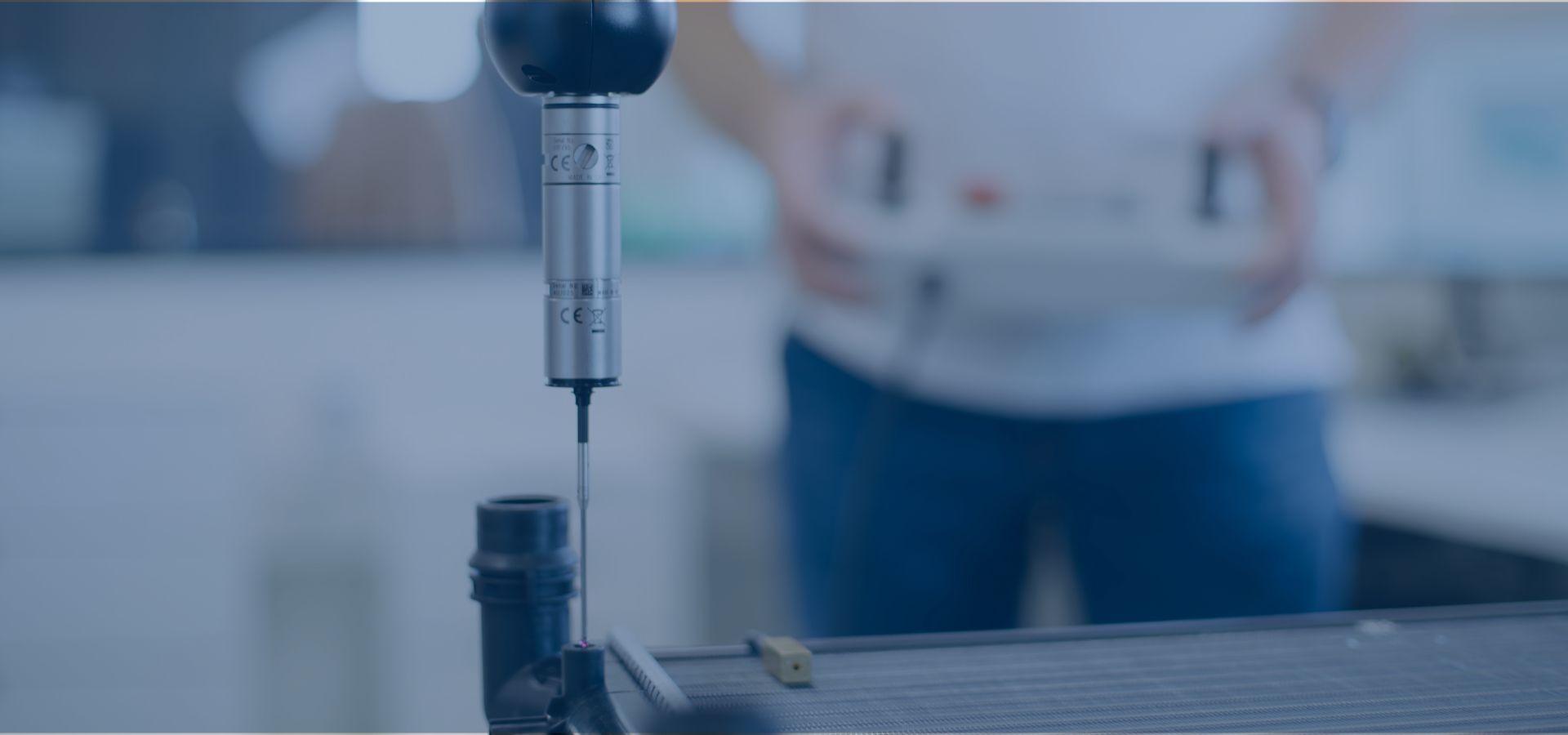
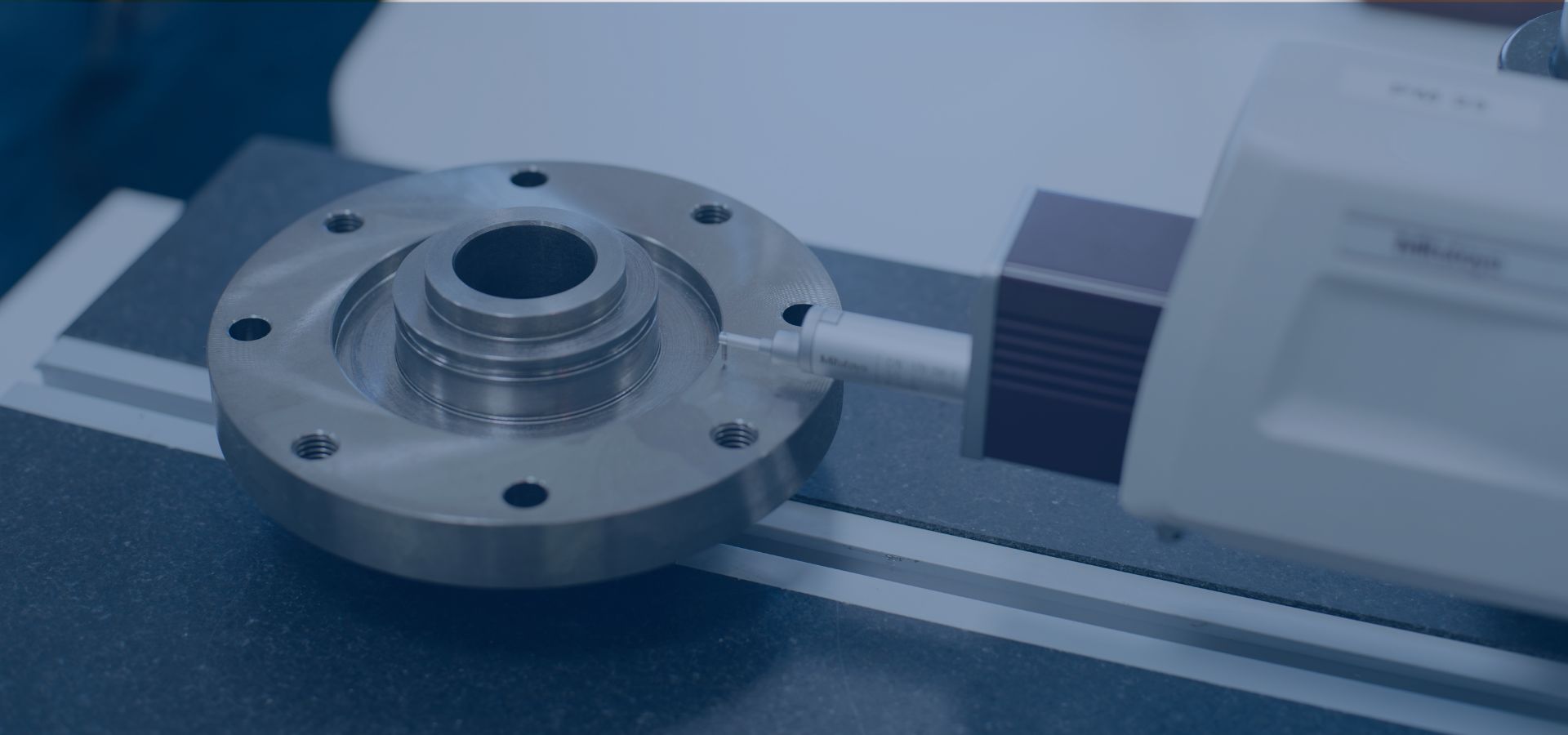
In tactile roughness measurement, a measuring head with a diamond tip moves over the surface to be tested. The tactile roughness measuring device has been in use for many years and is available in a large selection.
The range extends from hand-held devices for approx. 300 euros to efficient tabletop devices for serial roughness measurement. The tactile roughness measuring device is particularly suitable for Ra ranges from 0.1 µm. Due to increasing customer demands, however, the tactile measuring device has come under pressure.
After all, this process involves a diamond tip scanning over a surface. Diamond is the hardest material in the world. The diamond tip can therefore influence and falsify the measurement by cutting into the surface itself. This is why the trend is moving towards non-contact, optical methods of roughness measurement.
However, in very smooth areas, such as lapped or polished surfaces, the specification of roughness in micrometers reaches its technical limits. Ultra-fine ground or highly polished surfaces have roughnesses between 0.025 and 0.1 micrometers.
These can hardly be verified with conventional tactile roughness measurement. This is where the innovative optical roughness test can help. Instead of the average roughness value, the optical roughness test measures the angle of reflection of incident light.
This value is given in “Aq” (A = Angle”). The conversion is comparatively simple: 1 µm corresponds to approx. 300 Aq. Different methods are available for optical roughness measurement:
- White light interferometry
- Confocal technique
White light interferometry is a complex method for measuring roughness. It is often used for topographical measurements or for large-area surface analyses. Confocal technology, on the other hand, is divided into individual measurement methods. It is much simpler and can be accommodated in a compact measuring device.
Special case of fluid mechanics
In addition to tactile and optical measurement methods for determining roughness, there are also approaches for measuring the roughness of a surface using air currents.
Apart from the specific application areas of aerodynamics or fluid mechanics, however, these methods are not used in industry.
In normal mechanical engineering, tactile processes continue to dominate, but they are gradually being supplemented and in some cases even replaced by optical processes.
The friction losses in hydraulic or pneumatic systems can be calculated to a certain degree of accuracy in advance using the various methods. However, an empirical approach is used to determine the exact friction losses: After completion of the system, the incoming and outgoing pressure is measured.
The difference is the friction loss in the system. These can then be improved to a small extent by targeted measures. A typical example of this is polishing the intake and exhaust ducts of combustion engines.
Reducing the roughness of the intake and exhaust valves reduces unwanted turbulence and helps to improve engine performance.
Advantages and disadvantages of roughness measurement methods
Tactile methods have an advantage when it comes to measuring surface roughness from 0.1 µm. They are particularly reliable for coarse roughness, for example on roughened or ground surfaces.
The tactile methods are also sensitive to disturbance variables, such as those that can occur on honed or scaly surfaces. These disturbances generate measurement peaks, which are included in the overall evaluation of the measurement.
This can distort the final result. Overall, the tactile methods for measuring surface roughness are more suitable for coarser work. Another disadvantage is their tactile approach, which always requires touching the surface.
Optical methods have an advantage with polished, lapped and mirror-smooth surfaces. They cope well with the no longer perceptible or visible roughness of these structures and can provide valid values.
However, in the case of highly unstructured surfaces, for example surfaces with rust spots, optical methods can give incorrect values. However, it depends on the output method: Some optical methods, like tactile measuring methods, carry out a linear measurement.
They provide defined, valid values whose reliability increases with the length of the measuring section. However, 3D scanning methods such as white light interferometry look at the surface as a whole. They provide an exact image of the surface structure, in which the heights are represented by defined colors.
Another particular advantage of optical roughness measurement is its non-contact approach. Unwanted influences from the measurement method itself are completely excluded with optical methods.
A key advantage of optical roughness measurement is the higher inspection speed. With the help of optical methods, critical components such as bearing rollers of roller bearings can be 100% inspected.
This is a significant leap in quality assurance compared to the usual random sample inspection. It can therefore be assumed that optical roughness testing will become more widespread and replace traditional tactile methods in some areas.
A disadvantage of surface roughness measurement using optical methods is the sensitivity to contamination. The effort required to keep optical roughness measurement systems clean is considerable.
The reason is obvious: cloudy lenses, dirty reflectors or residues on the surfaces to be tested have an enormous impact on the measurement results. Only extremely conscientious testing, cleaning and timely replacement of sensitive components can help here.