

Roughness depth Rz16
Roughness is specified in the unit Rz. This indicates the maximum height difference along a center line on a defined measuring section “Ie”. Roughness depth RZ16 thus indicates that there is a height difference of 16 µm between the highest “mountain” and the lowest “valley” on the measuring section. This height difference does not have to be directly adjacent. However, it must be located on the measuring section.
In practice, the specification of Rz is not very popular. It only says something about the two extreme values. However, it does not provide any useful information about the total distance. This is why the specification “Ra” is much more widespread. It indicates the roughness of a surface according to the arithmetic mean along the measured distance. This is much more meaningful and application-oriented.
Every machining process influences the surface
The machining processes for metals are as follows:
- Casting (master molds)
- Forming (pressing and bending)
- Machining (turning, milling, grinding)
- Coating (chrome plating, painting)
- Change material properties (hardening, annealing).
The first three are also known as “shaping processes”. They have the greatest influence on the surface of a component. For example, the surface is particularly rough during sand casting and particularly smooth during precision turning or polishing. However, even polished and lapped surfaces have a measurable roughness. An ideally smooth surface can therefore not be achieved, at least not with the shaping processes.
Determining the roughness depth Rz
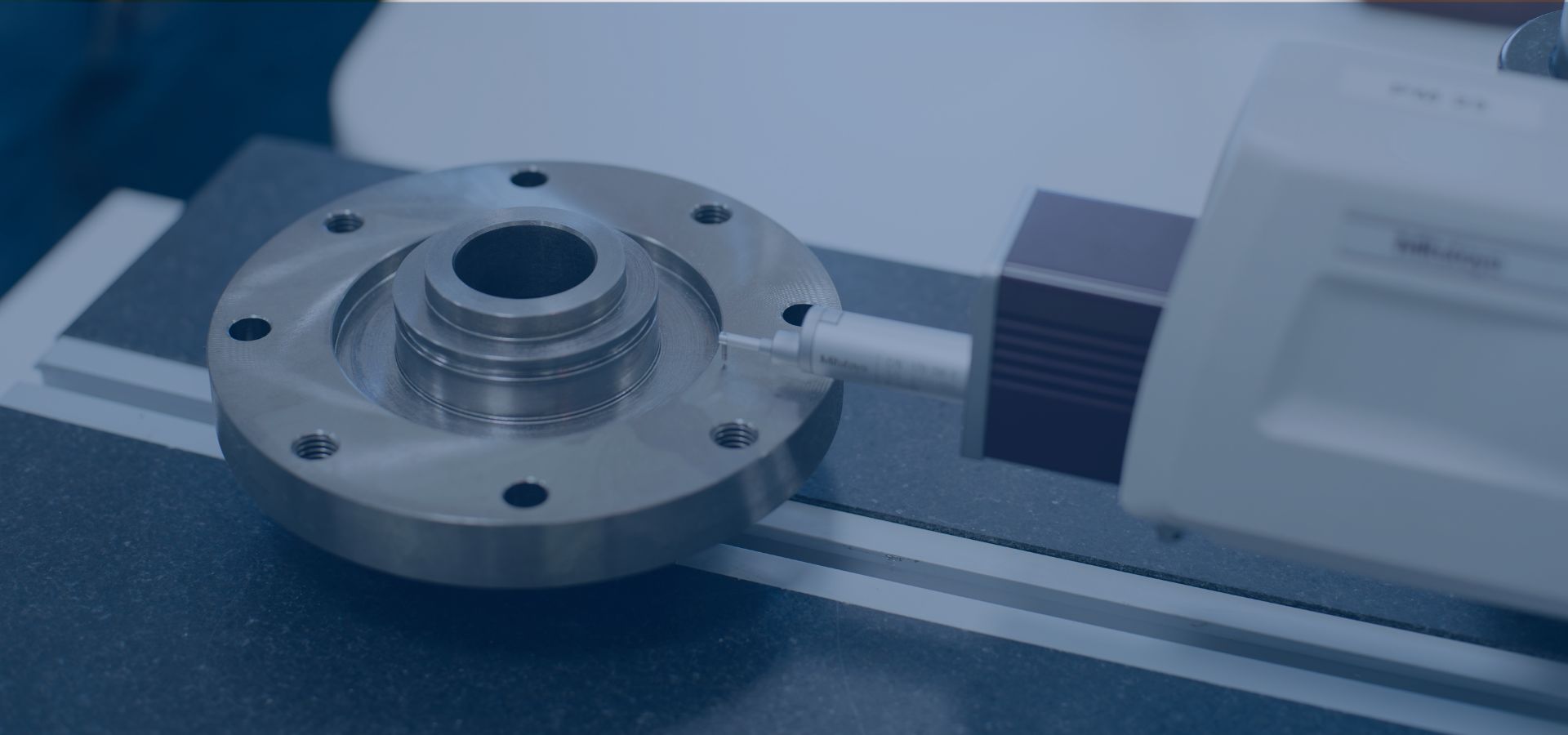
The roughness depth is determined on at least five parallel measuring sections. You can choose between the scanning method or the optical method. With the scanning method, a measuring head moves over the section. Similar to a record player, a needle is raised and lowered into the surface structures. This deflection is amplified by a coil and thus generates measurable current fluctuations. Optical methods work with fringe light projection or laser scanners.
Roughness according to ISO 1302
ISO 1302 is the standard for the quality of surfaces. It proposes the following roughnesses Rz for these types of machining:
- Castings: Roughness not definable
- Roughing during turning or milling with visible and noticeable scoring: + Rz 100
- Finishing when turning or milling with visible grooves: + Rz 25
- Fine finishing: No more visible scoring, but the component is not shiny: + Rz 6.3
- Polishing to mirror finish: + Rz 2
The roughness Rz16 is therefore between finishing and fine finishing. It is a common surface for machine components with medium loads. One application where the roughness Rz16 is no longer sufficient is, for example, piston rods of hydraulic cylinders. These are polished to mirror finish. This is the only way the seals used can retain the internal hydraulic oil. However, RZ16 is often used for gear wheels, clearance fits or gear racks. If high optical properties are not required, Rz16 is sufficient in most cases.
Correct roughness for the right applications
A defined surface roughness is required for many applications. The rougher the surface, the higher its coefficient of friction and the less reflective it becomes. This may well be intentional. Handles, for example, should be rough so that they do not slip out of the hand. Polished surfaces, on the other hand, are not just nice to look at. They are also a prerequisite for many other processing methods, such as chrome plating. For the related galvanizing process, however, the roughness of the surface of the starting material hardly plays a role. Zinc coatings are so thick that they even out roughness. Unfortunately, they are themselves so rough that they have to be heavily coated. Several passes through a powder coating system, for example, are suitable for this. The roughness must therefore always be indicated on the drawing.
Why do turned parts become rough?
Even if a turned part looks mirror-smooth, this manufacturing process always produces a certain roughness due to its design. Ultimately, turning is a cutting process in which long chips are cut out of the rotating base material. The feed therefore always produces a spiral cut that has natural peaks and valleys. These can be flattened somewhat by fine turning and finishing. However, scoring during turning cannot be completely avoided.
The same applies to all other machining processes, including grinding and polishing. During machining, particles are torn out of the base material. The cohesive forces ensure that more material is always blasted out than intended. This leads to the unavoidable roughness. The value Rz16 lies within the range in which a turned part can still be machined with tools. Finer surfaces require tool-free processes such as grinding or polishing.