

Parallel surfaces in mechanical engineering
When producing a flat surface, parallelism to a second surface often occurs automatically. When continuous casting or face rolling blocks and sheets, the opposite sides are parallel. Parallelism can also be created by edging two right angles. However, both planarity and parallelism must be tolerated.
Tolerance of flat surface and parallelism
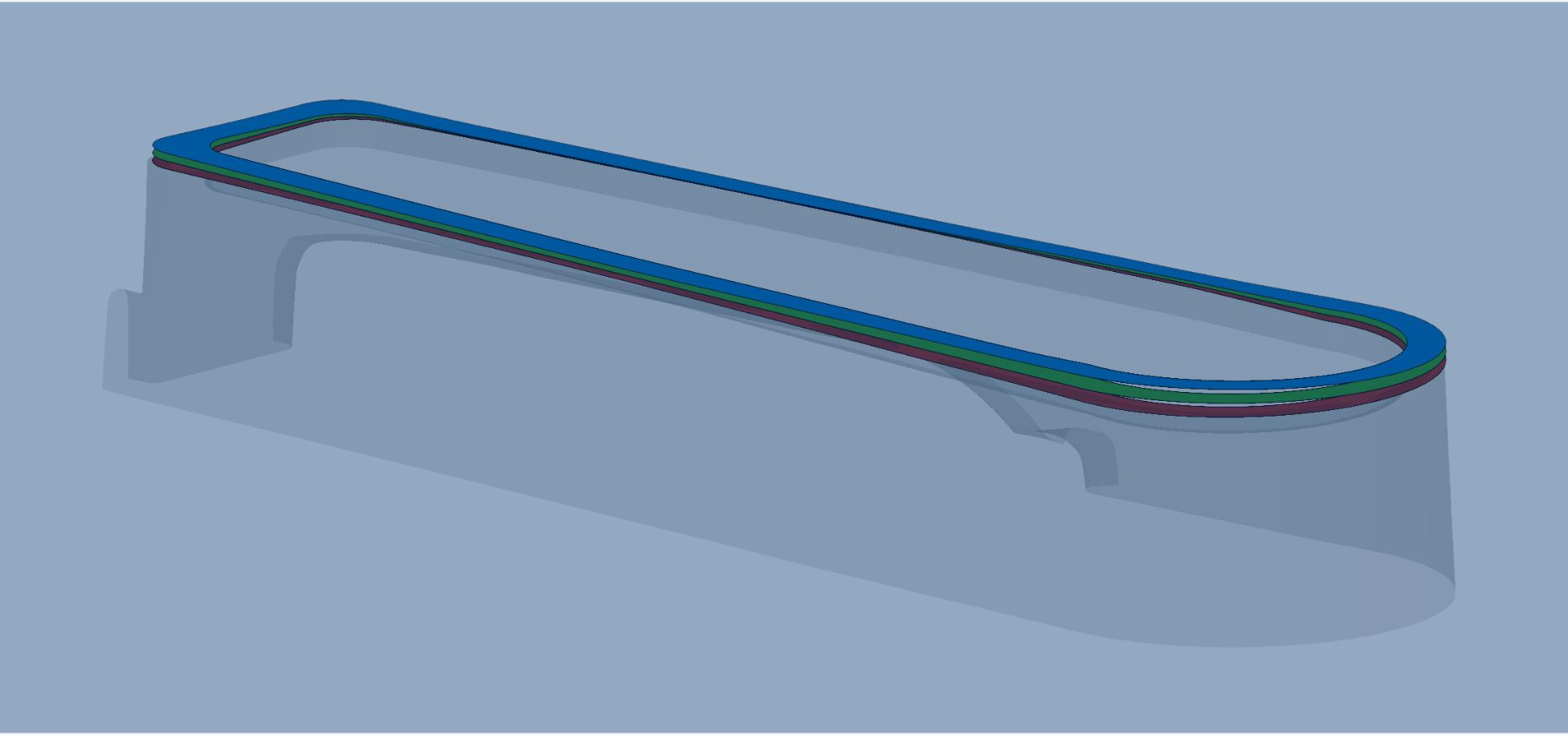
A planned surface has no hills or valleys along a certain measuring section – no matter how flat they may be. This makes the production of a technically highly stressable planar surface very challenging. A typical example of plane parallelism between two different components can be found in engine construction. The cylinder head and the cylinder block must not only have ideal flat surfaces. They must also have the best possible parallelism to each other. Any unevenness on the surfaces would cause the seal between the components to fail.
A cylinder head that has been milled at an angle can generate undesirable stresses that ultimately lead to cracks. If a defined planar surface is required, a precise tolerance range is always included. Plane-parallelism therefore hardly applies to installation situations that only have to meet visual requirements, such as cubic or rectangular housings.
Sliding surfaces, sealing surfaces or stop surfaces, on the other hand, must always meet requirements for both flatness and parallelism with other component surfaces.
Creation of plane parallelism
The production or alignment of plane-parallel surfaces depends on the workpiece and the required tolerance. Sheets are brought to the greatest possible flatness on straightening benches, bending benches or bending machines and then aligned parallel to each other. Blocks and other thick materials are milled to achieve the desired flatness. However, this requires particularly precise machine tools.