

Bolt guide with slotted hole
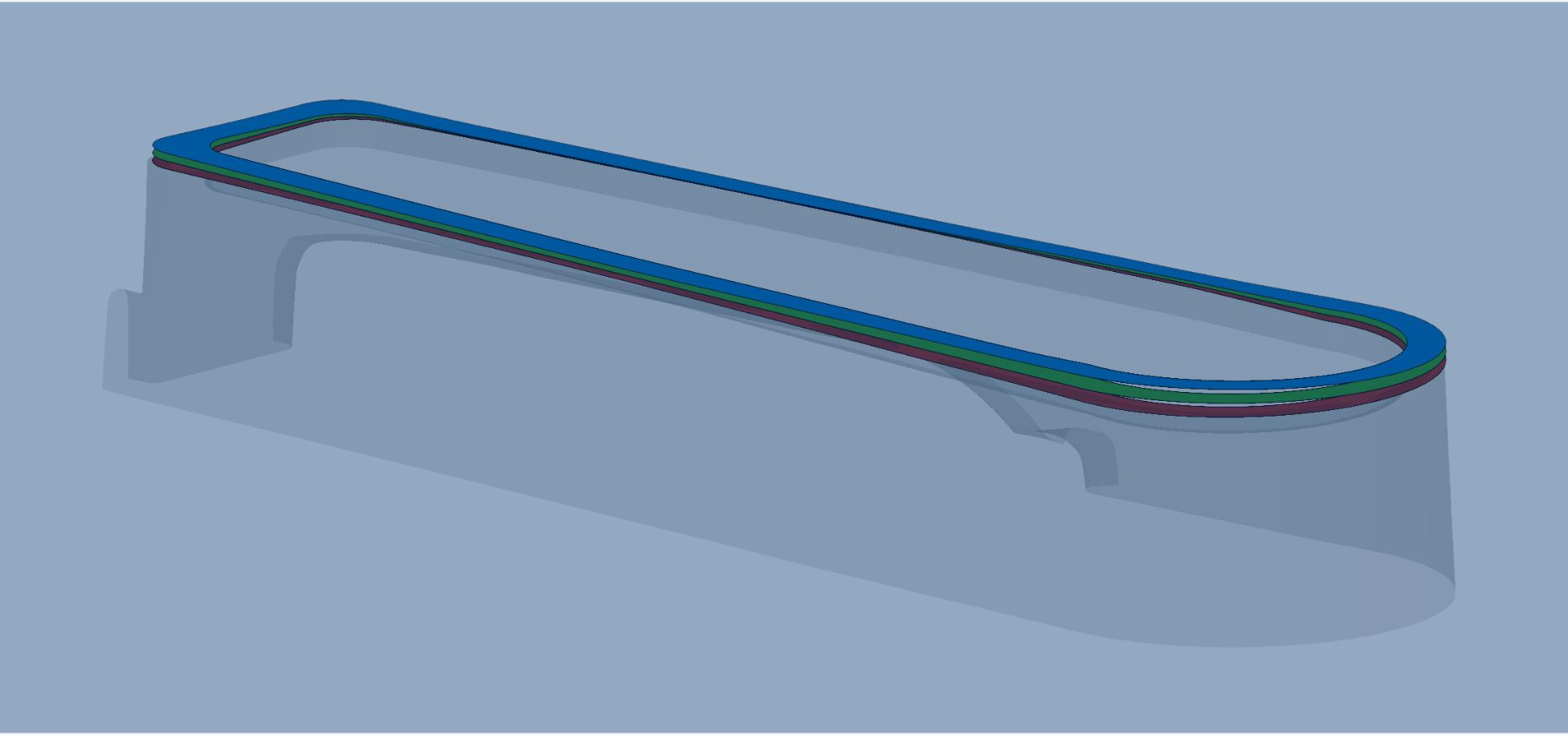
A slotted hole is a through-hole with an extended side geometry. The inserted bolt is mounted in such a way that it can move linearly or radially. This allows the connected components to be positioned within a safe range. This makes this component a fast, inexpensive and practical tool for ensuring simple kinematics.
Function of the slotted hole
Slotted holes are through-holes. In most cases, their purpose is to provide a guide for a pin or bolt. Alternatively, slotted holes are also used to save material and reduce weight. If it does not affect the stability of a component, slotted holes can make it lighter. This makes assembly easier and saves valuable energy with every movement.
Used as through rails for guideways, slotted holes can be used for single or permanent use. They fulfill the following functions:
- Enlarged attachment area for screw connections
- Adjustable angles, brackets and profiles
- Lock for flaps, doors and windows
- Adjustment angle through slotted hole on machine parts.
A sheet that is equipped with slotted holes makes it easier to screw in. The slotted holes make it possible to position the fastening screws anywhere over a wide area. Simple through-holes would create tension in the sheet metal at this point or require reworking.
Brackets, angles and profiles can be attached to the slotted hole and then slid into position. This makes installation easier.
Flaps, doors and windows can have an intermediate position between “open” and “closed” using slotted perforated sheets. A typical example is a window set to “tilt”. Slotted perforated sheets are required for this function.
Slotted holes are used in machines to engage and disengage drives or to tension belt drives. If the belt stretches over time and creates unwanted slippage, the slotted holes allow for quick and easy re-tensioning.
Making slotted holes
Slotted holes can be produced in the following ways:
- Milling
- Pouring
- Punching
- Laser, water jet or plasma cutting.
Milled slotted holes are typical for thick solid material. They are mainly used as guide rails for moving components. A typical example is the adjustment of an alternator in a car.
Cast slotted holes are usually used to reduce weight. If they are also to be used as guides, they must be reworked. This is again done on milling machines or boring mills.
Punched slotted holes are found in components made from thin sheet metal. They are used to improve the adjustment of angles, brackets and other lightweight components.
Cutting slotted holes is a quick, simple and inexpensive method for special geometries. They are less susceptible to wear than milling work. Nevertheless, light reworking is also recommended for cut thin sheets. A deburred slotted hole is safer and avoids unnecessary wear. Cut, punched or burned slotted holes should also have a semicircular finish at their ends. This prevents stress peaks and cracking in the corners.
Dimension slotted hole
The dimensions of the slotted hole depend on its use. First of all, the width and length of the element are important. It is not the actual length that is specified, but the distance between the circle centers at both ends. A suitable drill bit is sufficient for narrow slotted holes of standard width. The width of the slot corresponds to the diameter of the cutter. This diameter also determines the geometry of the semicircles at the ends.
If you want to dimension a slot that is not linear but radial, you must also specify the radian dimension. It is also advantageous to specify the projected center of the circle. It makes production considerably easier. A radial curve is required if an adjustment angle is to be achieved with the slotted hole. The circular arc corresponds to this adjustment angle.
Tolerances on the slotted hole
Slotted holes are generally tolerated with a clearance fit. If they are intended to guide a bolt, a transition or interference fit is not advantageous. These fits would cause unnecessary wear or cause the bolt to break.
Use of the slotted hole
It can be useful to protect the inserted bolt with a bushing. Bronze, rubber or plastic are suitable for this purpose. This solution is used as standard in the tilt windows mentioned above, for example. It significantly reduces noise and wear at this point.
However, the slotted hole as a guide rail in machines has a problem: the fastening is less reliable than a simple through-hole. This is due to the fact that a through-hole has a lateral positive fit. The component cannot slip even if the connection is loosened. The situation is different with a slotted hole. As soon as the clamping screw is loosened, the component has play in the direction of the slotted hole. The intended position of the components in relation to each other is therefore no longer guaranteed. This is prevented by strong bolts and high tightening torques.