

With nominal dimension and tolerance to the component
Drawing a component is easy, but manufacturing it is not. The external dimensions of components must be manufactured so precisely that the product can be integrated into an assembly. If the component is too large, it cannot be installed without damage. If the minimum dimensions are not met, there is a risk of leakage, noise development or high wear. This makes it necessary to add the tolerance to the nominal dimension.
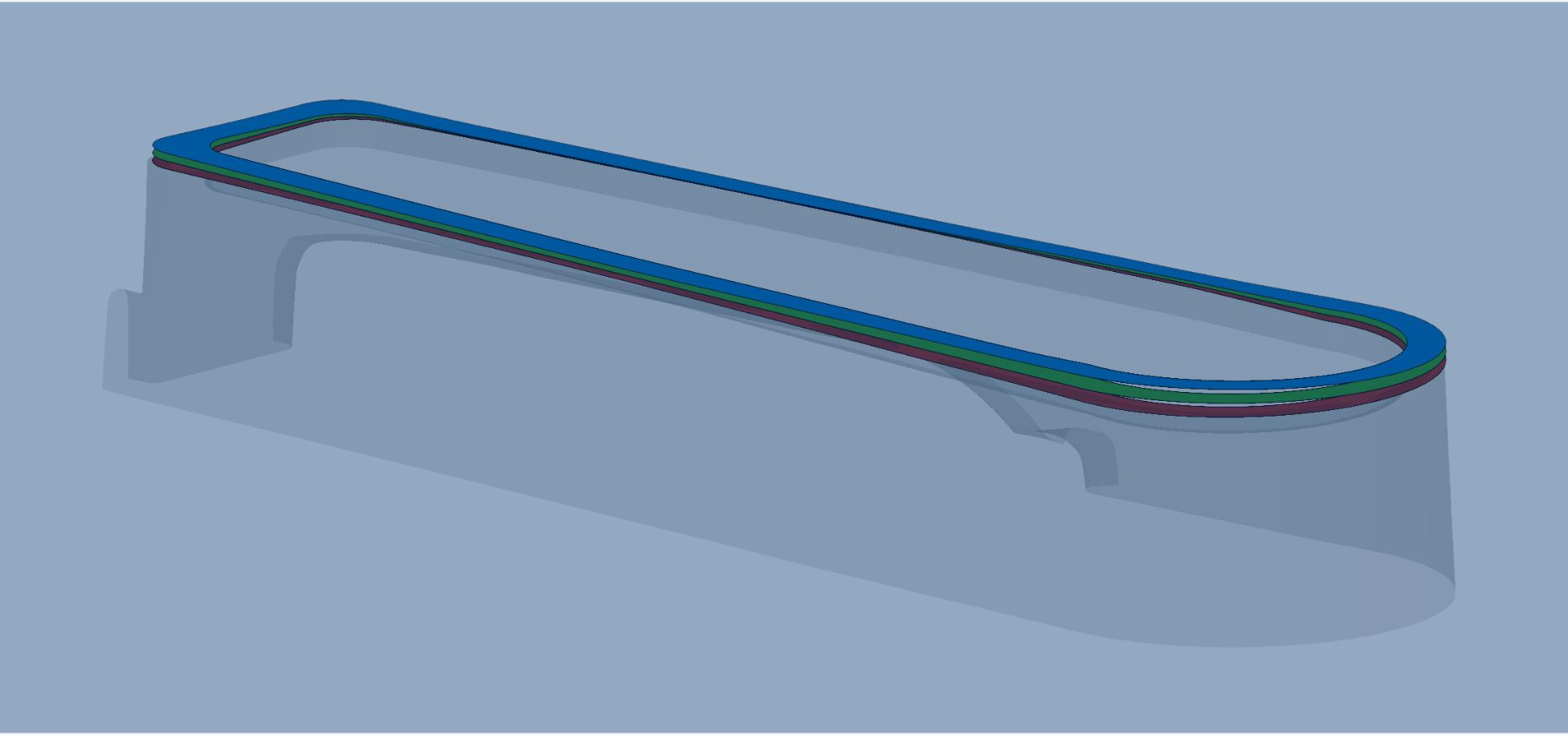
The tolerance is the range in which an actual dimension may deviate from the nominal dimension. You have to imagine the tolerance as an envelope curve. The upper tolerance lies above the nominal dimension, the lower tolerance is the minimum dimension and lies below it. The actual dimension must always be between these two curves. Only then is the component “within tolerance” and meets its requirements.
The distances between the nominal dimension and the tolerances do not have to be the same. Symmetry is only coincidental here. The designer must therefore always define the upper and lower limits separately in order to be able to provide the worker with precise information.
Production of components within tolerance
The manufacturing and machining processes allow tolerances of varying tightness. Sand casting (regardless of whether hotbox or coldbox) is at best reasonably precise in the millimeter range. Deviations of 2-3 millimeters must be expected with this process. A panel saw can produce simple components with a tolerance of just 0.5 mm.
When turning, a tolerance of 1/100 mm can be achieved under ideal conditions, based on a nominal dimension of up to 3 mm. Milling achieves approx. 6/1000 mm on good machines. Beyond this, only tool-free processes are available for producing close tolerances. Polishing and lapping can produce a nominal dimension of 3 mm with a precision of 1/10,000 mm.
The tighter the tolerance, the more complex the production of the component will be. The nominal dimension has no influence on this, but the specified tolerance values do. This is why it is so important to add the desired minimum and maximum dimensions to the dimensioning.
Upper tolerance undercut – and now?
If the upper tolerance is exceeded when checking the actual dimension on the workpiece, this can usually be rectified by reworking. It is more problematic if the minimum dimension is not reached. The application and regrinding of material is only possible under very specific conditions.
In the case of metals, it may still be possible to save the workpiece by welding it on. However, this is only possible with coarse workpieces with high tolerances. Therefore, falling below the minimum tolerance usually results in the product being scrapped.