

Industrial computed tomography for QA and reverse engineering
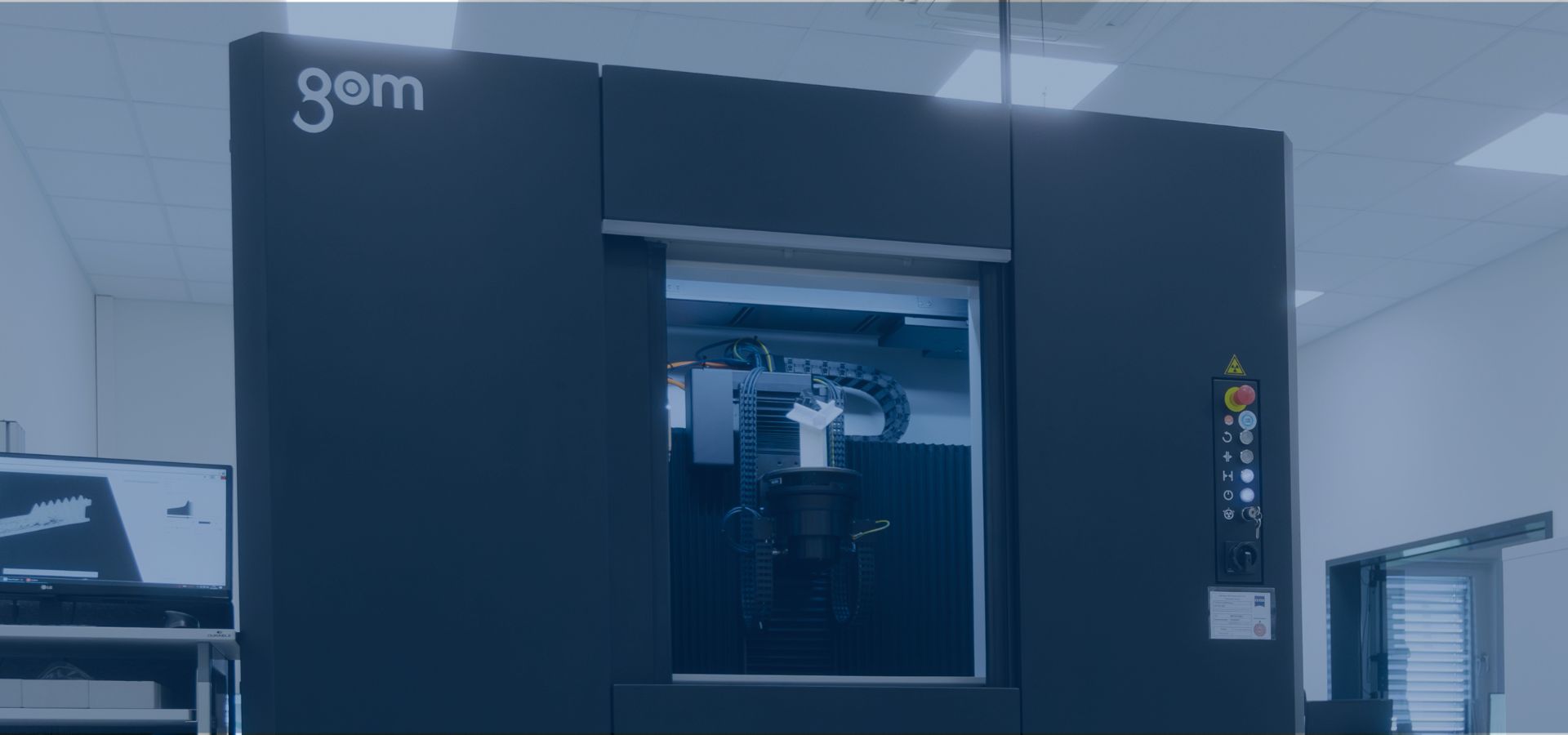
Industrial computed tomography is a non-destructive process that allows you to inspect entire assemblies in detail without disassembly.
This X-ray inspection analysis system is suitable for all areas of quality assurance and can be used for a wide range of applications.
In addition to particularly in-depth incoming, production or outgoing inspections, industrial computed tomography also offers you many possibilities for further use, for example for reverse engineering.
How does industrial computed tomography work?
Industrial computed tomography is derived from medical CT. However, it is significantly cheaper to implement as it is less complex in terms of design.
In essence, however, medical and industrial CT are very similar. Tomography means “drawing from sections (tomos = Greek cut, grafiem = to write/draw)”.
The body is x-rayed in small steps and the recorded sections are then reconstructed in a graphic.
In contrast to medical computed tomography, the object can be rotated in industrial CT measurement technology. This significantly reduces the design effort and makes it cheaper than CT in hospitals or clinics.
In addition, industrial computed tomography can work with significantly higher X-ray doses, as no consideration needs to be given to organic damage to the object to be x-rayed.
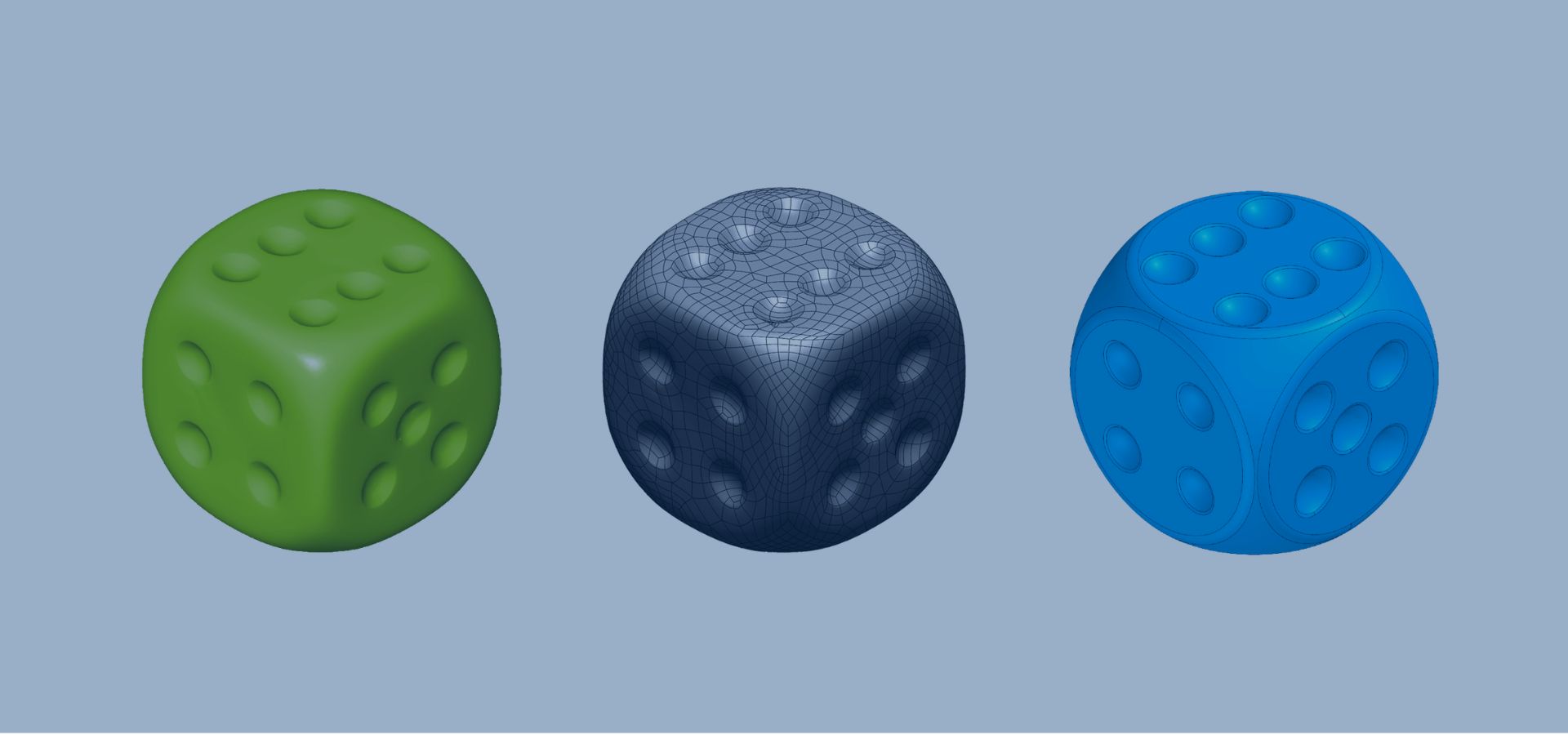
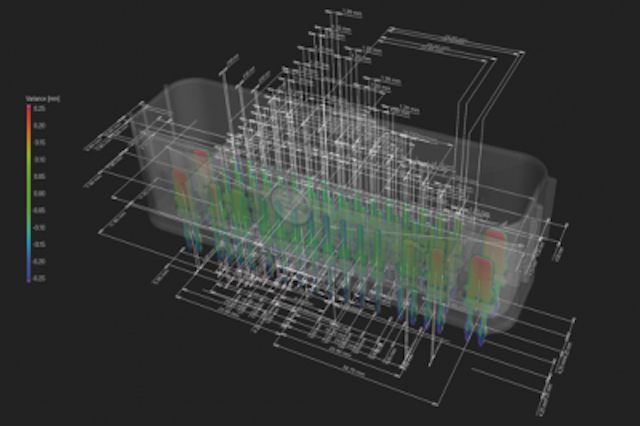
The result of computed tomography in industry is a high-precision, separable 3D model of the scanned object.
With CT measurement technology, you have a choice of different designs and sizes.
- Two-dimensional CT
- Three-dimensional CT
- Helix CT
Two-dimensional CT is most similar to the conventional X-ray used in medicine. The object is not rotated.
This method is very fast, as only one image is created. A common application for two-dimensional CT is the inspection of finished components in order to localize damaged areas.
Three-dimensional CT generates the image of the object with a single beam path. The object is rotated and broken down layer by layer into 2D graphics.
These can then be reassembled into a 3D model. This process is very accurate and provides detailed information. However, these systems are very expensive.
Helix CT is similar to three-dimensional CT. However, in this method, the object is not only moved along one axis, but is also shifted along its longitudinal axis during rotation.
The X-ray image is therefore generated in a helical shape (helix = spiral). It is particularly suitable for longer components.
You have a choice of three sizes:
- Macro CT
- Micro-CT
- Sub-micro CT
Macro CT systems are suitable for large components. They can also process objects with an edge length of several meters. However, their resolution is limited. Macro CT systems are particularly suitable for inspecting fully assembled components.
With these, it is important that all components are installed correctly. A micrometer-precise resolution of all details is not possible with this system.
Micro-CT systems are suitable for objects with a maximum edge length of 10 cm. They offer a resolution down to the micrometer range. They are particularly suitable for the intermediate inspection of components before they are assembled.
A typical application for micro-CT testing is the screening of composite materials to detect hairline cracks, cavities, inclusions or burrs.
Sub-micro CT systems offer the highest resolution. They can make details as small as 500 nm visible. However, these systems are only suitable for very small objects, for example electronic components or organic materials such as plant seeds.
This high-resolution computer tomography plays a secondary role in the measurement of components in industry.
Industrial computed tomography
Common applications of these 3D scans are as follows:
- Quality inspection of assemblies
- Quality inspection of homogeneous materials
- Quality inspection of inhomogeneous materials
- Reverse engineering
The testing of fully assembled components is a popular procedure in the final inspection.
With the exception of highly specific parameters, such as the torques of screw connections, practically all relevant information can be determined in this way using computer tomography in industry.
Industrial computed tomography is therefore suitable for both spot checks and 100% inspection of series production.
The inspection of homogeneous materials using industrial computed tomography goes far beyond the measurement of components. All edges, holes and cavities can be measured precisely using this method.
However, less complex methods would be just as suitable for this. The testing of homogeneous materials is primarily aimed at detecting undesirable defects in the base material: Blowholes, inclusions, cavities, segregations or pores can be visualized very well with this method.
As industrial computed tomography is a non-destructive measuring method, it is suitable for 100% testing. The inspection of components made of homogeneous materials is a typical intermediate inspection in an assembly process.
The quality inspection of inhomogeneous materials is one of the particular strengths of computed tomography in industry. Composite materials such as CFRP, GFRP or multi-layer materials with steel mesh inserts are becoming increasingly important in manufacturing.
The control of these materials is particularly important for the processing industry, as their technical properties affect the entire assembly.
The quality inspection of inhomogeneous materials is therefore a typical application for an incoming inspection in CT measurement technology. It is also very important for manual production methods.
Wind turbine blades, for example, are mainly manufactured by hand. Industrial computer tomography is a very reliable test method to ensure that these have been laminated in accordance with regulations.
Reverse engineering, also known as reverse engineering, is a process for understanding an assembly for which no production documents are available. These can be products from third-party manufacturers. However, the measurement of components is also useful for older in-house products for which data is no longer available.
The particular advantage of reverse engineering using industrial computed tomography is that you do not have to disassemble the product into its components. This does not jeopardize the functionality of the unit.
Reverse engineering is an important part of benchmarking and ensuring a company’s competitiveness. In this context, industrial computed tomography is a revenue generator for service providers.
Industrial computed tomography: advantages and disadvantages
Industrial computed tomography is another logical step in the development of quality control. It reduces the need for destructive material testing and significantly expands the possibilities for incoming, intermediate and outgoing inspections.
With a high-performance system, even a large series of complex assemblies can be 100% inspected. Every faulty part sorted out during production reduces the costs for processing complaints and thus contributes to customer loyalty.
One disadvantage of measuring components using CT measurement technology is still the very high cost of the equipment. However, it is becoming apparent that industrial CT is gradually becoming the required standard. As the devices become more widespread, a reduction in costs can therefore also be expected.
An interim solution for CT measurement technology is therefore service providers who offer the services of these systems to customers.
So if you cannot yet afford or do not want expensive CT measurement technology, you can access this innovative technology with the help of an appropriately equipped external quality inspector.
Conversely, industrial computed tomography is very well suited to ensuring the utilization of expensive systems by accepting contract services.
All in all, industrial CT is a highly innovative market whose demand will continue to grow in the future.