


References and reference systems according to DIN ISO 5459
Define the tolerance zone using a reference system
The drawing must show which tolerance zone is to be measured and how. DIN ISO 5459 allows a whole range of different methods for precisely defining a tolerance zone.
References as direct specification according to DIN ISO 5459
The easiest way to indicate a tolerance zone is to refer to its reference. A reference is represented by a small, black, equilateral triangle.
It is connected to a framed letter via a line. The letter with the desired tolerance can then be listed in a legend.
This gives the craftsman the necessary orientation on the drawing. The references can be further defined by additional information. These are common:
- Common axis
- Common center plane
- Upper, front or rear surface as reference system
The common axis specifies a dimension calculated from a specified line. This is usually the centerline through a body. However, other axes can also be defined if this makes sense.
The reference system in which the specified tolerance applies is formed between the center line and the surface.
If you want to switch from a two-dimensional view (e.g. optical 2D measurement) of the common axis to a three-dimensional view (e.g. optical 3D measurement) of a surface, the “Common center plane” reference system is used.
The tolerance zone must be checked for deviations in the longitudinal and transverse directions.
Coordinate measurements for complex components with DIN ISO 5459
For particularly complex components, the common axis or common center plane is often not feasible for practical reasons. This is where the coordinate measurement method comes into play.
DIN ISO 5459 specifies how coordinate measurements are set up. Starting from a fixed point, the space is divided into reference points along three axes.
The designation of the axes is basically arbitrary. However, the use of the last three letters of the alphabet has become established for this purpose.
It is also the easiest way to transfer the data to the manufacturing machines. Regardless of whether traditional machining processes or the ultra-modern additive processes (3D printers) are used, the use of the classic XYZ coordinate measuring system is and remains the common standard.
This also applies to the creation of a reference system in accordance with DIN ISO 5459. The only important thing is that the three axes are perpendicular to each other and meet at a common point.
For practical reasons, it makes sense to place the intersection point at a corner point of the component under consideration. However, DIN ISO 5459 does not necessarily stipulate this.
Floating components as a challenge
If a component is considered to be virtually floating in space, this increases the risk of measurement errors.
Although the reference system is basically highly precise due to coordinate measurements, a deviation in precision must be accepted due to the double measuring effort. Nevertheless, a contactless, floating view of a component in the coordinate system according to DIN ISO 5459 offers certain advantages:
- Dirt particles cannot influence the position of a component
- The component can be viewed comprehensively
If the component is placed in a test fixture designed for coordinate measurements in accordance with DIN ISO 5459 and checked using manual procedures, there is always a risk of measurement errors due to dirt particles.
If the component is displaced in the measuring device due to adhesions, the entire test setup can no longer be performed with the required precision.
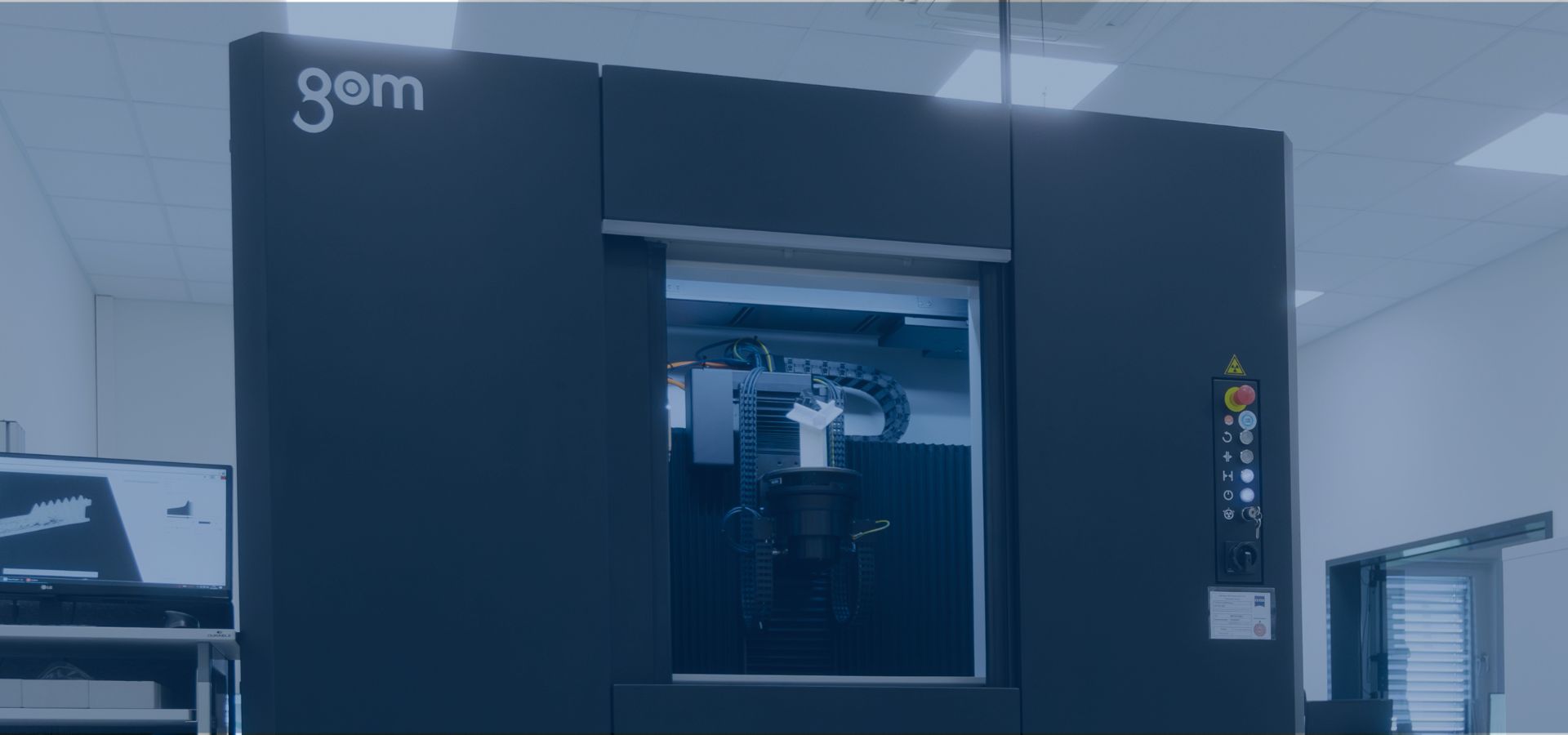
Optical methods are particularly suitable for carrying out coordinate measurements on floating components. Various industrial computed tomography methods are also particularly suitable here.
They can be positioned freely in the reference system and view the component from all sides. In addition to the traditional and still proven laser method, another approach is possible: photometry.
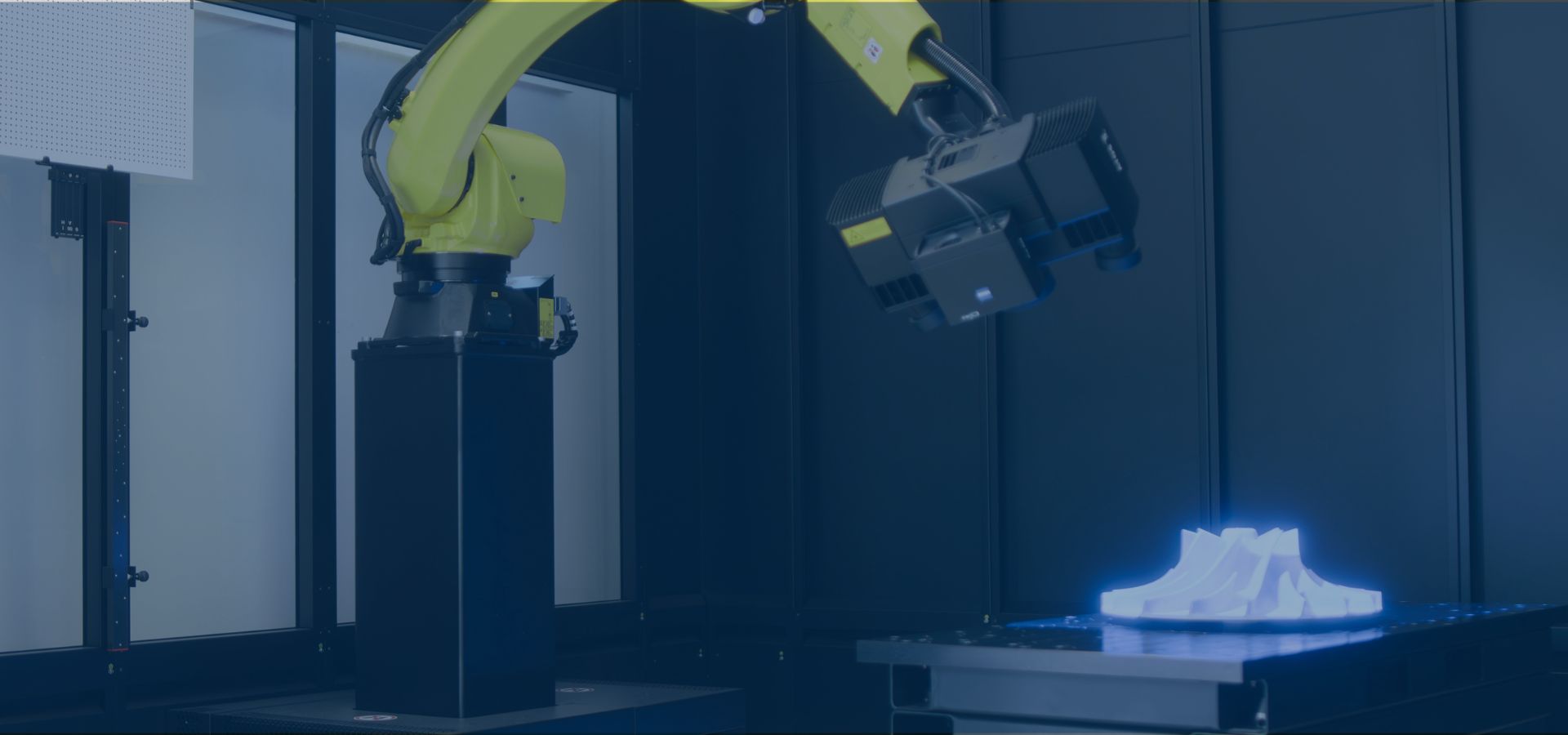
This method, which is also permissible according to DIN ISO 5459, utilizes the possibilities of modern digital photography for coordinate measurements in the three-dimensional reference system.
Photometry for fast and precise results according to DIN ISO 5459
In a coordinate measurement using digital photography, a camera is moved at a defined distance around an object to be inspected.
With a sufficient number of photographs, the component to be tested can be precisely measured in the reference system using the previously defined reference dimensions.
Instead of laborious determination via a common axis or common center plane, the component is recorded and measured in its entirety. Using suitable software, much more can be derived from the data obtained than just determining the required tolerances.
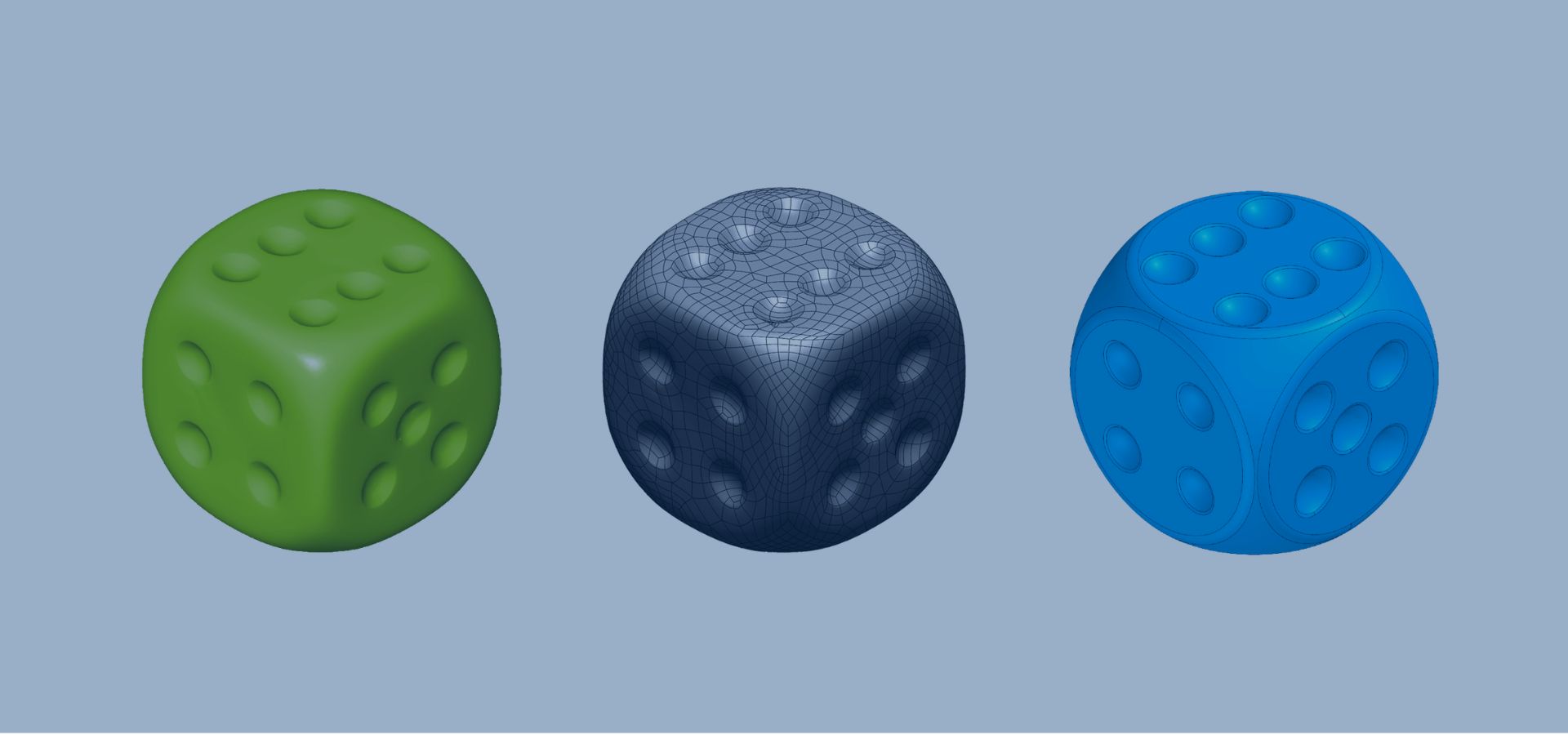
In fact, this DIN ISO 5459 recognized method is able to create complete 3D models of the photometrically measured object. These 3D models can not only be checked for dimensional accuracy with high precision.
They can also be used for numerous other applications. Typical examples of this are rapid prototyping or reverse engineering.