

– DIN ISO 1101
Concentricity for sliding fit and fit
The concentricity describes the uniformity of a round profile in rotation. In statics, this tolerance consideration is of secondary relevance. In dynamics, however, concentricity is one of the most important dimensions of all. Without high-precision manufactured bushings, shafts and bearings, modern technology would not be possible. This is why the control of concentricity tolerances is particularly important.
Applications of concentricity tolerance
The concentricity tolerance is measured wherever:
- a rotating profile exerts mechanical forces on other components
- a linearly moving round profile is moved into a suitable guide
- or combinations of both applications. Typical examples of components that need to be checked for concentricity tolerance are all types of shafts. On a car, for example:
- Camshafts
- Crankshafts
- Drive shafts
- Cardan shafts
- Gear wheels and pulleys of all kinds
The higher the rotational speed and the transmitted torques, the higher the load on the entire component Deviations in concentricity quickly lead to audible incorrect loads. As a rule, this quickly results in destroyed axial bearings, which ultimately leads to the failure of the entire assembly.
In the case of linear movements, the components displaced within one another must also be checked for concentricity. Common applications for this are
– Linear motors such as hydraulic cylinders
– Reciprocating pistons in combustion engines
After all, bolted, dynamic connections in levers, flaps, cantilevers and other mechanisms are only as good as their concentricity tolerance allows.
Even if the dynamic loads on these systems are usually much lower than on shafts or reciprocating pistons, imprecisely manufactured connecting bolts still quickly lead to failures. The concentricity tolerance can therefore not be given enough importance.
Regulated according to standard DIN ISO 1101
DIN ISO 1101 specifies exactly how concentricity is to be produced and checked. Concentricity is one of the form tolerances. Simply put, the concentricity tolerance is described by a zone that can be projected on any radial cutting plane as long as it is perpendicular to the surface.
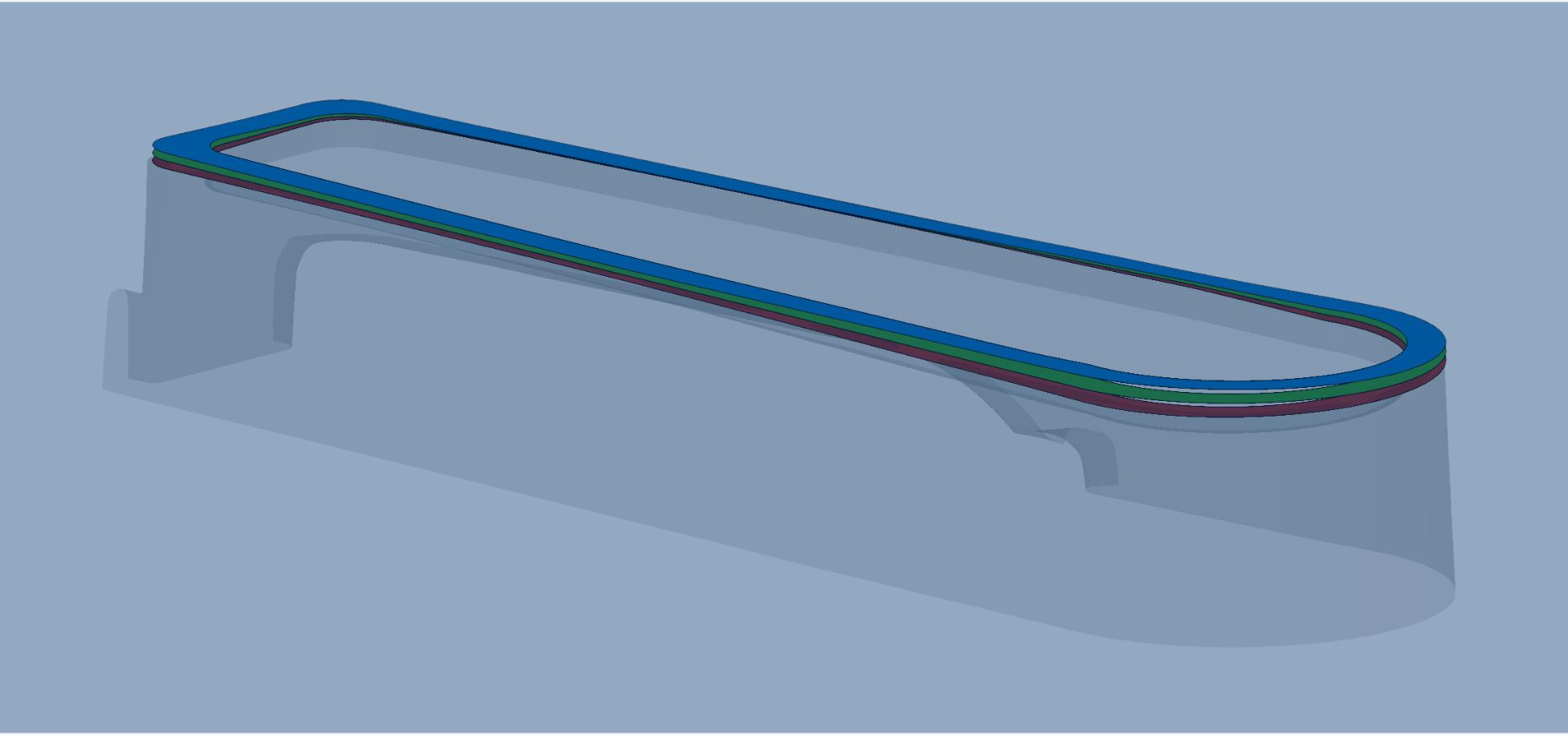
The tolerance zone is formed by two circles that enclose the component to be tested for concentricity. The inner circle indicates the minimum dimension, the outer circle the maximum dimension.
To determine the concentricity tolerance, the component must be rotated linearly to its axis. Various methods are used to determine a valid value for the tolerance.
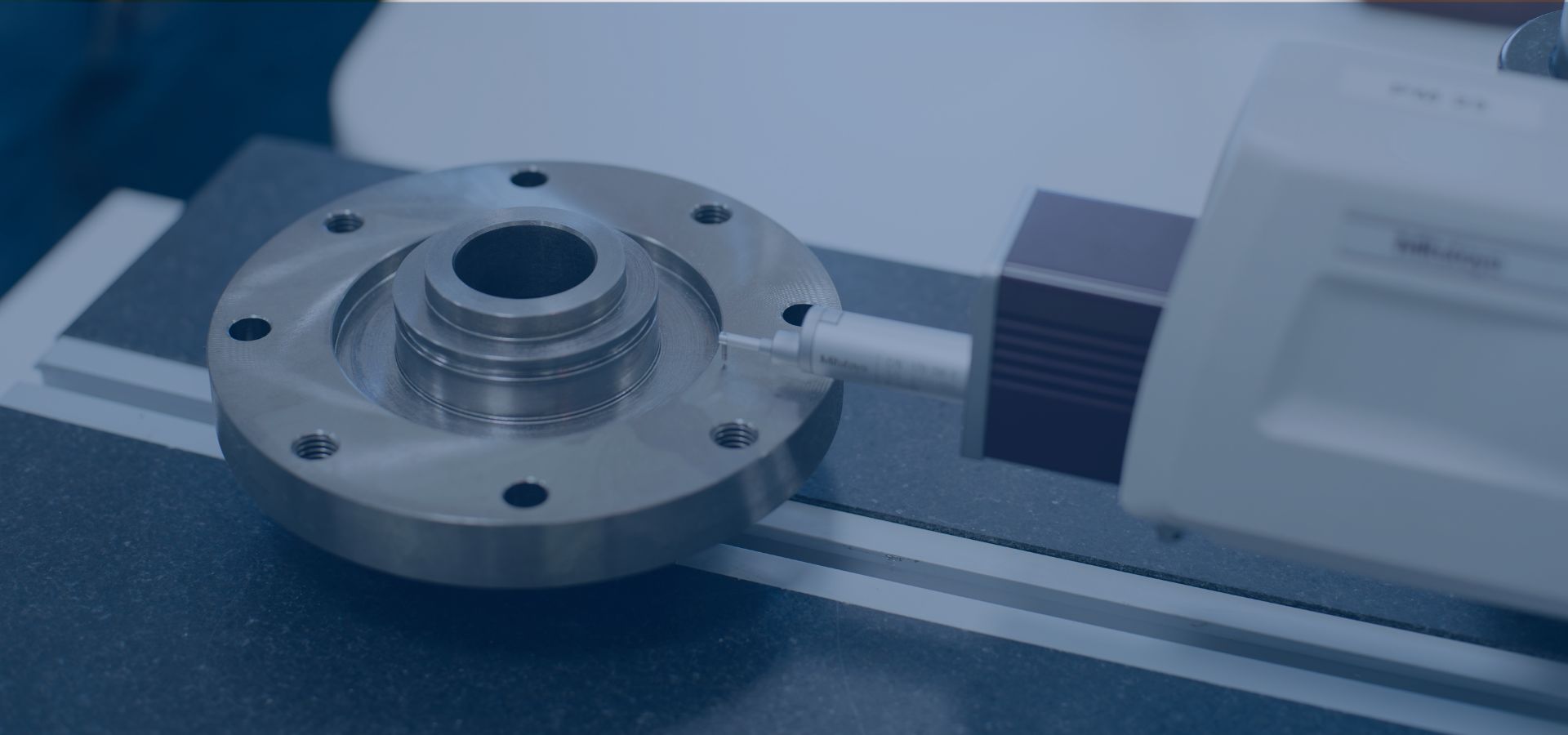
On-site inspection using tactile methods
As the component must be rotated to determine the concentricity tolerance, a clamping device is usually required. This rotates the component at a defined speed.
This traditional method still complies with DIN ISO 1101 and is generally sufficient for random checks of smaller components.
However, it becomes problematic when larger or complex-shaped profiles are to be tested using traditional tactile methods. In this case, a specially designed testing system is often required for a valid measurement in accordance with DIN ISO 1101. This can turn into a very cost-intensive investment, which also only has a limited utility value.
Optical processes for fast and reliable results
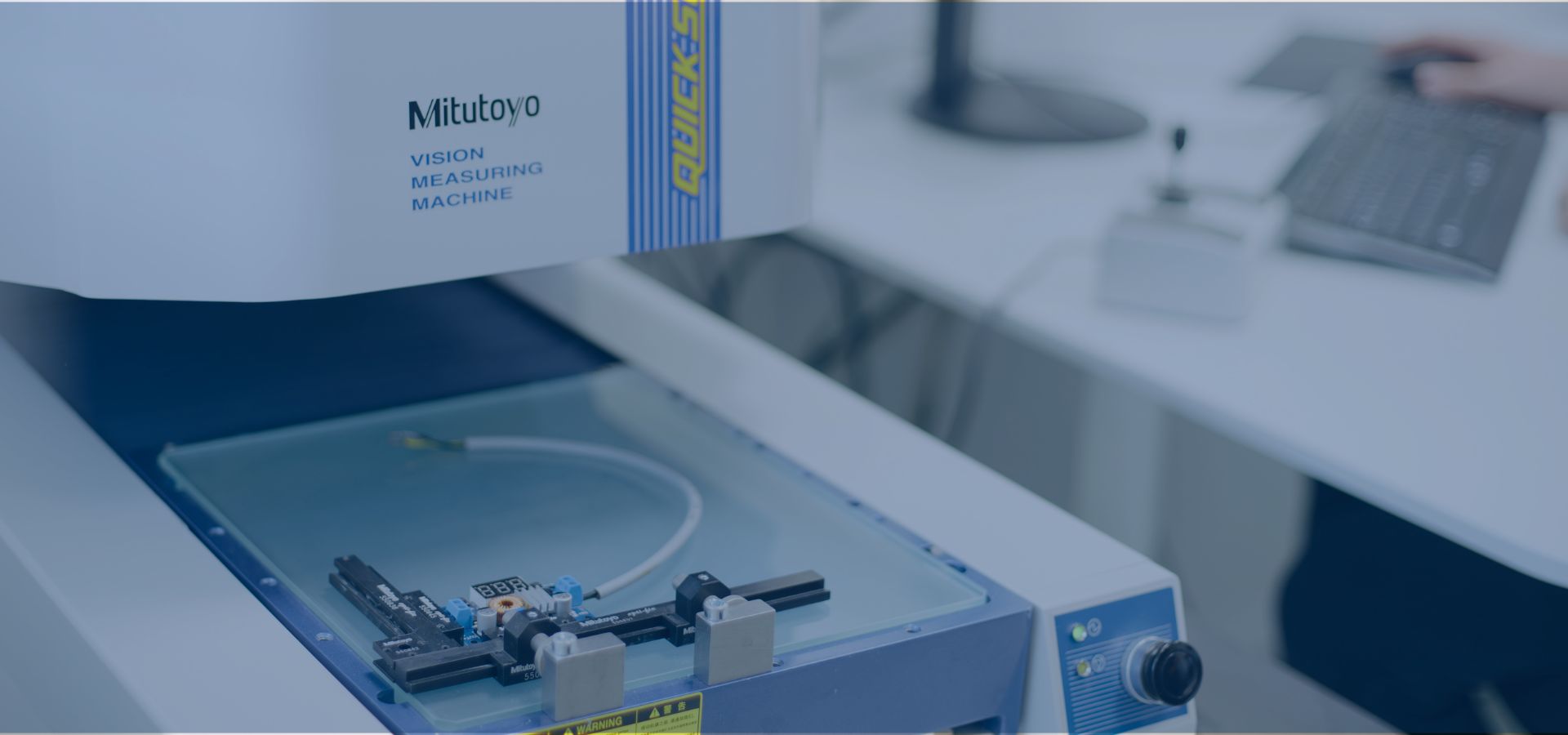
Optical methods have therefore proved particularly effective in evaluating the concentricity tolerance of sophisticated components. Laser measurement technology in particular is regularly used for this purpose today. A DIN ISO 1101-compliant tolerance assessment of concentricity by laser offers the following advantages:
– High measuring speed
– High precision and reliability of results
– Simple setup
– Universal usability.
A 3D laser measurement system is quite a large investment. The systems also require a certain amount of maintenance and servicing. However, they offer some additional functions that also make them very interesting for other applications.
A high-quality 3D measuring system with laser technology can also be used as a 3D scanner without any problems. The high-precision capture of the external geometry of a component is a great relief for many applications. These include
– Rapid prototyping
– Reverse engineering
and much more.
100% control even with concentricity
Components that have to be checked for their concentricity tolerance are usually subject to a 100% inspection. The damage that a tolerance deviation can cause in the finished module is simply too great to work with random checks.
3D laser shell technology is the right answer. Today’s systems are so convenient and barrier-free that they only need to be manufactured in a few sizes.
The contactless, optical detection by laser beam makes the geometry of the component and the structure of the testing device as independent of each other as possible. In addition, all other tolerances in accordance with DIN ISO 1101 can also be tested with just one test method.